SCOTUS Dashboard
The Docket
Current Circuit Splits
These active circuit splits are currently before the Supreme Court. Cert has been granted and a decision is pending.
Whether state laws categorically barring transgender women from women's sports teams violate the Equal Protection Clause, and what level of scrutiny applies to such classifications.
Circuits are beginning to divide on the constitutionality of state laws that categorically prohibit transgender athletes from competing on teams consistent with their gender identity. This split implicates the level of scrutiny applicable to sex-based and transgender classifications and whether as-applied challenges are viable under intermediate scrutiny.
Laws likely violate Equal Protection
Holds that categorical bans on transgender women in women's sports likely violate the Equal Protection Clause as applied to transgender individuals who have medically mitigated their sex-based biological advantages.
Laws are constitutional
Holds that such laws are a permissible exercise of state authority to maintain fair competition in women's sports based on biological sex differences.
Whether the Religious Land Use and Institutionalized Persons Act (RLUIPA) clearly authorizes individual-capacity damages suits against state prison officials, and whether Congress has the constitutional power under the Spending Clause to impose such personal liability.
Circuits disagree on whether RLUIPA's text provides sufficiently clear notice to authorize damages claims against prison officials in their individual capacities, implicating Spending Clause limits on Congress's ability to impose personal liability on individuals who are not direct recipients of federal funds.
RLUIPA authorizes individual-capacity damages
Holds that RLUIPA's text and structure provide clear authorization for damages suits against state prison officials in their individual capacities.
RLUIPA does not authorize individual-capacity damages
Holds that RLUIPA does not clearly authorize individual-capacity damages suits against prison officials, and the Spending Clause limits Congress's ability to impose such liability on non-recipients of federal funds.
Source: CourtListener · Analysis: Claude AI · See all circuit splits →
Analysis
& Opinions
SCOTUSblog · Amy Howe
Supreme Court allows Texas to enforce law requiring age verification and parental consent on apps ↗2026-07-06
SCOTUSblog · Kelsey Dallas
The justices remained busy last summer. This year, will they actually get a break? ↗2026-07-06
NYT Politics · Ann E. Marimow
Supreme Court Allows Texas Age-Verification Law for App Stores, for Now ↗2026-07-06
NYT Politics · Abbie VanSickle and Ann E. Marimow
Justice Alito Gives No Indication He’s Ready to Step Down From the Supreme Court ↗2026-07-04
Cases by Circuit
Upcoming and pending-decision cases mapped by the federal appeals court circuit they originated in. Hover over a state or badge to see cases. Bold lines show circuit boundaries; thinner lines show state borders.
Badge colors
Click a state or badge to see cases. Bold lines show circuit boundaries.
Pending cases by circuit
1st Circuit
—
2nd Circuit
—
3rd Circuit
—
4th Circuit
—
5th Circuit
2 cases (2 argued)
6th Circuit
1 case (1 argued)
7th Circuit
—
8th Circuit
—
9th Circuit
1 case (1 argued)
10th Circuit
—
11th Circuit
—
D.C. Circuit
—
Court Calendar
Oral argument sessions and conference dates for the October Term 2025. Argument dates link to case pages. Conference dates are when the Justices meet privately to discuss pending petitions and argued cases.
July 2026
No events this month.
Justices
Speaking turns and estimated speaking time per justice across all 2025 term oral arguments, ranked by time on record.

Justice Jackson
Speaking time
Speaking turns

Justice Sotomayor
Speaking time
Speaking turns
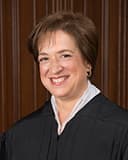
Justice Kagan
Speaking time
Speaking turns
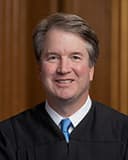
Justice Kavanaugh
Speaking time
Speaking turns
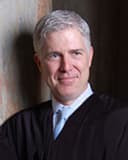
Justice Gorsuch
Speaking time
Speaking turns
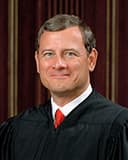
Chief Justice Roberts
Speaking time
Speaking turns

Justice Barrett
Speaking time
Speaking turns
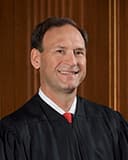
Justice Alito
Speaking time
Speaking turns
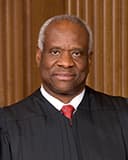
Justice Thomas
Speaking time
Speaking turns
Counsel
Attorneys with 2 or more cases in the 2025 term, ranked by speaking time. Click a name to see the cases they argued.
Speaking time
Cases argued
Speaking time
Cases argued
Speaking time
Cases argued
Speaking time
Cases argued
Speaking time
Cases argued
Speaking time
Cases argued
Speaking time
Cases argued
Speaking time
Cases argued
About
This site tracks upcoming and recent oral arguments before the United States Supreme Court. Case information is compiled directly from official Supreme Court records, including transcripts, docket filings, and published opinions. Summaries, legal term explanations, and party position analyses are generated using AI and are intended to orient readers and direct further human research and analysis. They should not be treated as legal advice or authoritative legal commentary. Click any case to read a plain-English breakdown of the facts, the legal question, and each side’s argument. The site is updated automatically each day at 5pm ET. Built by William Higgins. For comments or suggestions, contact william.higgins@sciencespo.fr.