Okello T. Chatrie v. United States
What is the scope of law enforcement's authority to access digital communications and metadata without a warrant, and what constitutional protections apply?
The Decision


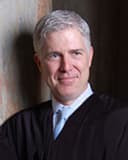

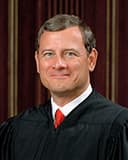
Roberts
·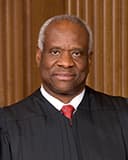
Thomas
·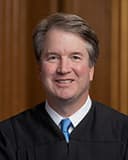
Kavanaugh
·
Barrett
·
Decided June 29, 2026
Majority Opinion— Justice Kagan
The Supreme Court held that police officers conducted a Fourth Amendment search when they obtained Okello Chatrie's cell-phone location data from Google through a "geofence warrant." After a 2019 bank robbery in Virginia, police drew a virtual perimeter around the crime scene and obtained a warrant requiring Google to turn over Location History data—a service that records a user's cell-phone location every two minutes—for phones in the area around the time of the crime. Through a three-step process of narrowing down anonymous data to identified users, police identified Chatrie as a suspect. The Court ruled that individuals have a reasonable expectation of privacy in their cell-phone location information, building on its 2018 decision in Carpenter v. United States, which reached the same conclusion about cell-site location information (CSLI). The Court found that Location History is even more precise than CSLI, pinpointing location within about 20 meters and recording location roughly 720 times per day, making it an even greater intrusion on privacy.
The Court rejected two key government arguments. First, it rejected the claim that accessing only a short period (two hours) of location data falls outside the Fourth Amendment, holding that even brief monitoring can reveal deeply private information and that constitutional protection does not depend on how much data the government ultimately obtains. Second, it rejected the argument that the "third-party doctrine"—which generally says people lose privacy expectations in information shared with others—should apply, reasoning that users do not truly "share" their location data with Google in any meaningful sense, just as Carpenter found for CSLI. The Court emphasized that requiring people to forfeit Fourth Amendment protection every time they use a smartphone app or service would gut privacy protections in the modern era. However, the Court did not resolve whether this particular warrant was valid, sending the case back to the Fourth Circuit to determine whether the warrant satisfied the Fourth Amendment's requirements of probable cause and particularity at each step of the search process.
Concurring Opinions
Justice Jackson
Justice Jackson, joined by Justice Sotomayor, agreed that a Fourth Amendment search occurred but wrote separately to argue that the Court should have gone further and found that the search violated the Fourth Amendment. She focused on the second and third steps of the warrant process, where officers were authorized to obtain additional location data and then identifying information for selected users. The warrant merely said officers would "attempt" to narrow the list without setting any criteria or requiring them to go back to the magistrate for further approval.
Jackson argued this meant key portions of the search were conducted without meaningful judicial oversight, giving officers a "roving commission" to collect more data at their discretion. She pointed out that when executing the warrant, officers initially sought data on all 19 devices identified in step one and narrowed the list only because Google insisted—not because the warrant required it. Some of the data obtained showed users' movements to sensitive locations like residences, a school, and a hospital. Jackson urged the Fourth Circuit to keep these concerns in mind when evaluating the warrant's constitutionality on remand.
Justice Gorsuch
Justice Gorsuch agreed with the outcome—that a Fourth Amendment search occurred—but would have reached that conclusion through different reasoning. He criticized the Court's continued reliance on the Katz "reasonable expectation of privacy" test, which he views as having no basis in the Constitution's text or history and as being impossible to apply consistently. He also criticized the third-party doctrine as indefensible, arguing it implausibly suggests Americans have no reasonable expectation of privacy in records held by banks, doctors, or technology companies.
Instead, Gorsuch would have applied a property-based approach rooted in the Fourth Amendment's text, which protects "persons, houses, papers, and effects." He argued that Chatrie's Location History data qualifies as his personal property—an "effect"—because Google's own terms referred to it as the user's information, and Chatrie had the right to review, edit, export, and delete it. Gorsuch also noted that many states treat digital data as personal property under their laws. He argued that even though Google stored the data on its servers, entrusting property to someone else doesn't make it no longer yours, just as giving your keys to a valet doesn't transfer ownership of your car. He suggested the majority's reasoning, while using the Katz framework, implicitly points toward this property-based understanding.
Justice Kagan
Justice Kagan authored the majority opinion and did not file a separate concurrence.
Justice Sotomayor
Justice Sotomayor joined Justice Jackson's concurrence, which argued the Court should have gone further to find the warrant deficient, particularly at steps two and three of the search process where officers had too much discretion and too little judicial oversight.
Dissenting Opinions
Justice Alito
Justice Alito, joined in part by Justices Thomas and Barrett, dissented on multiple grounds. First, he argued the Court should never have taken the case because its opinion is effectively advisory—it will not change the outcome for Chatrie. The Fourth Circuit had already held that even if the warrant was deficient, the evidence was admissible under the "good-faith exception" to the exclusionary rule (which allows evidence obtained by officers who reasonably relied on a warrant). Since the majority's opinion does nothing to disturb that holding, Alito argued, the decision amounts to a constitutional pronouncement with no practical effect on the case. He also noted that Google has since changed how it stores Location History data, making the specific geofence procedure at issue obsolete.
On the merits, Alito argued the majority improperly extended Carpenter v. United States far beyond its boundaries. He contended that under longstanding Fourth Amendment principles, compelled production of records held by a third party was never considered a "search," and that Chatrie has no property interest in data that Google collected, owned, and maintained on its own servers. He criticized the majority for treating only two hours of location data as equivalent to the seven days of data at issue in Carpenter, and argued that the majority's reasoning—that any use of smartphone apps and services is protected from the third-party doctrine—effectively eliminates that doctrine entirely. Alito warned the decision would destabilize Fourth Amendment law and create uncertainty for law enforcement, all in service of what he characterized as the Court striking a pose as a champion of digital privacy rather than faithfully applying established legal principles.
Oral Argument Recording
Via Spotify ↗
Background & Facts
Okello T. Chatrie was convicted in federal court based in part on evidence obtained through digital surveillance. The Fourth Circuit Court of Appeals upheld his conviction on April 30, 2025, rejecting his challenge to the government's surveillance methods. Chatrie filed a petition for certiorari arguing that the lower courts erred in permitting warrantless or insufficiently justified access to his digital communications and related metadata.
The Fourth Circuit's decision involved questions about the scope of government investigative authority in the digital age and what constitutional safeguards apply when law enforcement accesses electronic communications. The Supreme Court granted Chatrie's petition on January 16, 2026, but limited review to "Question 1 presented by the petition," suggesting the Court wishes to focus on a specific aspect of the surveillance and warrant doctrine.
Why This Case Matters
This case addresses the intersection of Fourth Amendment privacy protections and modern digital surveillance, an area where courts have struggled to apply traditional warrant doctrine to contemporary technologies. A decision favoring Chatrie could impose stricter warrant requirements on law enforcement's access to digital communications and metadata, potentially affecting numerous ongoing and future investigations. Conversely, a decision favoring the government could affirm broader law enforcement authority in the digital realm. The case has attracted significant amicus attention from privacy advocates, technology companies, and civil liberties organizations, reflecting the broad implications for both individual privacy rights and government investigative capacity.
The Arguments
Chatrie argues that the government's access to his digital communications and metadata violated the Fourth Amendment because it lacked adequate constitutional justification, either through a proper warrant or recognized exception. He contends that the Fourth Circuit incorrectly applied existing precedent and failed to account for the heightened privacy interests in digital communications in the modern era.
- Digital communications and metadata deserve heightened Fourth Amendment protection due to their intimate nature and volume
- Traditional warrant doctrine should apply to law enforcement access to digital evidence
- The government failed to satisfy constitutional prerequisites for warrantless or expedited access in this case
- Lower court precedent conflicts with Supreme Court privacy jurisprudence
The United States argues that the government's investigative methods complied with the Fourth Amendment and applicable law. The government contends that existing statutory and constitutional frameworks adequately protect privacy while enabling law enforcement to investigate crime effectively, and that the Fourth Circuit correctly applied binding precedent.
- Established Fourth Amendment doctrine permits the government's surveillance techniques
- Statutory procedures and requirements were followed in obtaining the evidence at issue
- Imposing stricter warrant requirements would unduly hamper legitimate law enforcement investigations
- The Fourth Circuit's decision aligns with precedent from other circuits and Supreme Court jurisprudence
Precedent Cases Cited
Carpenter v. United States
585 U.S. 296
This case established heightened Fourth Amendment protections for digital location data and may inform the Court's analysis of privacy interests in digital communications and metadata.
United States v. Jones
565 U.S. 400
Jones addressed the government's use of tracking technology and Fourth Amendment protections in the digital age, providing foundational reasoning about privacy expectations in modern surveillance.
Katz v. United States
389 U.S. 347
Katz established the reasonable expectation of privacy standard that forms the foundation for modern Fourth Amendment analysis and applies to electronic communications.
United States v. Warshak
631 F.3d 266
Warshak analyzed Fourth Amendment protections for email communications, establishing that individuals have reasonable expectations of privacy in stored electronic messages.
United States v. Brignoni-Ponce
422 U.S. 873
This case discusses standards for investigative stops and the balance between government investigative needs and individual privacy, principles applicable to digital surveillance questions.
Riley v. California
573 U.S. 373
Riley recognized the unique privacy interests in smartphones and digital devices, supporting arguments that modern digital evidence deserves special Fourth Amendment protection.
Legal Terminology
Analysis & Opinions
The Supreme Court ruled 6-3 that law enforcement's use of a "geofence warrant" — which directed Google to provide cellphone location data for users near a specific place during a specific time — constitutes a "search" under the Fourth Amendment. The case involving Okello Chatrie's 2019 bank robbery conviction was sent back to the lower court for further proceedings.
The Supreme Court placed limits on law enforcement's use of "geofence" searches, which sweep up cellphone location data from devices near crime scenes to identify suspects and witnesses. The ruling establishes that such broad location data collection constitutes a Fourth Amendment search.
The Supreme Court heard arguments on the constitutionality of geofence warrants, which allow police to sweep up cellphone location data from all users near a crime scene to identify suspects. The case raises significant Fourth Amendment questions about the scope of law enforcement's ability to demand bulk location data from technology companies.
The Supreme Court is weighing whether police can use geofence warrants to compel Google to turn over location data for everyone present in a given area at a given time. The case addresses major Fourth Amendment privacy concerns about dragnet-style digital surveillance by law enforcement.
The Supreme Court justices appeared divided on whether a geofence warrant violated the Fourth Amendment during oral argument in Chatrie v. United States. Some justices seemed to favor a relatively narrow ruling that would clarify the requirements for such warrants without resolving all the broader issues raised by geofence technology and digital surveillance.
The Supreme Court will hear oral arguments in Chatrie v. United States on April 27, a major Fourth Amendment case about police access to geofence location data. The case could set a landmark precedent on digital privacy and the legality of "reverse" searches, where law enforcement queries broad datasets to identify suspects. It is described as the most important digital privacy case the Court has taken up since Carpenter v. United States.
The Supreme Court is scheduled to hear oral argument in Chatrie v. United States, a case about whether law enforcement's use of "geofence warrants" to obtain cellphone location data violates the Fourth Amendment. Okello Chatrie was convicted of robbing a federal credit union in Virginia after police used his cellphone records to place him near the scene. The lower courts rejected his Fourth Amendment challenge, and the justices will now decide the issue.
The Supreme Court's final oral arguments of the term feature major cases involving the Fourth Amendment and immigration law. The criminal law analysis highlights the significance of these closing cases, which could reshape protections against government searches and the legal framework for immigration enforcement.