Monsanto Company v. John L. Durnell
Whether the Federal Insecticide, Fungicide, and Rodenticide Act preempts state law failure-to-warn claims based on allegedly inadequate product labeling when the EPA has not required the specific warning.
The Decision


Roberts
·
Alito
·
Sotomayor
·
Kagan
·
Gorsuch
·
Barrett
·
Decided June 25, 2026
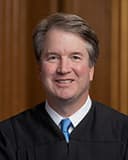
Majority Opinion— Justice Kavanaugh
The Supreme Court held that the Federal Insecticide, Fungicide, and Rodenticide Act (FIFRA) expressly preempts state-law failure-to-warn claims that would require a pesticide manufacturer to add a cancer warning to a product label that the EPA has approved without one. John Durnell sued Monsanto in Missouri state court, alleging that Roundup caused his non-Hodgkin's lymphoma and that Monsanto should have included a cancer warning on the label. A jury awarded him over $1 million. The Court reversed, finding that because the EPA has repeatedly evaluated glyphosate and concluded it is not likely to cause cancer—and has approved Roundup's label without a cancer warning—federal law requires Monsanto to use that EPA-approved label. FIFRA's preemption clause, titled "Uniformity," prohibits states from imposing labeling requirements that are "in addition to or different from" those required under the federal statute.
Justice Kavanaugh, writing for a 7-2 majority, explained that EPA's registration process involves a thorough review of a pesticide's label, including whether it contains all necessary safety warnings. Once EPA approves the label, manufacturers are legally required to use it and cannot unilaterally change it without EPA's approval. Because Durnell's tort claim would effectively require Monsanto to add a cancer warning that EPA has determined is unnecessary, the state-law requirement is "in addition to" and "different from" federal requirements—and is therefore preempted. The Court rejected Durnell's arguments that EPA's registration is merely prima facie evidence of compliance, finding that this statutory provision addresses EPA enforcement actions rather than state tort suits, and that it does not strip EPA's labeling determinations of preemptive force. The Court also relied heavily on its prior decision in Riegel v. Medtronic, which found preemption under the nearly identical preemption clause in the Medical Device Amendments when the FDA had given premarket approval to a device.
Concurring Opinions
Justice Thomas
Justice Thomas joined the majority opinion in full but wrote separately to raise constitutional concerns about FIFRA. He questioned whether the Act exceeds Congress's power under the Commerce Clause, noting that it regulates not just interstate sales of pesticides but also their purely local use—even a homeowner using Roundup in his own backyard. He also raised nondelegation concerns, arguing that FIFRA grants EPA broad authority to issue regulations carrying criminal penalties, which may amount to an unconstitutional delegation of core legislative power.
Justice Thomas further questioned whether federal agency actions like EPA's regulations and registration decisions can preempt state law under the Supremacy Clause, which makes the "Constitution," "Laws," and "Treaties" the supreme law of the land—but does not mention agency actions. He suggested that the modern administrative state creates tensions with the constitutional structure that the Framers would not have envisioned, and noted that broad regulatory schemes like FIFRA often benefit large incumbent companies at the expense of smaller competitors and consumers.
Dissenting Opinions
Justice Jackson
Justice Jackson, joined by Justice Gorsuch, dissented, arguing that Durnell's failure-to-warn claim is not preempted because it parallels—rather than adds to or differs from—FIFRA's own key labeling requirement: the prohibition on selling misbranded pesticides. Under FIFRA, a pesticide is misbranded if its label lacks warnings that are "necessary and adequate to protect health." Missouri's failure-to-warn tort imposes essentially the same duty. Because the state-law claim merely duplicates this federal requirement, it does not trigger FIFRA's preemption clause, which blocks only state requirements that go beyond or conflict with federal ones.
Justice Jackson emphasized that FIFRA itself says EPA registration is only "prima facie evidence" that a pesticide's label complies with the law, and that registration is not a defense to a misbranding charge. This means, she argued, that EPA's approval of a label does not conclusively establish that the label meets all of FIFRA's requirements—and therefore cannot create an affirmative labeling requirement that preempts state law. She criticized the majority for effectively treating EPA's registration decision as conclusive proof of label adequacy, which she said contradicts the statute's text, the Court's prior decision in Bates v. Dow Agrosciences, and the near-unanimous view of lower courts that had rejected this preemption argument. She concluded that the majority's holding unjustifiably closes the courthouse doors to tort plaintiffs like Durnell.
Oral Argument Recording
Via Spotify ↗
Background & Facts
John L. Durnell brought a failure-to-warn lawsuit against Monsanto Company, alleging that Monsanto's herbicide product failed to adequately warn of health risks. The case centers on whether state tort law allows such claims to proceed when the EPA, the federal agency responsible for regulating pesticides under the Federal Insecticide, Fungicide, and Rodenticide Act (FIFRA), has not mandated the additional warnings that Durnell claims should have been included on the product label.
The Missouri Court of Appeals, Eastern District, decided the case on February 11, 2025, and the case was subsequently appealed to the Supreme Court. Monsanto petitioned for certiorari, arguing that federal law governing pesticide labeling preempts state-law warning claims. The Supreme Court granted the petition on January 16, 2026, limiting review to the narrow question of FIFRA preemption in the label-warning context.
Why This Case Matters
This case addresses a critical intersection between federal regulatory authority and state tort law in the agricultural chemicals industry. A decision favoring Monsanto could significantly limit consumers' ability to bring failure-to-warn lawsuits in state court when federal regulators have approved a product's labeling, potentially shielding manufacturers from liability for allegedly inadequate warnings. Conversely, a decision favoring Durnell would preserve state law remedies and signal that FIFRA does not completely preempt warning-based tort claims. The outcome will affect not only pesticide manufacturers but also the broader landscape of product liability law, particularly for FDA-regulated and EPA-regulated products where state and federal standards may diverge.
The Circuit Split
Circuits disagree on whether FIFRA's preemption provision bars state-law failure-to-warn claims against pesticide manufacturers when the claim is based on the absence of a warning that the EPA did not require. The split affects product liability litigation involving agricultural chemicals and consumer pesticide products.
FIFRA preempts failure-to-warn claims
Holds that FIFRA preempts state-law failure-to-warn claims that would effectively require labeling different from or in addition to what FIFRA and EPA regulations permit.
FIFRA does not preempt failure-to-warn claims
Holds that FIFRA does not preempt state-law failure-to-warn claims because such claims impose requirements 'parallel to' rather than 'in addition to' FIFRA's labeling requirements.
The Arguments
FIFRA preempts state law failure-to-warn claims when the EPA has not required the disputed warning on a product label. Federal pesticide labeling is comprehensively regulated by the EPA, and allowing state courts to impose additional warning requirements would create conflicting regulatory schemes and undermine uniform federal standards.
- FIFRA establishes exclusive federal control over pesticide labeling requirements, and the EPA's approval of a label represents a federal determination that the label is adequate
- Permitting state-based warning claims would allow plaintiffs to circumvent the EPA's regulatory judgment and create a patchwork of state-imposed label requirements
- Failure-to-warn claims inherently challenge the adequacy of EPA-approved labels, which is a federal regulatory function
- Multiple amicus briefs from agricultural and industry groups support preemption to ensure regulatory uniformity and avoid conflicting state requirements
FIFRA does not preempt state law failure-to-warn claims because the statute does not explicitly preempt such claims and preserves traditional state tort remedies. The EPA's approval of a label does not constitute a positive federal determination that additional warnings are unnecessary or that state law claims are impermissible.
- FIFRA contains no express preemption clause eliminating state law warning claims, and courts should not infer preemption absent clear congressional intent
- The EPA's labeling approval is a minimum federal standard, not a ceiling that precludes state law from requiring more protective labeling
- State failure-to-warn claims operate independently from federal labeling requirements and do not conflict with federal regulatory authority
- Preemption would eliminate an important remedy for consumers harmed by allegedly inadequate warnings approved by federal regulators
Precedent Cases Cited
Cipollone v. Liggett, Inc.
505 U.S. 504
Cipollone is foundational preemption jurisprudence establishing that courts should not infer preemption absent clear congressional intent, and that federal approval of a product does not necessarily preempt state law claims.
Silkwood v. Kerr-McGee Corp.
464 U.S. 238
Silkwood is cited for the principle that federal regulation in an area does not automatically preempt state tort law, and that state remedies can coexist with federal regulatory schemes.
Geier v. American Honda Motor Co.
529 U.S. 861
Geier addresses preemption of design defect and warning claims where federal agencies have approved product standards, relevant to whether EPA approval of pesticide labels preempts state warning claims.
Huron Portland Cement Co. v. Detroit
362 U.S. 440
Huron addresses federal-state regulatory relationships and when state law can operate in fields of federal concern, relevant to the scope of EPA authority over pesticide labeling.
Hillsborough County v. Automated Medical Labs
471 U.S. 707
Hillsborough County is cited for analysis of implied preemption when a state law conflicts with federal regulatory objectives and uniform national standards.
Wyeth v. Levine
555 U.S. 555
Wyeth is cited by respondent for the principle that FDA approval of drug labeling does not preempt state failure-to-warn claims, providing an analogue to FIFRA preemption analysis.
Legal Terminology
Analysis & Opinions
The Supreme Court ruled 7-2 in favor of Monsanto in Monsanto Company v. Durnell, holding that federal pesticide labeling law preempts state lawsuits seeking to hold the company liable for failing to warn consumers about potential cancer risks from Roundup. Justice Kavanaugh wrote the majority opinion, with Justice Jackson dissenting. The decision has major implications for thousands of pending lawsuits against Monsanto's parent company Bayer.
The Supreme Court rejected lawsuits against Bayer alleging that its Roundup weedkiller caused cancer, ruling that federal law preempts state-level failure-to-warn claims about pesticide labels. The decision is expected to determine the fate of thousands of similar pending lawsuits against Bayer, which manufactures Roundup. The ruling represents a major victory for the company, which has faced billions of dollars in potential liability.
Bayer won a crucial Supreme Court ruling shielding it from lawsuits claiming its Roundup weedkiller causes cancer, with the justices finding that federal pesticide labeling law preempts state failure-to-warn claims. The decision overturns a verdict that had become the basis for billions of dollars in claims against the company. The ruling is expected to effectively end or severely limit thousands of pending Roundup cancer lawsuits.
The Supreme Court heard oral arguments in Monsanto Co. v. Durnell, a case about whether federal pesticide labeling law preempts a Missouri jury's $1.25 million award to a gardener who claimed Roundup caused cancer. The case raises significant questions about the balance of power between state and federal courts in mass tort litigation involving public harms.
The Supreme Court heard oral arguments in a case involving Monsanto's Roundup herbicide products and whether state-law claims requiring cancer warnings on pesticide labels are preempted by federal law. The dispute centers on the main active ingredient glyphosate and who gets to decide whether such labels need a cancer warning. The case could have broad implications for pesticide regulation and state tort lawsuits.
The Supreme Court appeared divided during oral arguments over whether federal law preempts state-law lawsuits alleging that Monsanto's Roundup weedkiller causes cancer. The outcome could affect thousands of product liability lawsuits against the herbicide's maker.
The Supreme Court is considering whether federal pesticide labeling law preempts state-court lawsuits by thousands of cancer victims who allege Monsanto's Roundup herbicide caused their illness. The case represents one of the largest waves of product liability litigation in U.S. history.
The Supreme Court is set to hear oral arguments in Monsanto Company v. Durnell, which asks whether federal pesticide labeling law preempts state requirements that cancer warnings be added to pesticide product labels. The case has massive implications, involving over 100,000 lawsuits and billions of dollars in potential liability related to Monsanto's products. The dispute puts the court at the center of a battle involving the international scientific community, federal and state policymakers, and the pesticide industry.