Chiles v. Salazar
Whether a state law banning licensed therapists from providing conversion therapy (talk therapy aimed at changing a minor's sexual orientation or gender identity) to minors violates the First Amendment's protection of speech.
The Decision
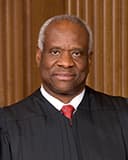
Roberts
·
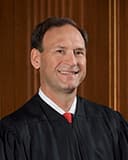
Thomas
·
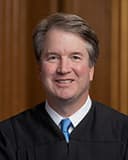
Alito
·
Kavanaugh
·
Barrett
·
Decided March 31, 2026
Majority Opinion— Justice Gorsuch
The Supreme Court ruled 8–1 that Colorado's ban on "conversion therapy," as applied to counselor Kaley Chiles's talk therapy practice, violates the First Amendment because it regulates speech based on viewpoint. Chiles is a licensed mental-health counselor who uses only spoken conversation—no medications or physical techniques—to help clients pursue their own stated goals regarding sexuality and gender identity. Colorado's 2019 law prohibits licensed counselors from engaging in any "practice or treatment" that attempts to change a minor's sexual orientation or gender identity, while explicitly permitting counselors to provide acceptance, support, and assistance to clients exploring their identity or undergoing gender transition. The Court held that this asymmetry—allowing speech supporting one perspective while forbidding speech supporting the opposite perspective—constitutes viewpoint discrimination, the most serious type of First Amendment violation.
Writing for the majority, Justice Gorsuch rejected Colorado's argument that the law merely regulates professional "conduct" rather than speech. The Court emphasized that when the law is applied to a talk therapist like Chiles, the only thing being regulated is what she says. Labeling speech as a "treatment" or "therapeutic modality" does not strip it of First Amendment protection. The Court also rejected the idea that professionals hold diminished free-speech rights, citing its 2018 decision in NIFLA v. Becerra. The majority further found that Colorado failed to show a longstanding historical tradition that would justify lesser constitutional scrutiny for this type of speech restriction. Licensing laws traditionally address qualifications, not viewpoints; informed-consent laws regulate speech only incidentally to physical procedures; and malpractice claims require proof of actual injury, unlike Colorado's law which threatens punishment simply for expressing a disfavored view. The case was sent back to the lower courts for further proceedings under the proper, more rigorous constitutional standard.
Concurring Opinions
Justice Kagan
Justice Kagan, joined by Justice Sotomayor, agreed that Colorado's law as applied to talk therapy is unconstitutional because it discriminates based on viewpoint—allowing therapists to affirm a minor's sexual orientation or gender identity while forbidding them from helping a minor who wants to change those things. Kagan wrote separately, however, to flag that a different, harder question would arise if a state enacted a law that was content-based but viewpoint-neutral. She noted that not all content-based laws automatically receive the Court's most demanding scrutiny; when there is no realistic risk that the government is trying to suppress disfavored ideas, the Court has sometimes applied less rigorous review. She suggested that content-based but viewpoint-neutral regulations of speech in medical settings might fall into that category, but said the Court did not need to resolve that issue here because Colorado's law clearly takes sides in an ideological debate.
Justice Sotomayor
Justice Sotomayor joined Justice Kagan's concurrence, agreeing that Colorado's law is unconstitutional as applied to talk therapy because it discriminates based on viewpoint, but signaling that a content-based yet viewpoint-neutral regulation of healthcare providers' speech might warrant a different and less demanding constitutional analysis.
Dissenting Opinions
Justice Jackson
Justice Jackson dissented, arguing that the majority fundamentally misunderstands the context in which this speech occurs. She emphasized that Chiles is not simply speaking—she is providing medical treatment as a state-licensed healthcare professional, and states have regulated the practice of medicine for centuries. Jackson contended that when a state restricts a provider's speech only incidentally, as a byproduct of regulating which medical treatments may be offered to patients, the First Amendment does not require heightened scrutiny. She relied heavily on the Court's earlier decisions in Casey and NIFLA, arguing that those cases drew a clear line: restrictions on speech made as part of providing medical care to a patient are permissible, while restrictions on speech unconnected to any medical procedure are not.
Jackson also challenged the majority's characterization of Colorado's law as viewpoint discrimination, arguing that all medical standards of care are inherently viewpoint-based—states routinely require doctors to recommend certain treatments and discourage others. She pointed to the broad medical consensus that conversion therapy is ineffective and harmful to minors, and argued that Colorado was simply incorporating that consensus into enforceable standards for licensed professionals. In her view, the majority's ruling threatens to upend longstanding state authority to regulate the medical profession and could call into question a wide array of laws governing what licensed healthcare providers may and may not do when treating patients.
Oral Argument Recording
Via Spotify ↗
Background & Facts
Kaley Chiles is a licensed counselor in Colorado who wants to provide voluntary talk therapy to minors seeking help with issues such as reducing unwanted same-sex attraction, changing unwanted same-sex behavior, or resolving gender dysphoria by realigning their identity with their biological sex. Colorado law prohibits licensed mental health professionals from performing 'conversion therapy' on minors, defined as efforts to change sexual orientation or gender identity, including efforts to change behavior, gender expression, or attraction.
Chiles challenged the law as a violation of her First Amendment rights, arguing that her counseling consists entirely of speech — one-on-one conversations — and contains no physical conduct such as aversive techniques (e.g., electric shock). The lower courts denied her request for a preliminary injunction. The Tenth Circuit upheld the law, reasoning that it regulated professional medical treatment (conduct) rather than protected speech.
Colorado raised a late-breaking argument that Chiles might lack standing because the state interprets its statute more narrowly than its text suggests, but both the district court and the Tenth Circuit had found standing, and Colorado did not cross-appeal on that issue. At the time of argument, anonymous complaints had been filed against Chiles, and Colorado was actively investigating her for allegedly violating the very law she challenges.
Why This Case Matters
This case could fundamentally reshape how states regulate licensed professionals whose services consist entirely of speech. If the Court applies strict scrutiny to laws banning talk-only therapy, it could invalidate similar conversion therapy bans in roughly 25 states. The decision will clarify the scope of the First Amendment's protection for professional speech after the Court's 2018 NIFLA decision, which rejected a broad 'professional speech' exception to the First Amendment but left open how to treat speech that occurs in the context of licensed medical treatment.
The case also raises critical questions about symmetry: whether the same constitutional framework would apply if a state banned therapists from affirming a minor's gay or transgender identity. Multiple justices pressed both sides on this 'mirror image' question, highlighting the stakes for any future regulation of therapist speech on either side of culturally contested issues.
The Arguments
Colorado's law is a viewpoint-based ban on pure speech — voluntary conversations between a licensed counselor and minor clients — and must be subject to strict scrutiny under the First Amendment. Colorado cannot satisfy strict scrutiny because it has no evidence that voluntary talk therapy by licensed professionals to minors causes harm, and the law prevents children from accessing beneficial counseling.
- The therapy at issue consists solely of speech (conversations), not physical conduct like aversive techniques, so the 'speech incidental to conduct' exception does not apply.
- Colorado's own expert materials concede they lack studies specifically addressing voluntary talk therapy by licensed professionals to minors, and cannot prove causation of harm.
- The law is viewpoint-discriminatory because it allows counseling that affirms a child's same-sex attraction or transgender identity but bans counseling that helps a child pursue the opposite goals.
- NIFLA rejected a professional speech exception and warned against states manipulating private conversations between licensed professionals and clients.
Key Exchanges with Justices
Justice Jackson
“Isn't a therapist providing talk therapy functionally the same as a medical professional prescribing medication — both are providing treatment, just using different tools?”
Campbell maintained that the First Amendment turns on whether only words are used, not on the label of 'treatment,' distinguishing his client from medical professionals who combine speech with physical conduct.
Justice Kagan
“If the law were flipped — banning therapy that affirms a gay or trans identity — would the same strict scrutiny analysis apply?”
Campbell agreed that strict scrutiny would apply symmetrically to both directions, strengthening his position that the framework is principled rather than ideological.
Justice Sotomayor
“Only one circuit has applied strict scrutiny to this kind of therapy; why shouldn't we remand rather than apply it ourselves?”
Campbell argued ongoing irreparable harm to his client and vulnerable children warrants immediate resolution, citing the Mahmoud precedent where the Court applied strict scrutiny directly.
Colorado's law is subject to strict scrutiny because it restricts speech based on content and viewpoint, falls outside the speech-incidental-to-conduct exception (since no non-speech conduct is regulated), and falls outside any historically grounded exception to First Amendment protection. Colorado cannot satisfy strict scrutiny on this evidentiary record.
- There is no longstanding historical tradition of states imposing categorical prior restraints on therapist speech; the history of malpractice and licensing does not extend to ex ante speech bans.
- Colorado's position would allow states in the 1970s to have banned therapists from telling gay patients they were not mentally ill, since that was then outside the standard of care.
- The evidentiary record contains no studies specifically addressing harm from non-aversive talk therapy by licensed professionals to minors.
- The difference between Skrmetti (regulating medical conduct) and this case is the First Amendment: when government restricts speech rather than conduct, the analysis necessarily changes.
Key Exchanges with Justices
Justice Kagan
“In your hypothetical about therapists who dare suicidal patients to commit suicide, why are you confident strict scrutiny could be satisfied?”
Mooppan argued such speech has no redeeming value and harm would be obvious without a study, but cautioned against diluting strict scrutiny's rigor — maintaining the standard works without creating exceptions.
Justice Jackson
“Isn't this case the functional equivalent of Skrmetti, where the state was allowed to prohibit certain medical treatment for minors?”
Mooppan drew a clear line: the First Amendment makes speech-based regulation fundamentally different from conduct-based regulation, just as Holder required heightened scrutiny for speech-based material support of terrorism.
Justice Barrett
“Should we apply strict scrutiny ourselves or remand to the Tenth Circuit?”
Mooppan urged the Court to resolve it, citing ongoing irreparable harm and a clear evidentiary record showing Colorado cannot satisfy strict scrutiny.
Colorado's law regulates a specific medical treatment — conversion therapy — that is ineffective and harmful, not protected speech. The law falls within the longstanding historical tradition of states regulating healthcare professionals' conduct and enforcing the standard of care, and does not trigger heightened First Amendment scrutiny.
- The special fiduciary relationship between healthcare provider and patient has always been subject to extensive regulation, including through malpractice and licensing, without triggering First Amendment scrutiny.
- The law does not prevent any professional from expressing any viewpoint about conversion therapy; it only prohibits performing the treatment itself within the clinical relationship.
- Studies show conversion therapy is associated with doubled suicide attempt rates and adverse mental health outcomes, and no study has ever shown it to be efficacious.
- Legislatures routinely call out specific harmful practices (like prescribing anabolic steroids for sports performance) regardless of whether words are involved.
Key Exchanges with Justices
Justice Gorsuch
“If the standard of care changed and affirming homosexuality was considered outside the standard of care, could a state ban that talk therapy under your theory — subject only to rational basis review?”
Stevenson conceded that under her framework, such a law would receive only rational basis review if consistent with the standard of care, exposing the potential breadth of her position.
Justice Alito
“How can you square your interpretation of the statute with its plain text, which explicitly includes bans on efforts to reduce same-sex attraction?”
Stevenson struggled to reconcile the statute's broad text with her narrow interpretation, and Justice Alito pointed out that the two hypothetical patients he described would receive opposite treatment based on viewpoint.
Justice Kagan
“Isn't there a distinction between a doctor giving wrong cholesterol advice (where speech is incidental to treatment) and the pure talk therapy at issue here?”
Stevenson insisted there is no distinction, arguing that words used to deliver treatment can be equally harmful regardless of whether physical conduct accompanies them — a position several justices appeared skeptical of.
Precedent Cases Cited
National Institute of Family and Life Advocates v. Becerra (NIFLA)
585 U.S. 755
Central to the dispute — petitioner argued NIFLA rejected a 'professional speech' exception to the First Amendment and warned against state manipulation of professional-client conversations. Respondent tried to distinguish it as broader than the narrow healthcare treatment context at issue here.
Holder v. Humanitarian Law Project
561 U.S. 1
Cited by the US and petitioner to show that even when a generally applicable law regulates conduct, the First Amendment still requires heightened scrutiny when the law is triggered by the communicative content of speech.
United States v. Skrmetti
Justice Jackson compared this case to Skrmetti, where the Court upheld state regulation of gender-affirming medical treatments for minors, questioning why talk-therapy regulation should be treated differently. Mooppan distinguished it because speech triggers the First Amendment.
Brown v. Entertainment Merchants Association
564 U.S. 786
Petitioner cited Brown for the proposition that strict scrutiny requires the government to prove causation of harm with evidence, not just intuition or assertion, and that Colorado failed to meet that burden.
Susan B. Anthony List v. Driehaus
Petitioner cited this case for the standing principle that a credible threat of enforcement exists when a law on its face covers the plaintiff's intended conduct and anyone can file a complaint triggering enforcement.
Mahmoud v. Taylor
Petitioner and the US argued the Court should apply strict scrutiny directly rather than remand, just as it did in Mahmoud, where lower courts had applied the wrong standard and the Court resolved the case itself.
Cohen v. California
403 U.S. 15
The US cited Cohen to illustrate that even when speech could be punished under a generally applicable conduct-based law (breach of the peace), the First Amendment still applies when the law is triggered by communicative content.
Iancu v. Brunetti
588 U.S. 388
Petitioner cited Brunetti and the later Vidal decision to illustrate the distinction between viewpoint discrimination (which is virtually always unconstitutional) and mere content discrimination (which may be treated differently).
Legal Terminology
Analysis & Opinions
The article analyzes the Supreme Court's decision in Chiles v. Salazar, a case involving conversion therapy, exploring the surprising non-partisan dynamics among the justices in reaching their ruling. It examines how the case cut across typical ideological lines on the Court.
A podcast episode discusses several Supreme Court-related developments, including GVRs (grants, vacates, and remands) in the Sittenfeld and Bannon cases, as well as the Chiles case. The hosts also discuss personnel changes at the Department of Justice, including the departure of Attorney General Pam Bondi. The episode touches on the Chiles v. Salazar case currently before the Court.