Trump v. Barbara
Whether former President Donald Trump is eligible to hold the office of President under the Fourteenth Amendment's insurrection clause, and related constitutional questions concerning presidential eligibility.
The Decision
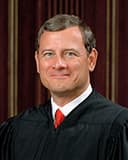
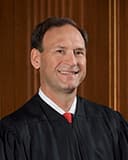

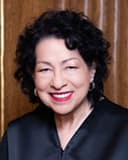
Sotomayor
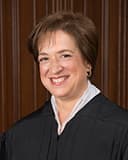
·
Kagan
·
Gorsuch
·
Kavanaugh
·
Barrett
·
Decided June 30, 2026
Majority Opinion— Justice Roberts
The Supreme Court held that children born in the United States to parents who are unlawfully or temporarily present in the country are U.S. citizens at birth under the Fourteenth Amendment's Citizenship Clause. The Court struck down Executive Order No. 14160, which had attempted to deny birthright citizenship to such children by interpreting the phrase "subject to the jurisdiction thereof" to exclude them. Chief Justice Roberts, writing for a 5-4 majority, traced the history of birthright citizenship from the English common law doctrine of jus soli (right of the soil), through the Dred Scott decision that the Fourteenth Amendment was designed to repudiate, and into the Reconstruction era. The Court concluded that the Citizenship Clause was intended to codify the longstanding common law rule that nearly all children born on a nation's soil are citizens, with only narrow exceptions for children of foreign diplomats and, historically, members of Indian tribes.
The Court relied heavily on its 1898 precedent in United States v. Wong Kim Ark, which had already held that the Fourteenth Amendment was "declaratory" of the common law rule of citizenship by birth. The majority rejected the Government's argument that "subject to the jurisdiction thereof" required parents to be domiciled in the United States or to owe some heightened form of "allegiance" beyond the natural allegiance arising from birth on American soil. The Court found scant historical evidence for a domicile requirement, noted that the word "domicile" barely appeared in the congressional debates, and emphasized that the text of the Citizenship Clause contains none of the qualifiers found in the Executive Order—words like "mother," "father," "lawful," or "temporary." The practical effect of the ruling is that the Executive Order is unenforceable, and birthright citizenship continues to apply broadly to children born on U.S. soil regardless of their parents' immigration status.
Concurring Opinions
Justice Jackson
Justice Jackson wrote a concurrence, joined in part by Justice Sotomayor, to respond to Justice Thomas's dissent. She argued that the principal dissent's characterization of the Fourteenth Amendment as a narrow, race-specific remedy for freed slaves fundamentally misreads the history of the Second Founding. Drawing extensively on the history of the Colored Conventions—gatherings of Black Americans in the decades before and after the Civil War—Jackson showed that freed Blacks and their allies did not advocate for a special set of rules benefiting only themselves. Instead, they championed a universalist vision of citizenship rooted in the principle that anyone born on American soil was entitled to the rights of citizenship. She noted that Senator Trumbull himself changed his initial race-specific draft of the Civil Rights Act of 1866 to universal language covering all persons born in the United States, and that Congress explicitly acknowledged the law would cover children of Chinese and Romani parents.
Jackson also criticized what she saw as an irony in Justice Thomas's position: despite his longstanding advocacy for a "colorblind" Constitution, Thomas was now arguing that the Citizenship Clause was a race-conscious measure limited to freed Blacks and those in analogous situations. Jackson contended that the Fourteenth Amendment was not colorblind but rather antisubordination and anticaste in its design—a universal restructuring intended to prevent any group from being treated as a subordinate class. She warned that the Government's and principal dissent's position would effectively return to the core tenet of Dred Scott by making bloodline, rather than birthplace, the marker of citizenship.
Dissenting Opinions
Justice Thomas
Justice Thomas, joined by Justice Gorsuch, dissented from the majority's constitutional holding. Thomas argued that the Citizenship Clause was a targeted measure designed to secure citizenship for freed slaves who had been denied it by Dred Scott—people who had no other homeland, owed no allegiance to any foreign power, and were fully subject to American authority. In his view, the phrase "subject to the jurisdiction thereof" required more than mere physical presence on American soil; it required a primary or complete allegiance to the United States, which he associated with domicile. Thomas contended that the common law rule of jus soli was a feudal relic tied to the relationship between a monarch and his subjects, and that the American conception of allegiance had evolved beyond the English model by the time of the Fourteenth Amendment's ratification.
Thomas spent considerable time analyzing the text of the Civil Rights Act of 1866, arguing that its phrase "not subject to any foreign power" supported a domicile-based understanding of citizenship. He pointed to scattered congressional statements referencing "temporary sojourners" and "foreigners" as evidence that the Reconstruction Congress did not intend to grant citizenship to children of all persons who happened to give birth on U.S. soil. Thomas also argued that Wong Kim Ark should be read narrowly, as the parents in that case were domiciled in the United States, and he criticized the majority for extending the Fourteenth Amendment beyond what he believed was its original, limited purpose of securing equal citizenship for formerly enslaved Black Americans.
Oral Argument Recording
Via Spotify ↗
Background & Facts
This case involves a challenge to former President Donald Trump's eligibility to serve as President of the United States. The respondents, identified as Barbara and others, brought proceedings challenging Trump's ballot eligibility based on the Fourteenth Amendment's Section 3, which disqualifies from federal office persons who engaged in insurrection or rebellion against the United States. The case was litigated in the U.S. District Court for the District of New Hampshire and appealed to the United States Court of Appeals for the First Circuit. Trump filed a petition for a writ of certiorari before judgment in September 2025, which the Supreme Court granted in December 2025, bypassing the normal appellate process and indicating the case's constitutional importance and urgency.
The lower courts have grappled with fundamental questions about the scope of the Fourteenth Amendment's insurrection clause, its application to former presidents, whether federal legislation is required to enforce Section 3, and the procedural mechanisms by which states may enforce presidential eligibility requirements. The case has generated extraordinary public interest and amicus participation, with numerous briefs filed by members of Congress, state governments, constitutional scholars, and advocacy organizations representing diverse perspectives on the amendment's meaning and application.
Why This Case Matters
This case addresses one of the most significant constitutional questions in modern American jurisprudence: whether the Fourteenth Amendment's insurrection clause operates as a self-executing constitutional limitation on presidential eligibility, and if so, whether Trump is disqualified under its terms. The decision will fundamentally shape the scope of constitutional restrictions on federal office-holding and the mechanisms by which such restrictions may be enforced through state ballot access rules. A ruling that the clause is self-executing and applicable to Trump could remove him from ballots nationwide; a ruling that it is not self-executing or does not apply could have profound implications for constitutional accountability and the bounds of executive power.
Beyond the immediate electoral context, the Court's decision will establish precedent on the interpretation of the Fourteenth Amendment's Section 3, the respective roles of federal courts and states in enforcing eligibility requirements, and whether congressional legislation is a prerequisite to enforcement. The extraordinary number of amicus briefs—filed by sitting senators, House members, state governments, constitutional scholars, and civil rights organizations—reflects the case's centrality to debates about democracy, constitutional limits on power, and the meaning of the post-Civil War constitutional amendments.
The Arguments
Trump argues that the Fourteenth Amendment's insurrection clause does not apply to him or is not self-executing without congressional legislation; that even if applicable, he did not engage in insurrection; and that state enforcement of eligibility rules through ballot access restrictions violates separation of powers and federal prerogatives over presidential elections. Trump contends that the clause requires federal legislative action to implement and cannot be enforced directly by states through their ballot access laws.
- Section 3 of the Fourteenth Amendment is not self-executing and requires federal legislative enforcement before states may apply it to exclude candidates from ballots.
- Trump did not engage in insurrection within the meaning of the Fourteenth Amendment, and any involvement was protected speech and assembly protected by the First Amendment.
- States lack authority to unilaterally enforce federal constitutional eligibility requirements for the presidency, which is exclusively a federal matter.
- Allowing states to police presidential eligibility through ballot access rules creates chaos and violates the uniformity and federalism principles governing national elections.
The respondents argue that Section 3 of the Fourteenth Amendment is a self-executing constitutional provision that disqualifies from office anyone who has engaged in insurrection, and that this restriction operates without need for implementing legislation. They contend that Trump's actions on and around January 6, 2021, constitute engagement in insurrection, making him ineligible under the plain language of the amendment, and that states have authority and responsibility to enforce this constitutional limitation by administering ballot access rules.
- Section 3 of the Fourteenth Amendment is self-executing and does not require congressional legislation to be enforced by state election officials and courts.
- Trump engaged in insurrection by inciting and encouraging the January 6 Capitol breach and obstructing the constitutional transfer of power.
- States have a constitutional duty to enforce ballot eligibility requirements and have long exercised this authority through election administration.
- The text, history, and purpose of the Fourteenth Amendment demonstrate that it was designed as a direct constitutional restraint on persons who engaged in rebellion, enforceable without further legislation.
Precedent Cases Cited
U.S. Term Limits, Inc. v. Thornton
514 U.S. 779
This case established that the Constitution exhaustively specifies the qualifications for federal office, and states cannot add additional qualifications beyond those listed in the Constitution. It is central to disputes over whether states may enforce Section 3 disqualifications through ballot access rules.
Marbury v. Madison
5 U.S. 137
Foundational case on judicial review and the authority of courts to interpret the Constitution. Both parties cite it regarding the proper role of courts in enforcing constitutional limitations on eligibility.
Ex parte Garland
71 U.S. 333
Nineteenth-century case interpreting the Fourteenth Amendment's insurrection clause and its application to post-Civil War restrictions on office-holding. Central to historical debates about self-execution and the amendment's original meaning.
Duncan v. Louisiana
391 U.S. 145
Cited for principles regarding incorporation of constitutional rights and the scope of protections available to individuals facing significant legal consequences. Relevant to questions about Trump's procedural rights and due process.
McCulloch v. Maryland
17 U.S. 316
Cited for its articulation of federal supremacy doctrine and the relationship between federal constitutional powers and state authority. Relevant to disputes over federal versus state enforcement of constitutional eligibility requirements.
Bush v. Gore
531 U.S. 98
Though decided on different grounds, cited by both parties regarding federal interests in the presidency, the uniformity of election administration, and the proper scope of state authority in presidential elections.
Legal Terminology
Analysis & Opinions
The Supreme Court's 2025-26 term is being characterized as potentially the most consequential in recent memory, particularly for President Trump. Trump was a named party in four major cases and became the first sitting president to attend oral argument, but suffered high-profile losses on tariffs, birthright citizenship, and his attempt to remove Federal Reserve Board member Lisa Cook.
The article celebrates the Supreme Court's majority opinion in Trump v. Barbara, which struck down President Trump's executive order 14160 that sought to end birthright citizenship. The author praises the court for basing its ruling on the Constitution itself and for affirming equal birthright citizenship for all born in the United States. The piece views the decision as a complete repudiation of the president's attempt to rewrite constitutional guarantees.
The Supreme Court closed out its term by issuing rulings on birthright citizenship, transgender athletes, and campaign finance on the final decision day. These decisions addressed some of the most politically significant issues of the term. The article provides an overview of the term's conclusion and the major cases decided on the last day.
The Financial Times analyzes the Supreme Court's 2025-26 term, noting that while Trump suffered notable losses on tariffs and birthright citizenship, the presidency as an institution has emerged stronger. The court's various rulings on executive power collectively expanded presidential authority even as they checked specific Trump administration actions. The article frames the term as a paradox where Trump lost battles but the executive branch won the war.
The Supreme Court announced its final opinions of the 2025-26 term, including the birthright citizenship case. The article describes the scene at the courthouse on the last day, noting that most litigants and lawyers in the major remaining cases were not present.
The Supreme Court ruled in Trump v. Barbara to strike down the executive order ending birthright citizenship, as many observers had predicted. Justices Thomas and Alito dissented, while Justice Barrett did not join them as some had speculated, making the decision more lopsided than expected.
The Supreme Court struck down President Trump's executive order seeking to end birthright citizenship, ruling in Trump v. Barbara that the order cannot be reconciled with the 14th Amendment. Chief Justice Roberts wrote the decision, which aligned with every lower court that had considered the issue.
The article analyzes the Supreme Court's 2025-26 term, noting that while the Court checked some of Trump's executive power, it simultaneously advanced a conservative legal agenda. The piece argues the rulings limiting presidential authority were narrower and more precarious than they might appear.
This article provides takeaways from a transformative Supreme Court term in which the justices rejected some of Trump's signature initiatives, including birthright citizenship restrictions, while delivering major conservative victories on issues like campaign finance and transgender athletes in sports.
President Trump responded to the Supreme Court's ruling upholding birthright citizenship by saying it was 'too bad' and falsely claiming Congress could reverse the decision through legislation. The ruling was a significant rebuke of a core element of Trump's immigration agenda.
The Supreme Court's decision striking down Trump's executive order ending birthright citizenship effectively ends one of the most aggressive components of his immigration agenda. However, the article notes that hundreds of other immigration restrictions implemented by the administration remain in effect.
The Supreme Court struck down President Trump's executive order that sought to ban birthright citizenship for children of undocumented immigrants and some temporary foreign visitors. The ruling upheld the longstanding constitutional guarantee of citizenship to virtually everyone born on U.S. soil under the 14th Amendment.
The New Yorker reports on the Supreme Court's decision upholding birthright citizenship and rejecting President Trump's attempt to end it through executive action. While the ruling preserved a fundamental constitutional guarantee, the article warns that the closeness of the decision suggests the fight over birthright citizenship may not be over. The piece raises concerns about future challenges to this constitutional principle.
SCOTUSblog analyzes the oral argument highlights in the birthright citizenship case, Trump v. Barbara, comparing their previously laid-out arguments with what actually transpired during the hearing. The article examines the key issues debated by the justices over the constitutional question of birthright citizenship.
This SCOTUSblog post reflects on oral arguments concerning the 14th Amendment's citizenship clause and birthright citizenship, drawing parallels to Second Amendment litigation. The author argues that the citizenship clause should be interpreted as a living provision rather than fixed to its original meaning.