Jules v. Andre Balazs Properties
What legal standards govern claims of discrimination or unfair treatment in the operation of hospitality or business establishments?
The Decision

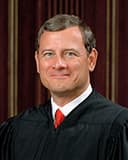
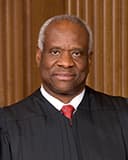
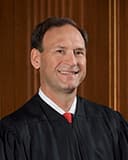
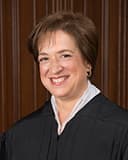


Decided May 14, 2026
Majority Opinion— Justice Sotomayor
The Supreme Court unanimously held that when a federal court has already stayed a lawsuit to send the parties to arbitration under Section 3 of the Federal Arbitration Act (FAA), that same court retains jurisdiction to later confirm or vacate the resulting arbitration award under Sections 9 and 10 of the FAA—even if the motion to confirm or vacate does not, on its own, present an independent basis for federal jurisdiction. The case involved Adrian Jules, a former hotel employee who sued his employers in federal court alleging discrimination under federal and state law. The employers successfully moved to stay the case pending arbitration. After the arbitrator ruled against Jules, the employers returned to the same federal court to confirm the award, and Jules cross-moved to vacate it. Jules argued that under the Court's earlier decision in Badgerow v. Walters, the court lacked jurisdiction because the confirm-or-vacate motions did not independently raise a federal question or satisfy diversity requirements.
The Court, in an opinion by Justice Sotomayor, distinguished this situation from Badgerow. In Badgerow, the parties had never filed a lawsuit in federal court—the only thing before the court was a freestanding motion to confirm or vacate an arbitration award, and there was no underlying federal case to supply jurisdiction. Here, by contrast, Jules himself had filed federal claims in federal court, giving the court jurisdiction from the start. Nothing in the FAA stripped that jurisdiction away while the case was stayed for arbitration. The Court emphasized that its recent decision in Smith v. Spizzirri, which held that courts must stay (not dismiss) cases sent to arbitration, was designed precisely so courts could maintain a supervisory role through the end of the process, including confirmation or vacatur of the award.
The practical effect of the ruling is significant: parties who have their federal lawsuits stayed pending arbitration can return to the same federal court afterward to resolve disputes about the arbitration award, without needing to start a brand-new case in state court. The Court rejected concerns that this would encourage parties to file sham federal lawsuits just to create a jurisdictional foothold, noting there was no evidence of such abuse and that the alternative—forcing parties into duplicative state-court proceedings—would be wasteful and could lead to inconsistent rulings.
Oral Argument Recording
Via Spotify ↗
Background & Facts
Adrian Jules filed suit against Andre Balazs Properties and related entities, raising claims that arose in the context of a hospitality or lodging business. The case was litigated in the United States District Court for the Southern District of New York and subsequently appealed to the United States Court of Appeals for the Second Circuit, which issued a decision on April 25, 2025. The Second Circuit's decision prompted Jules to petition for a writ of certiorari, arguing that the lower court's ruling involved significant legal questions warranting Supreme Court review.
The specific facts and nature of Jules's claims—including whether they involve employment discrimination, guest treatment, contract disputes, or other business-related grievances—are contained in the sealed materials and electronic record filed with the Court. The litigation has proceeded through standard appellate procedures, with both parties submitting briefs and the Court ultimately granting the petition on December 5, 2025.
Why This Case Matters
This case will clarify important legal principles governing how business operators must treat customers or clients and what remedies are available when disputes arise. The Supreme Court's decision could impact hospitality, retail, and other service industries nationwide by establishing or refining standards for fair treatment, discrimination liability, and damages. The grant of certiorari indicates that the Court found the Second Circuit's approach to the relevant legal questions sufficiently important or unsettled to warrant its review, suggesting that the decision may resolve a circuit split or address an underdeveloped area of law affecting how businesses operate and what legal obligations they owe to those they serve.
The Circuit Split
The circuits have diverged on the standards applicable to discrimination claims arising in hospitality and service industry contexts, including questions about liability and remedies. SCOTUS granted cert to resolve the split, indicating the Second Circuit's approach was sufficiently contested.
Broader liability standards
Adopts broader standards for establishing discrimination liability in hospitality or service establishments, with more expansive remedies available.
Narrower liability standards
Applies more restrictive standards for discrimination claims in business establishments, limiting the scope of liability and available damages.
The Arguments
Jules contends that the Second Circuit erred in its legal analysis and application of law to his claims against Andre Balazs Properties. He argues that the lower court's decision should be reversed and that the Supreme Court should establish or clarify the appropriate legal standard for evaluating his claims.
- The Second Circuit's decision conflicts with or misapplies established precedent
- The legal questions presented are of national importance and warrant Supreme Court resolution
- Jules was wrongly denied relief under the applicable legal standards
- Clarification from the Supreme Court is necessary to ensure consistent application of law across circuits
Andre Balazs Properties argues that the Second Circuit correctly decided the case and that the Supreme Court should not review it. The respondents contend that the lower court's analysis was legally sound, that no circuit split or unsettled legal question exists, and that the petition should be denied or, if reviewed, affirmed.
- The Second Circuit's decision accords with established legal precedent and prior Supreme Court rulings
- Jules's claims lack legal merit under applicable standards
- No circuit split or novel legal question justifies Supreme Court intervention
- Affirming the Second Circuit decision serves judicial efficiency and settled law
Precedent Cases Cited
Civil Rights Act of 1964
42 U.S.C. § 2000 et seq.
If Jules's claims involve discrimination based on protected characteristics in public accommodations or employment, the Civil Rights Act establishes the foundational statutory framework and standards governing such disputes.
Title VII of the Civil Rights Act of 1964
42 U.S.C. § 2000e et seq.
If Jules asserts employment discrimination claims, Title VII establishes the standards for proving discrimination and the remedies available.
Americans with Disabilities Act of 1990
42 U.S.C. § 12101 et seq.
If Jules's claims involve disability discrimination in a hospitality setting, the ADA governs the scope of accommodations and protections in public accommodations.
Tex. Dep't of Housing & Community Affairs v. Inclusive Communities Project, Inc.
576 U.S. 521
Relevant to establishing the scope of liability for disparate impact claims and the standards for proving discriminatory practices in the operation of businesses or facilities.
Burlington N. & Santa Fe Ry. Co. v. White
548 U.S. 53
If retaliation claims are involved, this precedent establishes the framework for evaluating retaliation under civil rights statutes.
42 U.S.C. § 1983
42 U.S.C. § 1983
If Jules's claims involve state action or government conduct, this statute may provide a cause of action for constitutional violations by persons acting under color of state law.
Legal Terminology
Analysis & Opinions
The Supreme Court ruled in Jules v. Andre Balazs Properties that federal courts have the authority to confirm arbitration awards in cases that are already pending in federal court. This decision clarifies the scope of federal court power under the Federal Arbitration Act, following the 2022 Badgerow v. Walters decision which had limited freestanding federal suits to confirm or vacate arbitration awards. The ruling is significant for arbitration practice as it establishes that cases already in the federal system can proceed to confirmation there.