Chevron USA v. Plaquemines Parish
Whether state-law environmental claims against oil companies for crude oil production are removable to federal court under the Federal Officer Removal Act because the production was 'related to' the companies' refining of aviation gasoline under federal contracts during World War II.
The Decision
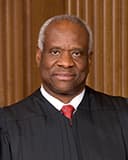


Roberts
·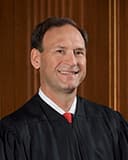
Alito
·
Sotomayor
·
Kagan
·
Gorsuch
·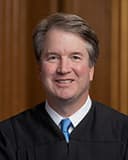
Kavanaugh
·
Barrett
·Decided April 17, 2026
Majority Opinion— Justice Thomas
The Supreme Court ruled that Chevron could move ("remove") a Louisiana state-court environmental lawsuit to federal court under the federal officer removal statute. The case arose from suits filed by Louisiana parishes alleging that oil companies, including Chevron, violated state coastal zone laws by producing crude oil without proper permits—including during World War II. Chevron argued the lawsuit should be heard in federal court because its wartime crude-oil production was connected to its federal contract to refine that oil into aviation gasoline ("avgas") for the U.S. military. The key legal question was whether the state lawsuit was "for or relating to" Chevron's federally directed wartime refining work.
The Court held that it was. Writing for a seven-justice majority, Justice Thomas explained that the phrase "relating to" is broad and covers connections that are indirect, but it is not limitless—the connection cannot be "tenuous, remote, or peripheral." Here, the relationship was close: Chevron produced crude oil in Louisiana fields that the federal government had identified as critical to the war effort, much of that oil went directly to Chevron's own avgas refinery, and the specific production methods the parishes challenged (vertical drilling, using canals, and earthen pits) were ones that helped maximize wartime oil output or complied with federal directives. The Court rejected the Fifth Circuit's reasoning that the refining contract had to specifically tell Chevron how to obtain crude oil, and also rejected the argument that the government's role as an intermediary in allocating crude oil broke the connection between production and refining.
The practical effect of the decision is that Chevron's case—and potentially similar cases by the parishes against other oil companies—can be heard in federal court rather than Louisiana state court. The Court vacated the lower court's ruling and sent the case back for further proceedings.
Concurring Opinions
Justice Jackson
Justice Jackson agreed that the Fifth Circuit's ruling should be overturned but disagreed with the majority's interpretation of the "relating to" language. She argued that when Congress added "or relating to" to the removal statute in 2011, it did so as a minor "conforming amendment" designed to clarify that presuit discovery proceedings (like subpoenas) targeting federal officers could be removed to federal court. Drawing on legislative history, she concluded that Congress did not intend to weaken the longstanding requirement of a "causal nexus"—meaning the federal duties must be a but-for cause of the challenged conduct—and replace it with the majority's broader "indirect relationship" standard.
Despite this disagreement about the legal standard, Justice Jackson reached the same result on the facts. She found that Chevron's federal avgas contracts were indeed a but-for cause of its crude-oil production, since Chevron pumped oil from Louisiana fields specifically to meet the demands of those wartime contracts. She agreed with the majority that the Fifth Circuit went too far in requiring a specific contractual directive about oil production, since a federal contract can be a but-for cause of conduct without explicitly ordering that particular activity.
Oral Argument Recording
Via Spotify ↗
Background & Facts
Louisiana parishes sued major oil companies, including Chevron, in state court for environmental damage caused by oil production activities—particularly the dumping of billions of gallons of produced water from oil wells into coastal marshes. The parishes sought to hold the companies liable under Louisiana law and restore the land to its original condition. The oil companies attempted to remove the cases to federal court under the Federal Officer Removal Act, arguing that their crude oil production was connected to their refining of aviation gasoline (avgas) under federal contracts during World War II.
During WWII, the federal government contracted with vertically integrated oil companies to refine avgas, a critical military product. The Petroleum Administration for War (PAW) extensively regulated oil production, including drill spacing and production levels. The avgas contracts even pegged the government's purchase price to the price of crude oil. The oil companies argue these connections make their production activities 'related to' acts performed under federal authority. One case that went to trial in state court resulted in a roughly $744 million verdict against Chevron.
The Fifth Circuit ruled against removal, holding that the avgas refining contracts did not contain specific directives regarding crude oil production, and therefore the production activities were not sufficiently connected to the federal contracts. The Supreme Court took the case to resolve the meaning of 'related to' in the Federal Officer Removal Act as amended in 2011.
Why This Case Matters
This case will define the scope of the 'related to' language Congress added to the Federal Officer Removal Act in 2011, potentially expanding or constraining the ability of federal contractors to move state-court lawsuits into federal court. A broad reading could allow any federal contractor whose sued-over conduct is connected to its government contract work to remove to federal court, while a narrow reading would limit removal to cases where the specific conduct was directed by the federal government.
The decision has major implications for climate change and environmental litigation brought by states and localities against fossil fuel companies, for military contractors facing state-court tort suits, and more broadly for the balance between state and federal courts. The United States government, retired military leaders, and multiple states have weighed in, with concerns that a narrow interpretation could discourage private parties from contracting with the federal government for fear of being stuck in potentially hostile state courts.
The Arguments
Congress's 2011 addition of 'related to' in the Federal Officer Removal Act is a broad, capacious term that encompasses their crude oil production activities because crude oil was the indispensable ingredient in the avgas they refined under federal contract. The contracts themselves linked avgas to crude by pegging the government's purchase price to crude oil prices, and enjoining their production would have directly harmed the war effort.
- The 'related to' language has been interpreted by the Court in over a dozen cases as a broad term meaning 'connected to' or 'associated with,' and Congress added it knowing this.
- Crude oil was the absolute indispensable component of avgas, and the contracts themselves drew the connection by pegging avgas prices to crude oil prices.
- If Petitioners' production had been enjoined during WWII, the federal government's war effort would have suffered directly.
- Alternatively, the pervasive wartime regulation by the Petroleum Administration for War made production itself an activity 'under' federal authority, not mere regulation as in Watson.
Key Exchanges with Justices
Justice Jackson
“Isn't the Fifth Circuit's requirement of a contractual directive regarding crude oil production even more stringent than a but-for causation test?”
It revealed potential agreement that the Fifth Circuit's 'contractual directive' test was too narrow and unsupported by the statute.
Justice Kagan
“Isn't it a bizarre outcome to put vertically integrated oil companies in federal court while oil-producing companies without refining capacity remain in state court, when the entire suit is about what both sets of companies have in common?”
It suggested the Court was troubled by the differential treatment and might be receptive to the Solicitor General's broader theory covering all wartime producers.
Justice Barrett
“Should we remand for the Fifth Circuit to address the colorable federal defense and whether the federal officer must be current, or should we resolve the case ourselves?”
It revealed concern about the breadth of what the Court would actually decide and whether important sub-issues remained open.
Petitioners acted under a federal officer in refining avgas, and their suits relate to that act because they target production of the crude oil that was the key ingredient in avgas. Alternatively, the Petroleum Administration for War's unique supervisory role over crude oil production during WWII means Petitioners were also acting under federal authority in producing crude.
- The statute's 'relating to' language, added after over a dozen Court decisions calling it broad, cannot be limited to pre-suit discovery proceedings as some amici suggest.
- The test should ask whether enjoining the charged conduct would have impaired the defendant's ability to assist the federal government.
- A narrow interpretation threatens military contracting relationships and could discourage private parties from assisting the government.
- The Fifth Circuit's 'contractual directive' test appears nowhere in the statute or the Court's prior cases and is deeply unworkable.
Key Exchanges with Justices
Justice Gorsuch
“You said 'directly impede' while Mr. Clement took the word 'direct' out—which is it, and couldn't interference in one product line always be claimed to impair a government contract in another?”
It revealed the difficulty of articulating a workable limiting principle for the broad 'relating to' standard.
Justice Jackson
“Congress described the existing causal nexus requirement in the House report and testimony consistently said the standard wasn't being changed—why doesn't that evidence show Congress wasn't trying to change the standard?”
It showed at least one Justice was skeptical that Congress intended a dramatic expansion of the removal statute.
Justice Kagan
“Each of the three prongs sets a really low bar—including the colorable federal defense prong which is barely above frivolous—so how does this test actually limit anything?”
It revealed concern that the multi-prong test provides insufficient gatekeeping when each prong is individually easy to satisfy.
The statute requires that the charged acts—what the complaint actually alleges—must have been committed under a federal officer. The complaints charge crude oil production activities like dumping produced water into marshes, which were not directed by any federal contract. The avgas refining contracts, which occurred 300 miles away at refineries, have no connection to the specific misconduct alleged.
- Watson holds that a defendant may remove only if, in committing the charged acts, he was acting under a federal officer—and Petitioners abandoned this argument below.
- There is no but-for causation: 70% of crude oil during WWII went to civilian use, and companies would have engaged in the same production practices without avgas contracts.
- The PAW's own history describes its treatment of oil production as subject to 'a minimum of regulation,' leaving production decisions largely to state agencies.
- The Rozel trial produced no evidence that WWII federal direction played any role, and Chevron raised no preemption defense at trial—undercutting the claim of a colorable federal defense.
Key Exchanges with Justices
Justice Gorsuch
“You don't argue that 'relating to' is a mere conforming amendment with no effect—you agree those words have meaning and change the statute?”
Respondents conceded the words have meaning and broaden the statute, narrowing the dispute to how the broadened standard applies to these facts.
Justice Barrett
“Didn't the parishes' counsel represent you before the Fifth Circuit, meaning any concession on the 'acting under' prong binds you too?”
It suggested the Court viewed the 'acting under' prong as potentially conceded, weakening a key pillar of Respondents' argument.
Justice Thomas
“As a practical matter, what difference does it make to be in state court versus federal court?”
Respondents acknowledged wanting state court experts on state law, implicitly conceding the forum choice matters strategically.
Precedent Cases Cited
Watson v. Philip Morris Companies, Inc.
551 U.S. 142
Central precedent on the meaning of 'acting under' a federal officer. Respondents relied heavily on Watson's statement that a defendant may remove only if the charged acts were committed while acting under a federal officer.
Morales v. Trans World Airlines, Inc.
504 U.S. 374
Cited for the proposition that 'relating to' is a very broad term of substantial breadth, which Congress used knowing this Court's interpretation when it amended the Federal Officer Removal Act in 2011.
Tennessee v. Davis
Cited as foundational precedent establishing the objectives of federal officer removal—protecting federal government operations from interference by state courts—going back nearly 150 years.
Burgess v. United States
553 U.S. 124
Cited by Petitioners and the Fifth Circuit for the proposition that even a conforming amendment is a real amendment whose words must be given their full effect.
Latiolais v. Huntington Ingalls, Inc. (Latiolais II)
Fifth Circuit en banc decision cited as the prototypical example of how the 2011 'relating to' amendment expanded removal in asbestos failure-to-warn cases against military contractors.
BP p.l.c. v. Mayor and City Council of Baltimore
593 U.S. 230
Cited as the basis for appellate review in federal officer removal cases under the 2011 amendments to Section 1447(d), showing Congress addressed broader issues than just pre-suit discovery.
Ford Motor Co. v. Montana Eighth Judicial District Court
592 U.S. 351
Justice Alito's concurrence was cited by the government for its discussion of causation in a broader sense in the personal jurisdiction context, analogizing to the relationship between production and refining here.
Willingham v. Morgan
395 U.S. 402
Cited as precedent supporting the argument that the statute protects agents of the federal government acting within the scope of their authority, and for the principle of liberal construction of the removal statute.
Legal Terminology
Analysis & Opinions
The Supreme Court unanimously ruled in favor of oil and gas companies in a lawsuit over damage to the Louisiana coast, sending the case back to federal courts. Several Louisiana parishes had sought to hold the companies liable, but the Court sided with the companies on the jurisdictional question of where the case should be heard.
The Supreme Court sided with oil companies in Louisiana coastal lawsuits, allowing the cases to potentially be moved from state courts to more industry-friendly federal venues. The ruling addresses the companies' efforts to have environmental damage claims heard in federal rather than state court.
The Supreme Court handed a victory to Chevron and other major oil companies in a case involving environmental damage to Louisiana's coastal wetlands. The decision calls into question a $745 million judgment against Chevron for restoring wetlands damaged as far back as World War II.