Cox Communications v. Sony Music Entertainment
What standard of culpability must be met for an Internet Service Provider to be held liable for contributory copyright infringement when it continues providing service to subscribers known to be infringing?
The Decision
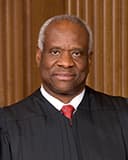

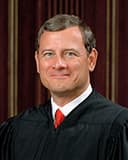
Roberts
·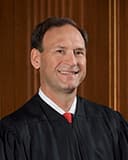
Alito
·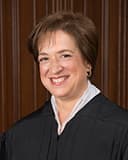
Kagan
·
Gorsuch
·
Kavanaugh
·
Barrett
·
Jackson
·Decided March 25, 2026
Majority Opinion— Justice Thomas
The Supreme Court ruled that Cox Communications, an internet service provider (ISP), is not liable for copyright infringement committed by its subscribers simply because it continued providing internet service to users it knew were infringing copyrights. Sony Music and other major music copyright holders had won a $1 billion jury verdict against Cox, arguing that Cox contributed to its subscribers' infringement by not cutting off their internet access after receiving over 163,000 notices identifying infringing accounts. The Fourth Circuit Court of Appeals had upheld this theory, finding that knowingly supplying a service to someone who will use it to infringe copyrights is enough for contributory liability.
The Supreme Court reversed, holding that under its prior decisions, a service provider can only be held contributorily liable for users' copyright infringement in two ways: (1) if it actively induced or encouraged the infringement, such as by marketing its service as a tool for piracy, or (2) if the service itself is tailored to infringement and has no substantial lawful uses. Cox did neither — it did not encourage subscribers to pirate music, and internet service obviously has enormous legitimate uses. The Court emphasized that mere knowledge that some users will misuse a service, combined with a failure to stop them, is not enough to make the provider a copyright infringer.
The practical effect of this decision is significant for internet service providers and the broader tech industry. ISPs cannot be held liable as contributory copyright infringers solely for continuing to provide internet access to subscribers known to engage in piracy. The Court also rejected Sony's argument that the Digital Millennium Copyright Act's safe harbor provision — which protects ISPs that terminate repeat infringers — would be rendered meaningless by this ruling, noting that the DMCA creates defenses but does not itself impose liability on ISPs who serve known infringers.
Concurring Opinions
Justice Sotomayor
Justice Sotomayor, joined by Justice Jackson, agreed that Cox should not be held liable but disagreed with the majority's reasoning. She argued that the majority was wrong to limit secondary copyright liability to only the two theories — inducement and providing a service tailored to infringement — that the Court had previously applied. She pointed out that the Court's earlier decisions in Sony and Grokster expressly left the door open to other common-law theories of secondary liability, such as aiding and abetting. By shutting that door, she warned, the majority effectively eliminated any realistic threat of secondary liability for ISPs, rendering the DMCA's safe harbor provision pointless and destroying the incentive structure Congress created to encourage ISPs to take steps against piracy on their networks.
Nonetheless, Justice Sotomayor concluded that Cox could not be held liable even under a common-law aiding-and-abetting theory. Drawing on recent decisions in Twitter v. Taamneh and Smith & Wesson v. Mexico, she explained that aiding and abetting requires proof that the defendant intended to help the wrongful conduct succeed — not mere indifference. Here, Cox lacked the specific knowledge needed to establish that intent: when Cox received infringement notices, it learned only which internet connection was involved, not which individual user was responsible. Given that many connections serve multiple users (households, dormitories, regional ISPs), Cox could not know who was actually committing infringement, making it impossible to infer that Cox intended to help any particular person pirate music.
Oral Argument Recording
Via Spotify ↗
Background & Facts
Cox Communications, a major ISP serving millions of homes and businesses, received approximately 5.7 million notices from copyright holders identifying subscribers engaged in copyright infringement through peer-to-peer file sharing. Cox created an anti-infringement program that sent hundreds of warnings daily and suspended accounts roughly 67,000 times during the relevant period, which it claims stopped infringement by 98% of accused infringers. However, about 1% of its subscriber base continued to infringe, and Cox did not terminate many repeat offenders.
Sony Music and other major record labels sued Cox for contributory copyright infringement, arguing that Cox knowingly continued providing Internet service to habitual infringers. Internal Cox emails showed employees expressing contempt for the DMCA, including one stating 'F the DMCA.' A jury found Cox liable and awarded a billion-dollar verdict. The Fourth Circuit affirmed, holding that Cox's knowledge that subscribers were substantially certain to continue infringing was sufficient for contributory liability.
Cox appealed, arguing that knowledge alone cannot support contributory liability and that continuing to provide generic Internet service is not an affirmative culpable act. The case raises fundamental questions about when providers of basic communications infrastructure can be held secondarily liable for their users' copyright infringement.
Why This Case Matters
This case could fundamentally reshape the relationship between copyright holders and Internet Service Providers. If Cox wins, ISPs would have little legal incentive to police copyright infringement on their networks, potentially rendering the DMCA's safe harbor provisions meaningless since there would be no underlying liability to seek shelter from. If Sony wins, ISPs could face massive liability for failing to terminate repeat infringers, raising concerns about cutting off Internet access for entire universities, hotels, or regional networks based on the actions of a few users.
The decision will also clarify the standard for secondary liability across multiple areas of law, as the Court must reconcile its recent decisions in Twitter v. Taamneh and Smith & Wesson with longstanding copyright doctrines from Sony and Grokster. The ruling will define whether 'purpose' or mere 'knowledge with substantial certainty' is required for contributory infringement, affecting not just copyright but potentially all forms of aiding-and-abetting liability in civil cases.
The Arguments
Providing generic Internet service to the general public on the same terms cannot give rise to contributory copyright liability, even with knowledge that some subscribers are infringing. Contributory liability requires affirmative culpable conduct demonstrating a purpose to foster infringement, not mere non-feasance in failing to terminate users.
- Twitter v. Taamneh explicitly held there is no duty for communication-providing services to terminate customers after discovering illegal use
- Cox's anti-infringement program sent hundreds of daily warnings, suspended accounts 67,000 times, and stopped 98% of accused infringers—far exceeding any 'simple measures' test
- Most top repeat-infringer accounts were regional ISPs, universities, and hotels serving thousands—termination would cut off entire communities from the Internet
- The DMCA safe harbor was enacted when liability rules were unknown and Congress directed that failure to satisfy it 'shall not adversely bear on liability'
Key Exchanges with Justices
Justice Jackson
“If a customer tells Cox they're addicted to infringing, have been sued before, and Cox is their only Internet option, would selling to them still create no liability?”
Rosenkranz confirmed no liability even in this extreme scenario, revealing the breadth of Petitioners' position.
Justice Kagan
“If you win, what would the DMCA safe harbor provision mean? It would seem to do nothing.”
Rosenkranz conceded the safe harbor would effectively be doing nothing under his proposed rule, a significant admission.
Justice Gorsuch
“The jury instructions here didn't contain purpose, just knowledge—so shouldn't we reverse on that narrow basis?”
Rosenkranz agreed with this syllogism, revealing a potential narrow path the Court could take.
Secondary liability in copyright law requires acting with the purpose of facilitating infringement. Because Cox provided the same generic Internet service to infringers and non-infringers alike, there is no basis for inferring such a purpose, and the case should be reversed.
- Both copyright law (Grokster) and general aiding-and-abetting law (Twitter, Smith & Wesson) require that a secondary actor participate in wrongdoing as something he 'wishes to bring about'
- Patent law codifies only two bases for secondary liability—inducement and selling specially suited devices—neither of which encompasses selling generic multi-use services
- The distinction between targeted assistance and provision of general-purpose technology is critical: selling to the mass public doesn't support inferring purpose
- Terminating all Internet access based on infringement is extremely overbroad given the centrality of the Internet and First Amendment concerns
Key Exchanges with Justices
Justice Barrett
“Under your theory, would Twitter not be liable for facilitating child trafficking if it knew a particular account was being used for that purpose?”
Stewart confirmed no secondary liability even in that scenario, though noted direct liability theories could apply when infringing content actually appears on a platform.
Justice Gorsuch
“At common law there were many ways to infer purpose—are you asking us to limit it to the two patent law categories for ISPs?”
Stewart confirmed that for ISPs providing generic services to mass audiences, liability should be limited essentially to the patent law categories.
Justice Sotomayor
“Aren't you worried that a holding this broad would be a disincentive for ISPs to provide any aid to copyright holders?”
Stewart acknowledged 'not much economic incentive would be left' but questioned whether that was a bad thing, given the overbreadth of terminating Internet access.
A classic form of material contribution is providing the means of infringement to a specific known infringer with knowledge that infringement is substantially certain to follow. Cox knowingly continued providing service to habitual infringers in perpetuity, which satisfies the intent standard under common law when combined with its demonstrated contempt for the DMCA.
- The Restatement (Second) of Torts Section 8A recognizes two ways to show intent: purpose/design, or acting with knowledge that results are substantially certain—both satisfy intentional tort requirements
- Inwood Laboratories established that providing the means of infringement to a specific known infringer creates secondary liability in trademark law, which copyright law should follow
- Adopting Cox's rule would render the DMCA safe harbor a dead letter and eliminate incentives for ISPs and copyright holders to cooperate
- 95% of the relevant accounts were residential customers, undermining Cox's argument that termination would primarily affect large multi-user institutions
Key Exchanges with Justices
Justice Kagan
“Twitter said five times that liability requires seeking by your action to make it occur. You fail on the non-feasance/misfeasance distinction, the equal treatment distinction, and the purpose requirement.”
This revealed that even if the Court rejects Cox's extreme position, it may still apply a purpose standard that would be difficult for Sony to meet.
Justice Gorsuch
“The Fourth Circuit applied its test 'in gross' rather than requiring specific knowledge of individual infringing users—that's not what your standard requires either, is it?”
Clement struggled to defend the Fourth Circuit's approach, suggesting even under his preferred standard a remand might be necessary.
Justice Alito
“How does your position work for a university account shared by 70,000 users? What is the ISP supposed to do?”
Clement's answers about hotels throttling speeds and having conversations with universities appeared to weaken his position on administrability.
Precedent Cases Cited
Twitter, Inc. v. Taamneh
598 U.S. 471
Central to both sides' arguments. Petitioners and the government cited it for the principle that communication-providing services have no duty to terminate customers and that passive non-feasance cannot create secondary liability.
Metro-Goldwyn-Mayer Studios Inc. v. Grokster, Ltd.
545 U.S. 913
Cited for its holding that liability cannot be predicated on 'mere failure to take affirmative steps to prevent infringement' and for establishing inducement as a basis for contributory copyright liability.
Sony Corp. of America v. Universal City Studios, Inc.
464 U.S. 417
Cited for borrowing the staple article of commerce doctrine from patent law and for recognizing that selling a device capable of substantial non-infringing uses does not create contributory liability.
Smith & Wesson Brands, Inc. v. Estados Unidos Mexicanos
Cited extensively for applying Twitter's aiding-and-abetting framework to product sellers, distinguishing between equivocal sales to the general public and targeted assistance to known wrongdoers.
Halberstam v. Sestak
Cited by Respondents as the common law standard for aiding-and-abetting liability, which uses knowledge rather than purpose as the intent element, with multiple factors for substantial assistance.
Inwood Laboratories, Inc. v. Ives Laboratories, Inc.
456 U.S. 844
Cited by Respondents as establishing in trademark law that providing the means of infringement to a specific known infringer creates secondary liability, which they argue should apply to copyright.
Henry v. A.B. Dick Co.
224 U.S. 1
Cited by Respondents for the proposition that selling a product with knowledge it would be used to infringe a patent supports contributory liability; the government countered that the facts showed specially suited goods and inducement.
Central Bank of Denver, N.A. v. First Interstate Bank of Denver, N.A.
511 U.S. 164
Cited by Petitioners and Justice Gorsuch as an example of the Court refusing to infer secondary liability from a statute that does not explicitly provide for it, counseling caution in expanding implied causes of action.