Bondi v. Lau
What are the proper standards and limits for prosecutorial discretion and immigration enforcement actions challenged on constitutional or statutory grounds?
The Decision
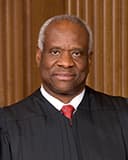
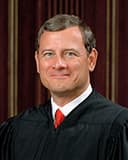
Roberts
·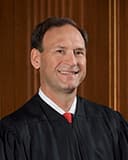
Alito
·
Sotomayor
·
Kagan
·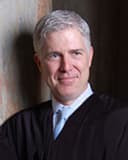
Gorsuch
·
Kavanaugh
·
Barrett
·
Decided June 23, 2026
Majority Opinion— Justice Thomas
The Supreme Court ruled 6–3 that a border officer does not need "clear and convincing" evidence that a lawful permanent resident (green card holder) committed a crime involving moral turpitude before treating that person as an applicant for admission rather than as someone already admitted to the country. The case involved Muk Choi Lau, a Chinese citizen and lawful permanent resident who left the U.S. for China while facing a criminal charge in New Jersey. When he returned, a border officer declined to treat him as already admitted and instead paroled him into the country. After Lau pleaded guilty, the government initiated removal proceedings charging him as inadmissible.
Justice Thomas, writing for the majority, explained that the process involves two steps: first, the government may treat a returning green card holder as seeking admission if he has committed a qualifying crime; second, the government must show the person is actually inadmissible (which typically requires a conviction). The Court found that nothing in the immigration statute requires the border officer to have clear and convincing evidence at the border that the person committed a crime. The majority noted that even under the Board of Immigration Appeals' own rules, the government's burden of proof applies at the later removal hearing, not at the border — and here, Lau's guilty plea satisfied that burden. The Court also rejected Lau's argument that only a conviction (not mere commission of a crime) could trigger the exception, finding the statute's plain language refers to having "committed" a crime, not having been convicted. The case was sent back to the Second Circuit to decide a remaining issue: whether Lau's specific crime qualifies as one involving moral turpitude.
Dissenting Opinions
Justice Jackson
Justice Jackson, joined by Justices Sotomayor and Kagan, dissented, arguing that the majority got the sequencing wrong. She emphasized that the statute says a lawful permanent resident "shall not be regarded as seeking an admission" unless one of six specific exceptions applies. In her view, this means the government must determine that an exception applies before stripping a green card holder of his already-admitted status at the border — not months or years later at a removal hearing. She pointed out that the statute's use of the present-perfect tense ("has committed," "has been absent") shows Congress intended the determination to be made by border officers at the time of entry, not retrospectively by an immigration judge.
Jackson also highlighted the serious real-world consequences of being demoted from already-admitted status. In Lau's case, his green card was confiscated and replaced with a temporary paper document that made it harder to work, open bank accounts, and prove his status — a limbo that lasted 14 years. She argued that the majority's ruling hands the government a "massive blank check" to strip returning green card holders of their status at the border without justification and backfill the evidence later, effectively swallowing the statutory default rule that Congress created to protect lawful permanent residents.
Oral Argument Recording
Via Spotify ↗
Background & Facts
This case arises from immigration enforcement actions and related constitutional or statutory challenges. Muk Choi Lau brought claims against Pamela Bondi, who serves as Attorney General, challenging certain government decisions or enforcement measures. The case proceeded through the lower courts, ultimately reaching the United States Court of Appeals for the Second Circuit, which issued a decision on March 4, 2025 that prompted Bondi's petition for Supreme Court review.
The Second Circuit's decision was upheld after rehearing was denied on July 17, 2025, leading Bondi to seek Supreme Court intervention. The case involves significant questions about the scope of executive authority, constitutional protections, or statutory constraints on government enforcement actions. Both parties have filed comprehensive briefs outlining their legal positions.
Why This Case Matters
This case presents important issues regarding the boundaries of executive authority in immigration and enforcement matters. The Supreme Court's decision could clarify the standards governing prosecutorial and administrative discretion, potentially affecting how federal agencies conduct enforcement operations and the extent to which such actions are subject to judicial review. Given that the Solicitor General is personally handling the petitioner's case, the decision will likely have broad implications for federal law enforcement practices and the balance between executive power and constitutional or statutory constraints on that power.
The Arguments
Bondi argues that the Second Circuit's decision improperly restricted the scope of prosecutorial and executive discretion in enforcement matters. She contends that the lower court's ruling either misapplied controlling legal standards or exceeded judicial authority to review decisions that lie within the executive branch's constitutional and statutory purview.
- Executive branch decisions on enforcement priorities and resource allocation merit substantial deference from courts
- The Second Circuit's decision conflicts with established precedent on the limits of judicial review of executive action
- Bondi's position reflects the government's traditional authority over law enforcement and immigration matters
- Reversal is necessary to restore proper separation of powers principles
Lau contends that the Second Circuit correctly identified constitutional or statutory limits on executive enforcement discretion and that prosecutorial decisions must comply with applicable legal constraints. Lau argues that the lower court's decision properly checked executive overreach and protected individual rights or statutory protections.
- Prosecutorial discretion is not unlimited and must operate within constitutional and statutory boundaries
- The Second Circuit correctly applied the relevant legal standards to the facts presented
- Executive enforcement actions remain subject to meaningful judicial review to ensure legal compliance
- The decision protects important individual rights or statutory protections against arbitrary government action
Precedent Cases Cited
Chevron U.S.A., Inc. v. Natural Resources Defense Council, Inc.
467 U.S. 837
Establishes the framework for judicial review of agency interpretations and discretionary decisions, directly relevant to the deference owed to executive enforcement choices.
Massachusetts v. EPA
549 U.S. 497
Addresses the limits on agency discretion and the circumstances under which agency decisions are subject to judicial review, relevant to whether enforcement decisions can be challenged.
Heckler v. Chaney
470 U.S. 821
Establishes that decisions not to enforce or prosecute are generally committed to agency discretion and presumptively unreviewable under the Administrative Procedure Act.
United States v. Brignoni-Ponce
422 U.S. 873
Establishes constitutional constraints on enforcement discretion and the requirement that law enforcement actions comply with Fourth Amendment and other constitutional protections.
Department of Commerce v. New York
139 S. Ct. 2551
Addresses judicial review of executive decisions and the requirement that agency action not be arbitrary or capricious, relevant to challenging enforcement discretion.
Lincoln v. Vigil
508 U.S. 182
Addresses the standard for judicial review of agency decisions allocating resources and setting enforcement priorities, directly applicable to the discretion issues in this case.
Legal Terminology
Analysis & Opinions
The Supreme Court ruled 6-3 that federal immigration law does not require border officers to have "clear and convincing evidence" that green card holders committed a disqualifying crime before denying them reentry. The decision, written by Justice Thomas, gives immigration officers broader discretion to refuse admission to lawful permanent residents accused of criminal activity.
Criminal law commentator Rory Little offers a nuanced analysis of the current Supreme Court's composition and previews the case Blanche v. Lau (also referred to as Bondi v. Lau), a crimmigration case involving interpretation of immigration rules. After attending oral argument, Little suggests there is a narrow and straightforward path for the government to prevail. The article provides insights into how the justices may approach the intersection of criminal and immigration law.
The Supreme Court heard oral arguments in Blanche v. Lau, a case about how immigration officers classify lawful permanent residents accused but not yet convicted of crimes that could lead to deportation. The case involves Muk Choi Lau, a Chinese national and lawful permanent resident since 2007, and was argued against the backdrop of the Trump administration's immigration enforcement efforts. The justices spent approximately 90 minutes debating the rights of lawful permanent residents in this context.
The Supreme Court is set to hear oral arguments in a case concerning the rights of lawful permanent residents who are accused of committing crimes that could affect their immigration status. The case, styled as Blanche v. Lau, involves the due process protections available to green card holders facing removal proceedings.