Hikma Pharmaceuticals USA Inc. v. Amarin Pharma, Inc.
Whether the Federal Circuit properly applied patent law standards in evaluating pharmaceutical patent disputes involving generic drug approval and patent-related regulatory delays.
The Decision

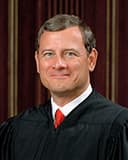
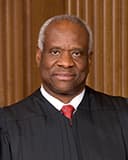
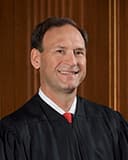

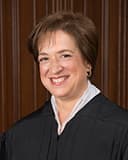

Decided June 4, 2026
Majority Opinion— Justice Jackson
The Supreme Court unanimously ruled in favor of Hikma Pharmaceuticals, holding that Amarin Pharma failed to adequately allege that Hikma actively encouraged doctors or pharmacists to use its generic drug in ways that would infringe Amarin's patents. The case involved Hikma's generic version of Amarin's drug Vascepa, which treats high triglycerides. While Vascepa was approved for two uses—treating severe hypertriglyceridemia (SH) and reducing cardiovascular risk (CV)—Hikma's generic was only approved for the SH use via a "skinny label" that carved out the still-patented CV use. Amarin sued, claiming that Hikma's label, website, patient leaflet, and press releases collectively encouraged medical providers to prescribe the generic for the patented CV use.
The Court found that Amarin's allegations fell short of the legal standard for "active inducement" of patent infringement. Under patent law, a company must take affirmative, purposeful steps to encourage others to infringe—it is not enough to show that doctors could possibly interpret vague statements as encouragement. The Court explained that many of Hikma's statements had obvious innocent explanations: the label matched Amarin's because the law required it; calling the product "generic Vascepa" was standard industry practice; and the website's broad therapeutic category and equivalence rating were not designed to push doctors toward the patented use. The Court also rejected reliance on omissions—such as not mentioning that the approved use was limited—because active inducement requires affirmative action, not silence. Finally, the Court found that press releases touting sales figures required too speculative a chain of events to constitute plausible encouragement to infringe.
The practical effect of this decision is significant for the generic drug industry. It reinforces that generic manufacturers can market their products using skinny labels without facing inducement liability based on routine, legally required, or vague statements. The ruling also corrects a trend in the Federal Circuit that had focused on whether doctors could read statements as encouragement, rather than on whether the manufacturer actively designed those statements to promote infringement.
Oral Argument Recording
Via Spotify ↗
Background & Facts
This case arises from a patent dispute in the pharmaceutical industry involving Hikma Pharmaceuticals and Amarin Pharma. The underlying controversy concerns patents related to pharmaceutical products and the regulatory pathways for drug approval. The case was litigated in the United States Court of Appeals for the Federal Circuit, which issued a decision on June 25, 2024, with rehearing denied on October 17, 2024.
The Federal Circuit's decision resolved questions about patent validity, infringement, or related intellectual property issues in the pharmaceutical context. The case has attracted significant amicus attention from scholars, industry groups, and the federal government, suggesting the decision could have broad implications for how patent law applies to drug development and approval processes. Hikma, a manufacturer seeking to bring products to market, challenged the Federal Circuit's decision, prompting Supreme Court review.
Why This Case Matters
This case addresses fundamental questions about how patent law interacts with pharmaceutical regulation and drug approval timelines. The Supreme Court's decision could affect the balance between patent holders' rights to exclude competitors and the public interest in timely access to generic medications. The involvement of the Solicitor General and amicus briefs from numerous scholars in law, economics, medicine, and business indicate this case has substantial implications for the pharmaceutical industry, patent law doctrine, and potentially public health policy. The decision may clarify how federal courts apply patent standards in cases involving FDA-regulated drugs and generic entry.
The Arguments
Hikma argues that the Federal Circuit erred in its patent analysis and that the lower court decision should be reversed or modified. The petitioner contends that the court misapplied relevant patent law standards in a manner that improperly favors patent holders and creates barriers to generic drug entry and competition.
- The Federal Circuit's decision deviates from established Supreme Court patent precedent and creates confusion in how patent law applies to pharmaceuticals
- The decision imposes unreasonable barriers to generic drug approval and competition in the pharmaceutical market
- Patent law standards should be applied consistently with the balance between innovation incentives and competitive access
- The lower court's analysis fails to account for the regulatory framework governing drug approval and patent disputes
Amarin defends the Federal Circuit's decision, arguing that it correctly applied existing patent law and that the Court should affirm. Amarin contends that patent rights deserve robust protection and that the Federal Circuit properly evaluated the patent claims at issue.
- The Federal Circuit's decision is consistent with established patent law precedent and correctly interprets patent statutes
- Patent holders are entitled to full protection of valid patent rights against generic competitors
- Hikma's arguments mischaracterize the lower court's reasoning and legal standards
- The decision does not create improper barriers but rather enforces legitimate patent protections
Precedent Cases Cited
35 U.S.C. Patent Statute
35 U.S.C.
Governs the substantive standards for patent validity, infringement, and remedies; central to resolving disputes over proper application of patent law in pharmaceutical cases.
Hatch-Waxman Act (Drug Price Competition and Patent Term Restoration Act)
35 U.S.C. §§ 271(e), 505(j)
Establishes the framework for generic drug approval and patent disputes in pharmaceuticals; directly relevant to the intersection of patent law and FDA drug approval processes.
eBay Inc. v. MercantileExchange.com, Inc.
547 U.S. 388
Establishes the four-factor test for obtaining injunctive relief in patent cases; relevant to remedies and relief standards applicable in pharmaceutical patent disputes.
Alice Corporation Pty. Ltd. v. CLS Bank International
573 U.S. 208
Establishes framework for determining patent-eligible subject matter under 35 U.S.C. § 101; potentially relevant to questions about what pharmaceutical innovations qualify for patent protection.
Merck Sharp & Dohme Corp. v. Gnosis S.p.A.
808 F.3d 829
Federal Circuit decision addressing patent law standards in pharmaceutical cases; directly relevant as a Circuit precedent on issues likely discussed in this appeal.
Pneumo Abatement Technology, Inc. v. RJ Lee Group, Inc.
651 F.3d 1375
Addresses standards for patent claim interpretation and infringement analysis; relevant to the substantive patent law questions before the Court.
Legal Terminology
Analysis & Opinions
The Supreme Court unanimously ruled in Hikma Pharmaceuticals USA v. Amarin Pharma that generic pharmaceutical manufacturers cannot be held liable for patent infringement based on the prescribing decisions of doctors or pharmacists. Justice Ketanji Brown Jackson wrote the opinion, which came quickly after oral arguments in April, reflecting broad agreement among the justices.
The Supreme Court heard oral arguments in Hikma Pharmaceuticals USA v. Amarin Pharma, a case about whether generic drug manufacturers can be held liable for patent infringement based on pharmacists' independent decisions to prescribe their products for patented uses. The justices appeared skeptical of holding Hikma responsible for the actions of pharmacists it does not control.
The Supreme Court will hear Hikma Pharmaceuticals USA v. Amarin Pharma, a case about patent infringement involving a heart disease medication called Vascepa and its generic substitute. The central question is how difficult it should be to hold a generic manufacturer liable when pharmacists dispense its product for a patented use. Lower courts ruled on the evidentiary standards for establishing such liability.