Pitchford v. Cain
Whether the Mississippi Supreme Court unreasonably applied AEDPA standards in determining that a petitioner waived his right to rebut the prosecutor's race-neutral explanations for exercising peremptory strikes against four Black jurors.
The Decision
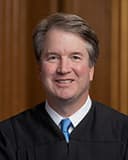
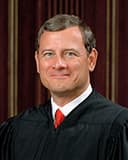
Roberts
·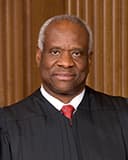
Thomas
·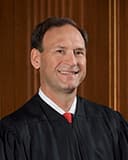
Alito
·
Sotomayor
·
Kagan
·
Barrett
·
Jackson
·
Decided May 28, 2026
Majority Opinion— Justice Kavanaugh
In this capital case, the Supreme Court ruled 5–4 that Terry Pitchford, a Black man sentenced to death in Mississippi for a 2004 robbery-murder, did not waive his right to challenge the prosecutor's use of race-based jury strikes under Batson v. Kentucky. During jury selection, the prosecutor struck four of five Black prospective jurors. Pitchford's lawyer objected, and the prosecutor offered race-neutral explanations, but the trial court never gave the defense a chance to argue that those explanations were pretextual — the critical third step of the Batson framework. When defense counsel tried to raise the issue again, the trial court cut them off and assured them the objection was already "clear in the record." The jury that convicted Pitchford and sentenced him to death consisted of 11 white jurors and 1 Black juror.
The Mississippi Supreme Court upheld the conviction, finding that Pitchford had waived his Batson claim by not arguing pretext at trial. Pitchford then sought federal habeas relief. The federal district court granted relief, concluding the state court's waiver finding was unreasonable, but the Fifth Circuit reversed. The Supreme Court sided with the district court, holding that the Mississippi Supreme Court unreasonably applied Batson and unreasonably found waiver. The Court emphasized that the trial court itself had assured defense counsel the objection was preserved, and that distinguishing between a "Batson objection" and a "Batson pretext argument" at that stage of the proceedings "slices Batson way too thin." The case was sent back for further proceedings, meaning Pitchford may ultimately receive a new trial with a properly selected jury.
Dissenting Opinions
Justice Gorsuch
Justice Gorsuch, joined by Justices Thomas, Alito, and Barrett, dissented on the ground that the federal habeas statute (AEDPA) sets a very high bar for overturning state court decisions, and Pitchford failed to clear it. Gorsuch argued that the Mississippi Supreme Court reasonably concluded that Pitchford's lawyers never actually presented a comparative-juror pretext argument during jury selection — the specific type of argument Pitchford later tried to press on appeal. He noted that during jury selection, defense counsel only made a statistical argument (that too few Black jurors remained), and when counsel asked to "reserve" the Batson objection at the end of jury selection, they repeated that same statistical point rather than raising a new argument comparing struck Black jurors to seated white jurors.
Gorsuch also pointed out that one of Pitchford's own trial attorneys later admitted in post-conviction proceedings that she had "failed to challenge the prosecution's reasons as pretextual at trial." He rejected the majority's portrayal of defense counsel being silenced by the trial court, noting that the record showed counsel was assertive and frequently interrupted the judge and other lawyers on other matters. Under AEDPA, Gorsuch argued, a federal court cannot grant relief just because a petitioner offers a plausible alternative reading of the record — the petitioner must show the state court's reading was compelled to be wrong, which Pitchford could not do. While disagreeing with the outcome, Gorsuch noted the decision was narrow and did not disturb the Court's broader AEDPA precedents.
Oral Argument Recording
Via Spotify ↗
Background & Facts
Terry Pitchford was convicted of murder in Mississippi state court and sentenced to death. During jury selection, the prosecutor used peremptory strikes—discretionary challenges allowing removal of prospective jurors without stated cause—to remove four Black jurors from the jury pool. Pitchford's trial counsel did not formally object to these strikes at trial, arguing that the removals were race-based violations of the Fourteenth Amendment and Batson v. Kentucky, the leading precedent requiring prosecutors to provide race-neutral reasons for such strikes.
After conviction, Pitchford raised the issue on direct appeal and in post-conviction proceedings, arguing that his counsel was ineffective for failing to object at trial. The Mississippi Supreme Court rejected his claims, finding that by not objecting during jury selection, Pitchford had waived his right to challenge the strikes—even though he later sought to develop the record regarding the prosecutor's alleged race-based motivation. The Fifth Circuit affirmed this decision on January 17, 2025.
Pitchford petitioned for certiorari, and the Supreme Court granted review limited to the narrow question of whether the Mississippi Supreme Court's waiver determination itself was unreasonable under the Antiterrorism Effective Death Penalty Act (AEDPA), which imposes strict limits on federal court review of state court decisions.
Why This Case Matters
This case sits at the intersection of two critical constitutional issues: racial discrimination in jury selection and the scope of federal habeas review under AEDPA. At stake is whether procedural defaults created by ineffective counsel can forever bar consideration of evidence of race-based peremptory strikes—a practice long recognized as a means to exclude jurors based on race and thereby undermine the defendant's right to an impartial jury. The decision will clarify whether federal courts can remedy constitutional violations involving jury discrimination when state courts impose strict procedural rules that effectively immunize prosecutorial misconduct from meaningful review. Given that AEDPA generally limits federal habeas relief to cases where state courts have decided questions contrary to clearly established federal law, the Court's ruling will significantly impact death-row inmates and other defendants seeking to challenge jury composition on race grounds.
The Arguments
The Mississippi Supreme Court's determination that Pitchford waived his Batson challenge by failing to object at trial—despite later demonstrating that trial counsel was ineffective—represents an unreasonable application of AEDPA standards and clearly established law. Federal review should be available to examine the substance of race-based peremptory strike claims, which implicate fundamental constitutional protections against racial discrimination in jury selection.
- A procedural waiver based on trial counsel's ineffective performance should not bar federal habeas review of a substantial constitutional claim involving race discrimination in jury selection.
- The Mississippi Supreme Court applied an inflexible rule that prioritizes technical procedural compliance over meaningful review of race-based jury exclusion.
- Clearly established Supreme Court precedent protects the right to challenge race-based peremptory strikes, and the state court's decision conflicts with that law.
Pitchford's failure to raise the Batson objection at trial constitutes a procedural default that bars federal habeas review under well-established principles of state procedural law. AEDPA requires deference to state court judgments unless they are contrary to or an unreasonable application of clearly established federal law, and no Supreme Court precedent requires reopening otherwise-defaulted Batson claims.
- Petitioner waived the Batson challenge by not objecting during jury selection, and this procedural bar is consistent with Mississippi law and federal habeas doctrine.
- AEDPA demands respect for state court procedural rules and does not override them simply because a constitutional claim is asserted.
- The state court's decision does not conflict with any clearly established Supreme Court precedent that would require federal review of the defaulted claim.
Precedent Cases Cited
Batson v. Kentucky
476 U.S. 79
Foundational precedent establishing that prosecutors cannot use peremptory strikes to remove jurors based on race; central to Pitchford's claim of race-based jury exclusion.
Antiterrorism Effective Death Penalty Act (AEDPA)
28 U.S.C. §2254(d)
The statute governing federal habeas review of state convictions, which limits relief to cases where the state court decided the question contrary to or unreasonably applied clearly established federal law; this is the precise lens through which the Supreme Court has agreed to review the Mississippi court's decision.
Coleman v. Thompson
501 U.S. 722
Establishes principles of procedural default in habeas review, holding that failure to comply with state procedural rules may bar federal review; relevant to the respondent's argument that Pitchford's trial-level procedural default is binding.
Miller-El v. Cockrell
537 U.S. 322
Addresses Batson claims in the habeas context and the showing required to establish race discrimination in jury selection; provides guidance on when Batson violations warrant federal relief.
Strickland v. Washington
466 U.S. 668
Establishes the test for ineffective assistance of counsel claims; relevant because Pitchford asserts that his trial counsel was ineffective for failing to object to the prosecutor's peremptory strikes.
Williams v. Taylor
529 U.S. 362
Interprets AEDPA's 'unreasonable application' clause and clarifies when a state court decision is sufficiently contrary to federal law to warrant federal habeas relief.
Legal Terminology
Analysis & Opinions
The Supreme Court released four opinions on Thursday covering cases involving shortening prison sentences, jury selection, and last-mile delivery drivers. The article also notes that a justice was called for jury duty. The opinions appear to include rulings in cases such as Flower Foods v. Brock and Pitchford v. Cain among others from the current term.
The Supreme Court's decision in Pitchford v. Cain is praised as a significant protection of jury rights that benefits all Americans. However, the opinion piece argues that the ruling also exposes how much further the Court and the legal system need to go in safeguarding these rights. The case involved issues related to jury selection procedures.
The Supreme Court ruled 5-4 in Pitchford v. Cain to throw out a Mississippi man's conviction and death sentence, finding that the trial judge failed to properly analyze whether the prosecutor engaged in racial discrimination during jury selection. Justice Kavanaugh wrote the majority opinion, joined by Chief Justice Roberts and Justices Sotomayor, Kagan, and one other justice.
The Supreme Court ruled that death row inmate Terry Pitchford can challenge the exclusion of Black jurors from his 2006 trial for the murder of a shopkeeper. Pitchford was convicted by a 12-member jury that included only one Black member, and the Court found the trial court's analysis of potential racial discrimination in jury selection was insufficient.
The Supreme Court sided with Terry Pitchford, a Mississippi man who has spent two decades on death row, finding merit in his argument that his conviction was tainted by racially biased jury selection. The ruling sends the case back for further proceedings to properly evaluate whether prosecutors improperly excluded Black jurors.