Cisco Systems, Inc. v. Doe I
Whether courts may compel disclosure of the identities of foreign tortfeasors sued in U.S. courts before the United States has established subject-matter jurisdiction or personal jurisdiction over those defendants.
The Decision

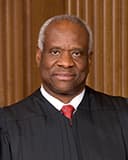
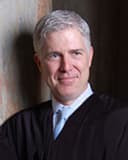
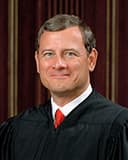
Roberts
·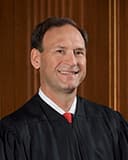
Alito
·
Kagan
·
Kavanaugh
·
Jackson
·
Decided June 23, 2026
Majority Opinion— Justice Barrett
The Supreme Court held that federal courts may not create new causes of action (the legal basis for a lawsuit) under the Alien Tort Statute (ATS) for violations of international law. The ATS, enacted in 1789, gives federal courts jurisdiction over lawsuits by foreign nationals for torts committed in violation of international law. In 2004, the Court's decision in Sosa v. Alvarez-Machain said the ATS was purely a jurisdictional statute but left open a narrow possibility that courts could craft new rights to sue under it. The Court now closed that door entirely, reasoning that creating causes of action is Congress's job, not the judiciary's, and that ATS cases inherently implicate foreign policy—a domain belonging to the political branches. The Court noted that it had never actually created a new ATS cause of action in the two decades since Sosa, and that subsequent legal developments have made it clear that judicially invented rights to sue offend the separation of powers.
The Court also held that the Torture Victim Protection Act (TVPA), which allows lawsuits against individuals who "subject" others to torture, does not extend to aiding-and-abetting liability. Relying on its earlier decision in Central Bank of Denver, the Court reasoned that because Congress knows how to expressly include aiding-and-abetting liability in statutes and chose not to do so in the TVPA, the statute does not cover those who merely assist torturers rather than directly causing the torture. The practical effect of the decision is that Cisco Systems cannot be sued under either the ATS or the TVPA for allegedly helping the Chinese government build surveillance technology used to identify and persecute Falun Gong practitioners. More broadly, the ruling effectively shuts the door to most future human rights lawsuits brought by foreign nationals in U.S. federal courts under the ATS.
Concurring Opinions
Justice Jackson
Justice Jackson, joined by Justice Kagan, agreed with the majority that the TVPA does not cover aiding-and-abetting liability, but disagreed with the majority's ATS holding and its reasoning about the TVPA. On the ATS, Jackson sided with Justice Sotomayor's dissent, believing that courts should retain the ability to recognize causes of action under the statute as Sosa allowed. On the TVPA, Jackson agreed that the word "subjects" does not encompass aiding and abetting, but objected to the majority's heavy reliance on Central Bank as creating a "magic words" test. Jackson emphasized that the absence of the words "aid" and "abet" in the TVPA was only one factor among many, not a dispositive rule requiring Congress to use specific phrases to impose that form of liability.
Dissenting Opinions
Justice Sotomayor
Justice Sotomayor, joined in large part by Justices Kagan and Jackson, dissented from both holdings. She argued that the majority effectively overruled the Court's 2004 decision in Sosa v. Alvarez-Machain without even acknowledging it was doing so, and without providing the special justification required to overturn precedent. She contended that Sosa was correctly decided: the First Congress intended the ATS to have immediate practical effect by allowing courts to recognize causes of action rooted in well-established international law norms, and historical evidence—including opinions by Thomas Jefferson and early Attorneys General—confirmed that the ATS was never meant to be limited to only three specific offenses. She criticized the majority for relying on separate opinions by individual Justices that never commanded a majority, and for ignoring that Congress had not amended the ATS or otherwise signaled disagreement with Sosa in the two decades since it was decided.
On the TVPA, Sotomayor argued that the word "subjects" naturally encompasses aiding and abetting, because someone who consciously and culpably participates in torture to help make it succeed has "subjected" the victim to that torture. She noted that all parties agreed the TVPA covers command responsibility—holding superior officers liable for subordinates' torture—which requires even less direct involvement than aiding and abetting. She criticized the majority for imposing a "magic words" requirement that Congress use the specific phrase "aiding and abetting" to impose that form of liability, calling the decision another instance of the Court remaking the law in its preferred image at the expense of victims of horrific human rights abuses.
Oral Argument Recording
Via Spotify ↗
Background & Facts
Cisco Systems and other technology companies filed suit in federal court against unnamed foreign defendants (referred to as "Doe" defendants) for alleged violations of federal law, including claims arising from extraterritorial conduct. The respondents sought to keep their identities concealed pending resolution of jurisdictional questions. The central dispute concerns whether U.S. courts should force disclosure of defendant identities early in litigation, before establishing whether the court has authority to hear the case or can exercise power over the defendants.
The Ninth Circuit Court of Appeals ruled in July 2023 in favor of early disclosure, reasoning that plaintiffs have a substantial interest in identifying potential defendants and that unnamed defendants should not escape identification challenges. The Ninth Circuit's decision created tension with how other circuits handle such disclosures and raised concerns about protecting foreign nationals from premature legal exposure.
Why This Case Matters
This case addresses a fundamental procedural question about the balance between a plaintiff's right to pursue claims against unknown parties and a defendant's right to remain unnamed before a court establishes its jurisdiction. The decision will affect how technology companies, manufacturers, and other U.S. firms can pursue international litigation claims and may impact foreign policy considerations by determining when U.S. courts can require foreign nationals to be identified in litigation. The strong support from business groups and amici on Cisco's side, combined with the Solicitor General's involvement, suggests the Court may be reconsidering federal courts' authority to compel such disclosures in cases involving extraterritorial conduct or foreign defendants. The ruling could significantly reshape discovery and jurisdictional practice in cases involving international parties.
The Arguments
Cisco argues that courts must compel disclosure of defendant identities as a prerequisite to establishing jurisdiction and pursuing claims. Cisco contends that unnamed defendants should not be able to avoid identification or challenge disclosure based on jurisdictional arguments that have not yet been resolved. The company maintains that forcing early disclosure serves the interests of justice and prevents foreign tortfeasors from using anonymity as a shield.
- Plaintiffs have a constitutional and procedural right to identify potential defendants before litigation can proceed
- Unnamed defendants should not obtain special protection from disclosure based on unresolved jurisdictional questions
- Technology companies need to identify foreign bad actors engaged in unlawful conduct affecting U.S. markets
- The Ninth Circuit's approach is consistent with federal discovery principles that broadly permit disclosure
Respondents argue that compelling disclosure of identities before jurisdiction is established violates fundamental due process and procedural fairness principles. They contend that unnamed defendants are entitled to a threshold determination of jurisdiction before being exposed to U.S. litigation and that early disclosure is premature and harmful, particularly for foreign nationals. Respondents emphasize that jurisdiction must be established before a court can exercise power over any defendant.
- A court must establish subject-matter and personal jurisdiction before compelling disclosure that subjects defendants to litigation
- Premature disclosure exposes foreign defendants to reputational harm and litigation burdens before jurisdiction is proper
- Federal Rules of Civil Procedure require jurisdictional prerequisites to be satisfied before broader disclosure obligations attach
- International comity and foreign relations concerns weigh against compelling disclosure of foreign nationals absent jurisdiction
Precedent Cases Cited
Burnham v. Superior Court
495 U.S. 604
Establishes the foundational principles of personal jurisdiction and when a court may exercise power over a defendant; central to respondents' argument that jurisdiction must precede disclosure obligations.
International Shoe Co. v. Washington
326 U.S. 310
Foundational case establishing the 'minimum contacts' standard for personal jurisdiction; relevant to whether disclosure can occur before minimum contacts are established.
Eerie Railroad Co. v. Tompkins
304 U.S. 64
Addresses federalism and the limits of federal court authority; relevant to questions about federal courts' power to compel disclosure regarding foreign defendants.
Twombly v. Bell Atlantic Corp.
553 U.S. 544
Establishes modern pleading standards requiring sufficient factual allegations before discovery; relevant to when courts can require disclosure of defendant identities.
Doe v. Cahill
884 A.2d 451
Addresses standards for unmasking anonymous defendants in litigation, balancing disclosure against defendant privacy interests; provides comparative framework for the Court's analysis.
United States v. Salerno
481 U.S. 739
Establishes principles of procedural due process and fair notice; relevant to respondents' arguments that disclosure without jurisdiction violates due process.
Legal Terminology
Analysis & Opinions
The Supreme Court's decision in Cisco Systems, Inc. v. Doe, announced on June 23, shielded both corporations and government officials from civil suits under the Alien Tort Statute for facilitating international human rights violations. The ruling was expected to benefit corporations but unexpectedly also extended protections to government officials. Critics argue the decision effectively grants impunity for acts including torture, extrajudicial murder, slavery, and genocide.
The Supreme Court significantly limited the ability of foreign nationals to bring lawsuits in U.S. courts for serious violations of international law. Justice Barrett's opinion held that the Alien Tort Statute only permits lawsuits based on the narrow set of claims Congress envisioned when it passed the law in 1789, and the Torture Victim Protection Act was also construed narrowly.
The Supreme Court rejected a lawsuit alleging that Cisco Systems helped China target and persecute Falun Gong practitioners, a decision with broader implications for corporate liability in international human rights abuses. The ruling narrowed the scope of lawsuits that can be brought under laws allowing foreigners to sue in U.S. courts for violations of international law.
The Supreme Court appeared likely to further limit the ability of plaintiffs to bring claims in U.S. courts for alleged violations of international law. During oral argument, the justices seemed poised to narrow the scope of such lawsuits, which would restrict foreign plaintiffs' access to American courts for international law claims.
The Supreme Court is set to hear oral argument in Cisco Systems v. Doe, which asks whether corporations can be held liable as accomplices under the Alien Tort Statute for serious violations of international law. The case involves allegations that Cisco helped the Chinese government surveil and persecute citizens, and could significantly define the scope of corporate liability under the ATS.