Trump v. Cook
Whether the president may remove a Federal Reserve governor 'for cause' based on pre-office conduct without providing notice or a hearing, and whether courts can issue a preliminary injunction preventing such removal.
The Decision
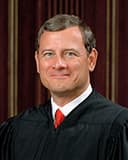
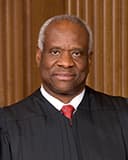
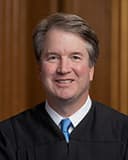


Sotomayor
·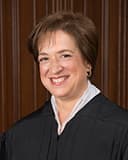
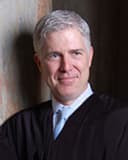
Kagan
·
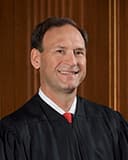
Gorsuch
·

Decided June 29, 2026
Majority Opinion— Justice Roberts
The Supreme Court denied the Government's application to stay a preliminary injunction that prevented President Trump from removing Lisa Cook from the Board of Governors of the Federal Reserve System. In August 2025, the President attempted to fire Cook — the first time in the Federal Reserve's 111-year history that a Governor had been fired — citing allegations that she had committed mortgage fraud before taking office. Cook sued, arguing the removal was not "for cause" as required by the Federal Reserve Act and that she had not been given the required notice and opportunity to respond before being terminated. The District Court issued a preliminary injunction keeping Cook in her position, and the Court of Appeals declined to stay that order.
The Supreme Court, in an opinion by Chief Justice Roberts, rejected all three of the Government's arguments. First, the Court held that a presidential determination of "cause" under the Federal Reserve Act is judicially reviewable — the statute does not give the President unreviewable discretion. Second, the Court held that "cause" must meet a substantial threshold reflecting the Federal Reserve's unique historical role and independence from political interference, rejecting both the Government's very low bar and Cook's very high bar. Third, the Court held that federal courts can issue preliminary injunctions to keep a removed Governor in office during litigation. Critically, the Court resolved the case on the narrow procedural ground that the President failed to give Cook notice and any meaningful opportunity to respond before firing her — protections that the Court found were implicitly required by the statute, based on longstanding common-law principles and the Court's own precedents from 1901 and 1903. The Court also affirmed the constitutionality of the Federal Reserve's for-cause removal protection, finding it consistent with Article II and rooted in the nation's long tradition of independent central banking dating back to the founding era. The practical effect is that Cook remains in her position, and if the President wishes to pursue removal, he must first provide her with notice of the charges and an opportunity to respond.
Concurring Opinions
Justice Kavanaugh
Justice Kavanaugh joined the Court's opinion in full and wrote separately to emphasize two points. First, he stressed that the ruling does not decide whether the President may ultimately remove Cook for cause — that question depends on the underlying facts, which have not yet been determined. The opinion merely establishes the legal and procedural ground rules for any future removal proceedings and judicial review.
Second, Kavanaugh emphasized that the Court's decision confirms the longstanding understanding that the Federal Reserve is an independent agency whose Governors enjoy for-cause removal protection consistent with Article II. He noted that even the Government itself conceded this point, acknowledging the long tradition of central bank independence from executive influence. Kavanaugh argued that leaving open the question of whether the Federal Reserve could remain independent after the Court's decision in Trump v. Slaughter (which addressed for-cause protections at other agencies) would create dangerous uncertainty that could destabilize the U.S. and world economies. He concluded that the Federal Reserve's independence, rooted in a distinct historical tradition, should remain settled, and any change must come through the legislative process.
Justice Jackson
Justice Jackson joined the Court's opinion but wrote separately to explain that the case could have been resolved on the equitable factors alone, without even reaching the merits. She emphasized that whether to grant a stay is fundamentally a fairness determination, and the Government failed to identify any concrete, irreparable harm beyond the abstract claim that the President is injured whenever someone exercises power over his objection — an argument she characterized as insufficient.
Jackson further argued that the public interest overwhelmingly weighed against granting a stay. She cited economic experts and former government officials who stressed that the Federal Reserve's independence is critical to the long-term health of the national economy, and that allowing the President to remove a Governor without full legal review would send a dangerous signal that the Federal Reserve is vulnerable to political manipulation. She concluded that the potential harm to the nation's economy from undermining the Fed's independence far outweighed any claimed injury to the President from temporarily retaining Cook during the litigation.
Dissenting Opinions
Justice Thomas
Justice Thomas dissented, arguing that the President's removal of Cook was lawful on every ground. He contended that Cook has no property right in her government position under the Due Process Clause, that the "for cause" standard in the Federal Reserve Act sets a very low bar easily satisfied by allegations of mortgage fraud, and that the statute's plain text contains no requirement for notice or a hearing before removal. Thomas criticized the majority for reading procedural requirements into the statute that Congress never included, relying on what he characterized as a single line of dicta from two early 1900s cases (Reagan and Shurtleff) rather than any genuine common-law consensus.
Thomas also argued that the Federal Reserve's for-cause removal protection is unconstitutional under Article II, which he read as giving the President the power to remove principal executive officers at will. He rejected the majority's historical analogy to the First and Second Banks of the United States, arguing those banks were private corporations with no sovereign regulatory power, unlike the modern Federal Reserve Board, which is a powerful executive agency. He further contended that federal courts lack equitable authority to issue injunctions reinstating removed executive officers, and that Cook had no right of action to bring her claims in the first place. He characterized the majority's decision as unprecedented — the first time the Court had ever upheld an injunction against the President's removal of an executive officer.
Justice Alito
Justice Alito, joined by Justice Gorsuch, dissented on the ground that the Court should not have issued such a comprehensive opinion on the emergency docket. He argued that the lower courts resolved the case solely on Cook's constitutional due process claim, and the Court should not have reached out to address the statutory questions about what "cause" means or whether the statute implicitly requires notice and a hearing. In his view, those questions were complicated and novel, and the Court was wrong to resolve them in the context of an interim stay application rather than after full merits briefing and argument in the normal course.
Justice Barrett
Justice Barrett dissented, arguing that the Court said too much for an interim ruling on a stay application. She objected to the majority's decision to address the constitutionality of the Federal Reserve's for-cause removal protection and other substantive legal questions, contending that interim applications require balancing the risk of locking in premature legal conclusions against the cost of saying too little. Barrett also expressed concern that the District Court's injunction could be read to broadly prohibit the President from ever removing Cook for her alleged mortgage fraud, even if proper procedures were followed — a reading she found problematic — and suggested that the appropriate remedy, if the injunction were overbroad, would be to narrow it rather than deny the stay application entirely.
Oral Argument Recording
Via Spotify ↗
Background & Facts
In 2021, Lisa D. Cook submitted mortgage applications for two properties in Michigan and Georgia within a two-week period. In both applications, she represented that she would occupy each property as her principal residence within 60 days. Since it would be impossible to honor both commitments simultaneously, the president characterized this as either deceit or gross negligence in obtaining favorable interest rates. Cook was later appointed and confirmed as a governor of the Federal Reserve Board.
On August 25, 2025, President Trump removed Cook from her position, citing the conflicting mortgage applications as cause. This was preceded by a Truth Social post five days earlier calling for her resignation. Cook challenged the removal in court, arguing she was entitled to notice and a hearing before removal and that the alleged conduct did not constitute 'cause.' Her attorneys submitted a letter stating the Michigan bank gave permission to rent the property after she relocated to Washington for her appointment, and that the Georgia application included an attachment disclosing the property was a vacation home.
The district court issued a preliminary injunction reinstating Cook, finding that 'for cause' does not encompass pre-office conduct and that Cook had a due process right to notice and a hearing. The D.C. Circuit upheld the injunction solely on the ground that Cook had a property interest in her office under the Due Process Clause. The government then filed this emergency application asking the Supreme Court to stay the preliminary injunction.
Why This Case Matters
This case represents the first time in the 112-year history of the Federal Reserve that a president has attempted to remove a governor for cause, making it a landmark test of Federal Reserve independence. The outcome will define the meaning of 'for cause' removal for Fed governors, determine what procedural protections apply, and establish whether courts can provide meaningful judicial review of such removals.
The broader implications extend well beyond the Federal Reserve. As Justice Kavanaugh emphasized, whatever standard the Court sets will apply to future presidents of both parties, potentially transforming for-cause removal protections across independent agencies into the functional equivalent of at-will employment. The case also raises fundamental questions about the balance between presidential power and institutional independence, with economists warning that undermining Fed independence could trigger economic instability. Multiple justices expressed concern that deciding these complex constitutional questions on an emergency application without full lower court development could set dangerous precedents.
The Arguments
The president lawfully removed Cook for cause because her conflicting mortgage applications constitute at minimum gross negligence in financial transactions, which is closely related to the duties of a Federal Reserve governor who sets interest rates. The word 'cause' in the statute confers broad discretion on the president, does not require notice or a hearing, and courts lack jurisdiction to issue preliminary injunctions reinstating removed officers.
- The statutory term 'cause' without further qualification is broader and more deferential to the president than the 'inefficiency, neglect, or malfeasance' (INM) standard Congress deliberately chose not to use here.
- Congress knows how to require notice and a hearing—it did so in the NLRA one month before reenacting this for-cause provision in 1935—so its absence here is intentional.
- Under Sawyer, courts lack jurisdiction to issue preliminary injunctions restoring public officers, and no such injunction existed in American history from 1789 to 2025.
- Cook's challenge is an ultra vires claim requiring her to show the president's action was entirely in excess of his powers and contrary to a specific statutory prohibition—a burden she cannot meet.
Key Exchanges with Justices
Justice Kavanaugh
“Your position of no procedure, no judicial review, and no remedy—doesn't that mean every future president's appointees would be removed for cause on Inauguration Day, effectively creating at-will removal?”
It revealed that even a justice sympathetic to executive power saw the government's position as potentially destroying the independence it claimed to respect.
Justice Jackson
“Was Ms. Cook given the opportunity in some sort of formal proceeding to contest the evidence, and what evidence was actually presented to the president?”
General Sauer's admission that Cook's only opportunity to respond was 'in public' after a Truth Social post highlighted the absence of any meaningful process.
Justice Barrett
“Economists warn that granting the stay could trigger a recession—shouldn't the risk counsel caution in the stay posture, and shouldn't the nature of the alleged misconduct factor into the equities?”
It showed the Court grappling with unprecedented practical stakes and the difficulty of assessing irreparable harm when the government cannot direct Fed policy anyway.
The for-cause removal provision protects Federal Reserve independence and means at minimum INM plus ineligibility, not mere gross negligence. The statute requires notice and an opportunity to be heard before removal, and courts have jurisdiction to provide preliminary injunctive relief to preserve the status quo while the case is litigated.
- Humphrey's Executor used 'for cause' and 'INM' interchangeably at least three times, and senators in the 1935 debate did the same, establishing that for cause means INM plus statutory ineligibility under Section 244.
- Under either common law or Shurtleff, a statute fixing a term and restricting removal to cause requires notice and an opportunity to be heard—a requirement the president failed to satisfy.
- Even on the facts most favorable to the government, an inadvertent mistake on a mortgage application is at most gross negligence, which falls far below any legitimate reading of 'for cause' for this uniquely structured institution.
- The 112-year unbroken history of no president ever attempting to remove a Fed governor demonstrates the strength of the independence norm the Court should protect.
Key Exchanges with Justices
Justice Alito
“Under your position that for cause only covers in-office conduct, could a governor who was forced to resign from a prior job for an egregious pattern of sexual misconduct be removed?”
Clement stuck with his position but revealed his backup arguments—the common law infamous-crime exception and impeachment as the ultimate safety valve—showing the layered nature of his defense.
Justice Kavanaugh
“Your front-line position is INM, but intervention/resignation and impeachment don't really work for people who dig in. Doesn't the balance tilt too far?”
Clement argued that for the Fed specifically, the balance should favor keeping officials in office to protect market confidence in Fed independence from political pressure.
Justice Jackson
“Are you conceding that a Truth Social post constitutes sufficient notice when the president seeks to remove a Fed governor for cause?”
Clement clarified that while the post provided actual awareness, it was fundamentally defective notice because it also constituted evidence that the president had prejudged the matter.
Precedent Cases Cited
Humphrey's Executor v. United States
Central to both sides: the government accepts its holding that for-cause removal restrictions are constitutional; Clement argued it used 'for cause' and 'INM' interchangeably at least three times, establishing their equivalence.
Shurtleff v. United States
Both sides relied on it for the proposition that when a statute specifies grounds for removal (like INM), notice and a hearing are required even if the statute doesn't expressly say so. The government argued this principle applies only to INM, not to the broader term 'cause.'
Sawyer v. [unnamed]
The government's primary authority for the proposition that courts lack jurisdiction to issue preliminary injunctions restoring public officers to office, arguing this bars the district court's remedy here.
Cleveland Board of Education v. Loudermill
The D.C. Circuit relied on it to find Cook had a property interest in her position requiring due process protections. The government argued this was misapplied because the statute does not create the kind of property interest Loudermill contemplated.
Marbury v. Madison
Cited by the government for the principle that courts cannot mandamus the president in discretionary acts, and by both sides regarding the distinction between ministerial and discretionary presidential duties.
Myers v. United States
Referenced for the Decision of 1789 and the tradition recognizing presidential removal power, including the concept of suspensory removals pending final determination.
Morrison v. Olson
Justice Scalia's dissent was cited by the former Fed Governors' amicus brief and discussed by Justice Kavanaugh for its warning about the danger of giving someone unlimited resources to find wrongdoing against a target.
Vermont Yankee Nuclear Power Corp. v. Natural Resources Defense Council
The government argued that if courts cannot dictate procedures to federal agencies under this case, they certainly cannot dictate procedures to the president for removal hearings.
Legal Terminology
Analysis & Opinions
The Supreme Court's 2025-26 term is being characterized as potentially the most consequential in recent memory, particularly for President Trump. Trump was a named party in four major cases and became the first sitting president to attend oral argument, but suffered high-profile losses on tariffs, birthright citizenship, and his attempt to remove Federal Reserve Board member Lisa Cook.
The article examines the implications of the Supreme Court's decisions in Slaughter and Cook for the future of independent federal agencies. It discusses how these rulings affect presidential power to fire agency heads, potentially upending the longstanding Humphrey's Executor precedent that allowed Congress to shield agencies from total presidential control.
The Supreme Court ruled 5-4 in favor of Federal Reserve Governor Lisa Cook, preventing President Trump from firing her. Chief Justice Roberts wrote that allowing the administration's position would effectively transform the Federal Reserve's structure, and Cook can remain in her position while her legal challenge proceeds.
After the Supreme Court affirmed that Federal Reserve officials can only be fired for cause, President Trump renewed his threat to "take appropriate action immediately" against Fed Governor Lisa Cook. The ruling protects Cook's position but Trump signaled he would continue pursuing her removal.
In twin rulings, the Supreme Court affirmed the Federal Reserve's independence by preventing Trump from firing Fed Governor Lisa Cook at will, while simultaneously expanding presidential power by allowing Trump to fire other independent regulators for any reason. The decisions drew sharp ideological lines among the justices.
With final decisions remaining, the Supreme Court is sharply divided on major cases including whether President Trump can end birthright citizenship and fire a Federal Reserve leader. The article previews the contentious rulings expected in the final week of the term.
The Supreme Court temporarily blocked President Trump from firing Federal Reserve Board member Lisa Cook, the first Black woman to serve on the Fed board. The decision is a setback for Trump, who had alleged Cook committed mortgage fraud as justification for her removal.
The Supreme Court blocked President Trump from firing Federal Reserve Governor Cook, upholding the independence of the Federal Reserve's leadership structure. The justices ruled that the president cannot remove the Fed governor at will, while issuing a separate decision regarding another top regulator's removal protections.
While the Supreme Court upheld the Federal Reserve's independence by protecting its governors from presidential removal, the article notes that other federal agencies were not afforded the same protections. The decision raises concerns about the vulnerability of other independent regulatory bodies to executive power, even as the central bank's structure was preserved.