Trump v. Slaughter
Whether the President has unrestricted constitutional authority to remove members of multi-member independent agencies like the Federal Trade Commission, and whether Humphrey's Executor v. United States should be overruled.
The Decision
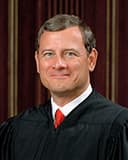
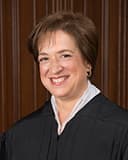
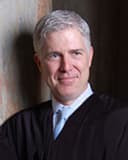
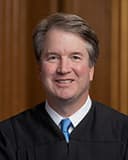
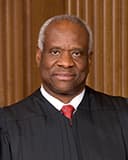
Thomas
·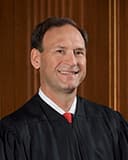
Alito
·
Barrett
·
Jackson
·
Decided June 29, 2026
Majority Opinion— Justice Roberts
In Trump v. Slaughter, the Supreme Court held that the Federal Trade Commission's statutory provision allowing the President to remove Commissioners only for "inefficiency, neglect of duty, or malfeasance in office" violates the Constitution's separation of powers. The case arose when President Trump fired two Democratic FTC Commissioners without citing any statutory cause, instead invoking his authority under Article II. Commissioner Slaughter sued to be reinstated, and the lower courts ruled in her favor based on the 1935 precedent Humphrey's Executor v. United States, which had upheld the FTC's removal protections.
Chief Justice Roberts, writing for the majority, traced the constitutional design back to the Founding, emphasizing that the Framers deliberately vested "the executive Power" in a single President to ensure accountability and energy in government. The Court relied heavily on the 1926 decision in Myers v. United States, which held that the President must be able to remove executive officers at will as part of his constitutional duty to "take Care that the Laws be faithfully executed." The majority found that Humphrey's Executor rested on the now-discredited premise that the FTC exercises "no part of the executive power" — a characterization the Court itself had undermined in subsequent decisions. Because the modern FTC promulgates binding rules, enforces laws through in-house adjudications, and files civil suits on behalf of the United States, the Court concluded it plainly exercises executive power.
The Court formally overruled Humphrey's Executor to the extent it survived, finding that every factor relevant to stare decisis — quality of reasoning, consistency with other precedents, workability, and reliance interests — supported abandoning the decision. The majority rejected the argument that Congress had legitimately relied on Humphrey's to create independent agencies, noting that insulating agencies from the President often just increased their subservience to Congress rather than producing neutral governance. The Court left open questions about the Federal Reserve, non-Article III courts, and entities that do not exercise executive power, but held that any officer exercising the President's executive power must be removable by him at will.
Concurring Opinions
Justice Gorsuch
Justice Gorsuch agreed fully with the majority's holding but wrote separately to sound an alarm about its broader implications. He traced the origins of independent agencies to the early 20th-century progressive vision of Woodrow Wilson and James Landis, who sought to vest vast power in politically insulated expert agencies. Gorsuch argued that Congress likely would not have delegated such sweeping legislative and judicial powers to these agencies had it known the President would ultimately control them. Now that removal protections have been struck down, the President effectively gains control not just over executive enforcement but also over the enormous rulemaking and adjudicatory powers Congress had entrusted to independent agencies.
Gorsuch warned that concentrating executive, legislative, and judicial functions in the hands of a single President risks the very accumulation of power the Framers feared. He acknowledged that Congress could theoretically reclaim these delegated powers, but noted a practical ratchet effect: retrieving authority once delegated by simple majority now requires a veto-proof supermajority. He suggested the Court itself bears responsibility for the situation — having decided Humphrey's, tolerated broad delegations, and now removed the insulation — and urged the Court to reinvigorate constitutional doctrines like the nondelegation principle and Article III protections to prevent dangerous concentrations of power in the presidency.
Justice Kavanaugh
The provided opinion text was trimmed before Justice Kavanaugh's concurrence could be included in full. Based on the case summary, Justice Kavanaugh joined the majority opinion and filed a separate concurrence, but the substance of his individual writing is not available from the provided text.
Justice Kagan
The provided opinion text was trimmed before Justice Kagan's concurrence could be included in full. Based on the case summary, Justice Kagan filed a separate concurrence, but the substance of her individual writing is not available from the provided text.
Dissenting Opinions
Justice Sotomayor
The provided opinion text was trimmed before Justice Sotomayor's dissent could be included in full, but the majority opinion extensively describes and responds to her arguments. Justice Sotomayor, joined by Justices Kagan and Jackson, dissented vigorously. She argued that there is no historical evidence the Framers adopted a general rule of at-will presidential removal, rejecting the majority's reading of the Decision of 1789 and the constitutional text. She defended Humphrey's Executor as correctly decided and as the foundation for nearly a century of congressional practice creating independent agencies insulated from direct presidential control.
Sotomayor emphasized the massive reliance interests at stake, noting that dozens of agencies are headed by officials removable only for cause and that ordinary Americans and regulated businesses have built expectations around the stability and independence these agencies provide. She accused the majority of ignoring this longstanding practice and warned that the decision effectively dismantles the independent agency structure that Congress deliberately created. She also criticized the majority for departing from stare decisis while simultaneously undermining Myers's rival precedent, Humphrey's Executor, and argued the majority's approach would concentrate dangerous levels of power in the presidency.
Oral Argument Recording
Via Spotify ↗
Background & Facts
President Trump fired FTC Commissioner Rebecca Kelly Slaughter without cause, in apparent violation of the FTC Act, which allows removal of commissioners only for 'inefficiency, neglect of duty, or malfeasance in office.' Slaughter challenged her removal, and the district court ruled in her favor, finding the firing violated the statute as interpreted by the Supreme Court in Humphrey's Executor v. United States (1935), which unanimously upheld the FTC's for-cause removal protection.
The government argues that Humphrey's Executor was wrongly decided and should be overruled because the Constitution's Vesting Clause grants all executive power to the President, which necessarily includes the power to remove any executive officer at will. They contend that the FTC exercises quintessentially executive powers — rulemaking, adjudication, investigation, and civil enforcement — and that insulating its commissioners from presidential removal violates the separation of powers.
The respondents argue that multi-member commissions with removal protections have existed since the founding era, that Congress and Presidents have jointly created more than two dozen such independent agencies since 1887, and that Humphrey's Executor has been settled law for 90 years. They contend the government has no principled limiting theory and that overruling Humphrey's would put at risk the entire structure of independent agencies across the federal government.
Why This Case Matters
This case could fundamentally reshape the structure of the federal government. If the Court overrules Humphrey's Executor, the President would gain at-will removal power over the heads of more than two dozen independent agencies — including the FCC, SEC, NLRB, Nuclear Regulatory Commission, and potentially the Federal Reserve — ending nearly a century of independence for these bodies. The decision would affect how Congress can structure agencies going forward and could call into question removal protections for inferior officers and civil servants.
The case also raises profound questions about the balance of power between Congress and the President. Congress has long relied on Humphrey's Executor to create agencies insulated from direct presidential control, believing that nonpartisan expertise and independence serve the public interest. Overruling it would concentrate enormous regulatory, rulemaking, and adjudicative power under direct presidential authority, which supporters call democratic accountability and critics call unchecked executive power.
The Arguments
The Constitution's Vesting Clause grants all executive power to the President, which includes an unrestricted power to remove executive officers. Humphrey's Executor was grievously wrong when decided, its reasoning has been repudiated by subsequent cases, and it should be overruled to restore democratic accountability over agencies wielding enormous governmental power.
- Nine Supreme Court decisions from Ex Parte Hennen (1839) through Trump v. United States (2024) confirm the President's exclusive and illimitable removal power
- Humphrey's Executor's rationale that agencies exercise quasi-legislative and quasi-judicial powers outside executive power has been unanimously rejected by the Court
- Independent agencies create an unconstitutional power vacuum where officers exercise enormous authority without answering to the voters through the President
- Overruling Humphrey's would not destroy agencies but merely sever the removal restriction, restoring political accountability as done in Free Enterprise Fund and Seila Law
Key Exchanges with Justices
Justice Kagan
“If your fundamental proposition is that the Vesting Clause gives all executive power to the President, once you're down this road, how do you stop? What about inferior officers, employees, and civil service protections?”
Revealed the government's difficulty in articulating where its theory stops, as General Sauer could only say they hadn't challenged those categories yet rather than explain why they wouldn't.
Justice Barrett
“Is there any reason we have to ground the removal power specifically in the Vesting Clause, rather than the Take Care Clause or Appointments Clause, given the hard questions about limiting principles?”
Suggested a potential middle-ground approach that could limit the reach of the decision by not fully endorsing the broadest unitary executive theory.
Justice Kavanaugh
“Why did no President challenge this structure from 1935 to 2025, given that many Presidents have had strong views of Article II?”
General Sauer acknowledged Presidents may have had political incentives to outsource tough decisions but argued one President cannot bind successors on constitutional structure.
Multi-member commissions with for-cause removal protections have been part of American governance since the founding era, upheld unanimously by the Court in Humphrey's Executor, and relied upon by Congress in creating more than two dozen independent agencies. Petitioners' theory has no principled stopping point and would cause real-world chaos by putting the Federal Reserve, Article I courts, and all independent agencies at risk.
- No case in over 200 years has ever struck down a single layer of for-cause removal protection for principal officers on a multi-member commission
- The FTC's current powers are essentially the same as when Humphrey's Executor was decided, so there is no changed circumstance justifying overruling
- Petitioners cannot reconcile their theory with their own concessions about the Federal Reserve and Article I courts, proving the theory lacks a principled limit
- The political branches have successfully managed the balance between presidential supervision and agency independence through accommodation for over a century
Key Exchanges with Justices
Justice Gorsuch
“Why isn't civil enforcement just as conclusive and preclusive as criminal prosecution? It's a conclusive decision about enforcement power of the federal government against individuals.”
Exposed a significant weakness in respondent's theory, as Agarwal struggled to explain why civil enforcement doesn't implicate the same presidential control concerns as criminal enforcement.
Justice Alito
“You keep saying these hypotheticals haven't happened, but I want to understand the limits of your principle. Could Congress convert cabinet departments into multi-member commissions with removal protection?”
Revealed that respondent's limiting principles were somewhat vague, relying heavily on the conclusive-and-preclusive standard and historical tradition rather than bright-line rules.
Chief Justice Roberts
“Humphrey's Executor addressed an agency with very little executive power and is a dried husk of what people thought it was. Putting Humphrey's aside, what's your next good case?”
Suggested the Chief Justice may view Humphrey's as significantly weakened, forcing respondent to rely on Wiener and Free Enterprise Fund as alternative authorities.
Precedent Cases Cited
Humphrey's Executor v. United States
295 U.S. 602
The central precedent at issue: petitioners seek to overrule it while respondents defend it as settled law upholding for-cause removal protections for FTC commissioners.
Seila Law LLC v. Consumer Financial Protection Bureau
Both sides relied heavily on this case: petitioners cited its reasoning about executive power and removal authority; respondents cited its distinction between single-director and multi-member agencies.
Myers v. United States
272 U.S. 52
Petitioners cited it as establishing the President's broad removal power; respondents noted that four Myers justices later joined the unanimous Humphrey's Executor decision.
Free Enterprise Fund v. Public Company Accounting Oversight Board
Cited for its holding that dual layers of for-cause removal were unconstitutional, its severability approach of excising only the removal restriction, and its statement about not deciding the status of lesser functionaries.
Trump v. United States
Petitioners cited it for holding the President's removal power is conclusive and preclusive; respondents cited its recognition that criminal investigations and prosecutions are constitutionally committed to the President.
Wiener v. United States
357 U.S. 349
Cited as extending Humphrey's Executor's philosophy to the War Claims Commission; petitioners urged overruling it while respondents defended it as further support for removal protections.
Morrison v. Olson
487 U.S. 654
Petitioners argued it repudiated Humphrey's Executor's quasi-legislative/quasi-judicial reasoning; cited as part of the evolving and unstable framework around removal restrictions.
INS v. Chadha
462 U.S. 919
Cited in discussion of the legislative veto as a former congressional check on independent agencies, and as an example of the Court striking down a longstanding practice on separation-of-powers grounds.
Legal Terminology
Analysis & Opinions
The Supreme Court's 2025-26 term is being characterized as potentially the most consequential in recent memory, particularly for President Trump. Trump was a named party in four major cases and became the first sitting president to attend oral argument, but suffered high-profile losses on tariffs, birthright citizenship, and his attempt to remove Federal Reserve Board member Lisa Cook.
The article examines the implications of the Supreme Court's decisions in Slaughter and Cook for the future of independent federal agencies. It discusses how these rulings affect presidential power to fire agency heads, potentially upending the longstanding Humphrey's Executor precedent that allowed Congress to shield agencies from total presidential control.
The article argues that while the Supreme Court's Slaughter decision was significant, it represents only part of the challenge in constraining executive power. The author contends that Congress must also be compelled to fulfill its role in holding the executive branch accountable.
An opinion piece argues that the Supreme Court correctly upheld birthright citizenship as guaranteed by the 14th Amendment. The editorial emphasizes that the Constitution's text is unambiguous: anyone born in the United States and subject to its jurisdiction is a citizen.
The Supreme Court struck down President Trump's executive order attempting to end birthright citizenship, reaffirming that the 14th Amendment automatically grants citizenship to virtually all children born on U.S. soil. The ruling upheld the longstanding constitutional principle that birth in the United States confers American citizenship.
The Supreme Court rejected President Trump's attempt to end birthright citizenship through executive action, dealing a major blow to his immigration agenda. The decision affirmed the constitutional guarantee that children born in the United States are American citizens.
An opinion piece reflects on the Supreme Court's birthright citizenship ruling as a reaffirmation of America's foundational principle of welcoming newcomers. The article frames the decision as a reminder to both the nation and President Trump about what citizenship means under the Constitution.
The article examines the Supreme Court's history of handling humanitarian protection cases, noting the Court has previously allowed the Trump administration to temporarily end such protections while cases are being litigated. This context is relevant to current cases involving Temporary Protected Status for immigrants from troubled nations.
During Supreme Court oral arguments, anti-Haitian remarks made by President Trump were raised in connection with the administration's effort to end humanitarian protections for Haitians. The Trump administration argues its decision was based on foreign policy and national security considerations rather than race, but challengers point to discriminatory statements as evidence of racial animus.
The Supreme Court heard oral arguments on the Trump administration's plan to revoke Temporary Protected Status for hundreds of thousands of Haitians and Syrians. The case could have far-reaching implications for more than a million people from troubled nations who currently have deportation protections in the United States.
This SCOTUSblog post reflects on oral arguments concerning the 14th Amendment's citizenship clause and birthright citizenship, drawing parallels to Second Amendment litigation. The author argues that the citizenship clause should be interpreted as a living provision rather than fixed to its original meaning.