Exxon Mobil Corp. v. Corporación Cimex, S.A. (Cuba)
Whether Title III of the Helms-Burton Act (LIBERTAD Act) abrogates the sovereign immunity of Cuban agencies and instrumentalities under the Foreign Sovereign Immunities Act.
The Decision
Roberts
·
Thomas
·
Alito
·
Sotomayor
·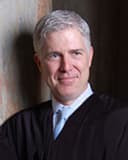
Gorsuch
·
Barrett
·
Jackson
·
Decided June 23, 2026
Majority Opinion— Justice Kavanaugh
The Supreme Court held that the Helms-Burton Act — a 1996 law allowing Americans to sue over property confiscated by Cuba's government — itself eliminates the sovereign immunity of Cuban government-owned companies. This means that plaintiffs like Exxon do not also need to satisfy one of the exceptions in the separate Foreign Sovereign Immunities Act (FSIA) in order to bring their lawsuits. Exxon had sued Cuban state-owned companies that had been operating its seized oil refinery and service stations since the 1960s, seeking over $1 billion in damages.
Justice Kavanaugh, writing for a 6-3 majority, relied on four main reasons. First, the Helms-Burton Act explicitly creates a right to sue entities defined to include foreign government agencies and instrumentalities — which, under the Court's precedents, signals that Congress intended to waive sovereign immunity. Second, requiring plaintiffs to also meet FSIA exceptions would effectively kill the cause of action, because those exceptions demand a commercial connection to the United States that is nearly impossible to show given the comprehensive U.S. embargo on Cuba that the same law codified. Third, the Act channels lawsuits through the general federal-question jurisdiction statute (28 U.S.C. §1331) rather than the FSIA's own jurisdictional provision (§1330), indicating Congress did not intend the FSIA to govern these suits. Fourth, the Act gives the President broad power to suspend or allow lawsuits based on national security and foreign policy — mirroring the pre-FSIA system where the Executive Branch controlled immunity decisions, rather than the courts-centered FSIA approach.
The practical effect of the ruling is significant: Exxon and other Americans whose property was seized by Cuba can now pursue their claims in U.S. courts against Cuban government companies without having to prove that those companies had commercial ties to the United States. The case was sent back to the lower courts for further proceedings.
Dissenting Opinions
Justice Kagan
Justice Kagan, joined by Justices Sotomayor and Jackson, dissented, arguing that the Helms-Burton Act does not eliminate sovereign immunity for Cuban government companies. She emphasized that a cause of action and a waiver of immunity are two separate things — Congress can create one without the other. The Helms-Burton Act says nothing about immunity in its text, and Congress actually considered and rejected an amendment that would have expressly waived FSIA immunity for these suits. That deliberate choice, Kagan argued, should be respected rather than overridden by inference.
Kagan also challenged the majority's claim that the cause of action would be meaningless without an immunity waiver. She pointed out that the law was primarily designed to deter private foreign investors from profiting off confiscated Cuban property — most lawsuits under it target private companies, not Cuban government entities. For the subset of suits against government-owned companies, plaintiffs can still proceed if they meet an FSIA exception. Moreover, she noted that even under the majority's ruling, winning plaintiffs would likely be unable to actually collect any money because the FSIA's separate rules on execution immunity — which shield a foreign government's property from seizure to satisfy a judgment — still apply. In her view, the majority's promise of 'fully effective remedies' was hollow, and the Court should have applied both statutes as Congress wrote them.
Oral Argument Recording
Via Spotify ↗
Background & Facts
Around 1960, Cuba confiscated approximately $70 million worth of Exxon Mobil's property. In 1996, Congress passed the Helms-Burton Act (LIBERTAD Act), which created a private cause of action under Title III against anyone who 'traffics' in property confiscated by the Cuban government, including foreign government instrumentalities like state-controlled Cuban companies. At the same time, Congress codified a strict embargo cutting off most commerce between the U.S. and Cuba. After presidents suspended Title III for 23 years (1996-2019), the suspension was lifted, and Exxon sued Corporación Cimex, a Cuban government instrumentality.
The lower court held that Exxon's claims against Cimex were barred by the Foreign Sovereign Immunities Act (FSIA), a 1976 law that generally grants foreign governments and their instrumentalities immunity from suit in U.S. courts unless specific exceptions apply, such as the commercial activity exception. Exxon argues that Title III itself abrogates FSIA immunity for these claims. The case turns on whether the Helms-Burton Act's creation of a cause of action against foreign instrumentalities, combined with other statutory provisions, is sufficient to displace the FSIA's immunity rules.
Notably, early drafts of the Helms-Burton Act contained an explicit waiver of FSIA immunity, but this provision was removed during the legislative process after the executive branch objected that it would violate international law. Congress did, however, add provisions specifically addressing claims against Cuban instrumentalities and gave the President a 'suspension' power to turn Title III suits on and off every six months.
Why This Case Matters
This case addresses a fundamental question about how Congress can override the FSIA — the statute that has governed foreign sovereign immunity in U.S. courts for nearly 50 years. If the Court rules for Exxon, it would establish that Congress can abrogate foreign sovereign immunity without expressly referencing or displacing the FSIA, simply by creating a sufficiently detailed cause of action against foreign instrumentalities. This could open the door to billions of dollars in claims against Cuban entities and potentially against instrumentalities of other countries that do business with Cuba.
The case also has broader implications for the relationship between later-enacted statutes and the FSIA's claim to be the 'exclusive' framework for foreign sovereign immunity. Several Justices expressed concern that ruling for Exxon could undermine the FSIA's purpose of replacing ad hoc, executive-controlled immunity decisions with clear legal rules. Conversely, a ruling for the respondents would significantly limit the practical reach of Title III against its primary targets — Cuban government-controlled entities — potentially reducing it to a narrow set of cases involving humanitarian trade exceptions.
The Arguments
Title III of the Helms-Burton Act clearly abrogates the sovereign immunity of Cuban agencies and instrumentalities through the 'sum total' of its provisions, without needing to use magic words. Congress created a cause of action expressly targeting foreign instrumentalities, repeatedly discussed claims against them, and simultaneously enacted a restrictive embargo that would render FSIA commercial activity exceptions virtually useless.
- Section 6082(c)(1) routes Title III jurisdiction through 28 U.S.C. §1331 (federal question), not §1330 (FSIA jurisdiction), showing Congress displaced the FSIA framework
- Congress simultaneously codified a strict embargo banning commerce with Cuba, making it nonsensical to rely on FSIA commercial activity exceptions
- Multiple statutory provisions specifically address claims and judgments against Cuban instrumentalities, including suspension authorities specifically for such claims
- Under Kirtz and Kimel, creating a cause of action expressly applied to government entities is a recognized route to abrogation of sovereign immunity
Key Exchanges with Justices
Justice Kagan
“Why shouldn't we treat the FSIA as the background law that governs immunity for all causes of action, rather than reading the creation of a cause of action as itself abrogating immunity?”
It revealed that the petitioner's strongest argument may not be the cause of action alone but rather the jurisdictional routing through §1331 and Congress's selective incorporation of FSIA provisions.
Justice Jackson
“How does allowing this flood of claims advance Congress's primary purpose of deterring third-party investment in Cuba, given that the FSIA already exists to handle immunity questions?”
It revealed skepticism that Congress intended to go beyond standard FSIA rules when its primary goal was deterring private third-party traffickers, not necessarily suing the Cuban government directly.
Justice Barrett
“Does the LIBERTAD Act also abrogate sovereign immunity for agencies and instrumentalities of countries other than Cuba?”
The petitioner conceded 'probably yes,' which raised concerns about the sweeping scope of their interpretation.
Multiple provisions of the LIBERTAD Act clearly show Congress abrogated jurisdictional immunity of Cuban instrumentalities without regard to the FSIA, particularly the routing of jurisdiction through §1331 rather than §1330 and the selective incorporation of specific FSIA provisions. The presidential suspension power confirms Congress knew it was going beyond the FSIA.
- Section 6082(c)(1)'s reference to §1331 as 'other' federal question actions means Title III suits are not FSIA suits under §1330
- Section 6082(c)(2) selectively incorporates the FSIA's service-of-process rule, implying the rest of the FSIA was displaced
- The executive branch warned during legislative debate that the bill went 'far beyond' the FSIA, and Congress's response was to add a presidential suspension power, not to limit the bill to FSIA exceptions
- Mismatches between jurisdictional immunity and execution immunity are common and not anomalous under the FSIA
Key Exchanges with Justices
Justice Kagan
“Why would Congress abrogate sovereign immunity in such an unusual way when, even if successful, execution immunity provisions would prevent collection on judgments against Cuban sovereigns?”
It exposed a significant weakness in the petitioner's position — even winning on immunity might produce no practical relief.
Justice Kavanaugh
“Which way does the presidential suspension power cut — does it show Congress went beyond the FSIA, or does it show Congress effectively reverted to the pre-FSIA regime where the President controlled immunity decisions?”
It revealed the tension in the government's position: arguing Congress wanted these suits while acknowledging the President had unlimited power to block them.
Justice Jackson
“Isn't what you're describing — giving the President a toggle switch over sovereign immunity — exactly the kind of extraordinary step that Congress would need to state clearly, especially given that the FSIA was enacted to prevent such ad hoc executive control?”
It highlighted that the government's reading would effectively undo a core purpose of the FSIA — removing sovereign immunity decisions from executive discretion.
Nothing in Title III's text abrogates the FSIA's immunity protections. The two statutes can be harmonized because Title III claims can proceed where FSIA exceptions like commercial activity are met. Under Kirtz, abrogation is only implied when a cause of action would be a complete dead letter, which is not the case here given substantial U.S.-Cuba commerce.
- Legislative history shows Congress deliberately removed an express FSIA waiver from the bill after executive branch objections about international law violations
- Billions of dollars in exports, remittances, and travel flow between the U.S. and Cuba, providing ample commercial activity connections for FSIA exceptions
- If abrogation applies here, it would extend to instrumentalities of ALL countries trading with Cuba, a sweeping result Congress could not have silently intended
- The presidential suspension power addresses the controversial nature of the entire cause of action, not just suits against sovereigns, since it also covers private party suits
Key Exchanges with Justices
Justice Gorsuch
“If the petitioner's argument is that this is an express rather than implied repeal of the FSIA, doesn't that change the analysis — you wouldn't need to show reconcilability if Congress expressly displaced the FSIA?”
The respondent firmly maintained there is no express repeal, but the exchange highlighted the critical threshold question of how to characterize the statutory relationship.
Justice Alito
“If Congress knew the FSIA would wipe out 99.999% of potential Helms-Burton claims, wouldn't it be fair to infer Congress did not intend to preserve FSIA immunity — and where is the line between 100% and 99.9%?”
It revealed the respondent's vulnerability on the line-drawing problem, as he resisted conceding any threshold below 100% while acknowledging the impracticality of that bright-line rule.
Justice Sotomayor
“If the Court rules for the petitioner, wouldn't that expand claims to hundreds or thousands against foreign government entities worldwide?”
The respondent confirmed the statute covers instrumentalities of any foreign state, underscoring the far-reaching consequences of the petitioner's position.
Precedent Cases Cited
FAA v. Cooper (Kirtz)
Central precedent on how Congress can abrogate sovereign immunity without magic words — through the 'sum total' of statutory provisions, particularly by creating a cause of action against government entities that would be negated by immunity.
Kimel v. Florida Board of Regents
528 U.S. 62
Cited for the principle that when Congress creates a cause of action expressly applying to state defendants, that can constitute abrogation of sovereign immunity even without explicit abrogation language.
Financial Oversight and Management Board for Puerto Rico v. Aurelius Investment (FOMB)
Cited as another example where creating a cause of action against a governmental entity was treated as abrogation of sovereign immunity.
Republic of Iraq v. Beaty
Cited for the principle that a specific, targeted statutory provision can supplement or modify the FSIA without expressly referencing it.
Republic of Argentina v. NML Capital
Cited for the principle that mismatches between jurisdictional immunity and execution immunity exceptions under the FSIA are normal and not anomalous.
Murray v. The Schooner Charming Betsy
Invoked for the canon of interpretation that statutes should be construed to avoid violations of international law, which respondents and amici argued counsels against reading Title III to abrogate sovereign immunity.
Carcieri v. Salazar
Cited for the principle that courts must try to reconcile two statutes before finding an implied repeal, and implied repeals are disfavored.
National Association of Home Builders v. Defenders of Wildlife
551 U.S. 644
Cited by respondents for the principle that reading an additional exception into a statute — whether called an exception, amendment, or implied amendment — still constitutes an implied repeal.
Legal Terminology
Analysis & Opinions
The Supreme Court ruled in favor of Exxon Mobil, allowing its lawsuit against Cuban state-owned companies over the confiscation of oil assets by Cuba to proceed. Justice Kavanaugh wrote that the Helms-Burton Act cancels the sovereign immunity that Cuban government entities would normally enjoy, permitting plaintiffs to seek compensation for confiscated property.
The Supreme Court sided with Exxon Mobil in its lawsuit seeking compensation for oil and gas assets confiscated by the Cuban government in 1960. The Trump administration backed Exxon's position in the case, which turned on whether Cuban state-owned companies could claim sovereign immunity under the Helms-Burton Act.