Louisiana v. Callais
Whether Section 2 of the Voting Rights Act, as construed under the Gingles framework, can constitutionally compel race-based redistricting as a remedy for vote dilution, and whether compliance with Section 2 constitutes a compelling governmental interest justifying the use of race in drawing district lines.
The Decision
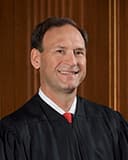
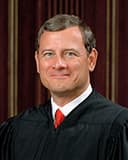
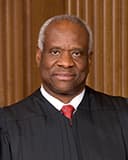
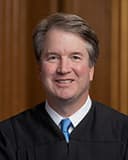

Sotomayor
·
Gorsuch
·
Barrett
·
Jackson
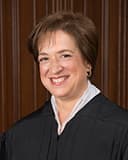
·
Decided April 29, 2026
Majority Opinion— Justice Alito
The Supreme Court, in a 6–3 decision written by Justice Alito, held that Louisiana's congressional redistricting map (known as SB8), which created a second majority-Black district, was an unconstitutional racial gerrymander. The case arose after a federal court found that Louisiana's earlier map likely violated Section 2 of the Voting Rights Act by not including an additional majority-Black district. Louisiana then drew SB8 to comply, but the new map was challenged as using race as the predominant factor in drawing district lines. The Court affirmed the lower court's ruling that SB8 violated the Equal Protection Clause of the Fourteenth Amendment.
The Court's key move was to reinterpret what Section 2 of the Voting Rights Act actually requires. For over 30 years, the Court had assumed without deciding that complying with the Voting Rights Act could justify the intentional use of race in redistricting. The Court now answered that question: compliance with Section 2, properly understood, can be a compelling interest — but only when Section 2 actually demands the race-conscious action. The Court held that Section 2 must be read narrowly to stay within Congress's power to enforce the Fifteenth Amendment, which only prohibits intentional racial discrimination in voting. Under this reading, Section 2 imposes liability only when there is a strong inference that a state intentionally drew districts to give minority voters less opportunity because of their race — not merely because of partisan considerations.
The Court updated the longstanding Gingles framework for evaluating vote-dilution claims. Under the new standards, plaintiffs must show that their proposed alternative maps achieve all of the state's legitimate goals (including partisan objectives), must disentangle racial voting patterns from partisan ones, and must focus on evidence of present-day intentional discrimination rather than historical injustices. Applying this updated framework, the Court found that the earlier Robinson plaintiffs had failed to prove their Section 2 case at every step — their illustrative maps did not meet the state's political goals, their evidence of racially polarized voting did not account for partisanship, and their totality-of-circumstances evidence did not show current intentional discrimination. Because Section 2 did not actually require a second majority-Black district, no compelling interest justified Louisiana's race-based redistricting, making SB8 an unconstitutional racial gerrymander.
Concurring Opinions
Justice Thomas
Justice Thomas, joined by Justice Gorsuch, concurred fully with the majority but wrote separately to reiterate his longstanding view that Section 2 of the Voting Rights Act should never have been interpreted to apply to redistricting at all. He argued that the statutory language — which prohibits discriminatory 'voting qualifications,' 'prerequisites to voting,' or 'standards, practices, or procedures' — does not encompass how states draw district lines. In his view, Section 2 reaches only rules that regulate access to the ballot or how votes are counted, not a state's choice of one districting plan over another.
Thomas praised the majority's decision as largely ending what he called a 'disastrous misadventure' in voting-rights law, in which courts and legislatures systematically divided the country into racial electoral districts — drawing Black voters into 'Black districts,' Hispanic voters into 'Hispanic districts,' and so on. He characterized this practice as repugnant to a color-blind Constitution and argued that no Section 2 challenge to a districting plan should ever succeed.
Justice Kavanaugh
Justice Kavanaugh's concurrence is referenced in the syllabus and majority opinion as having raised the question in Allen v. Milligan of whether race-based redistricting under Section 2 could extend indefinitely into the future despite changed conditions. His concurrence in this case supported the majority's reasoning and its decision to update the Gingles framework in light of significantly changed circumstances since the Voting Rights Act was passed and since Gingles was decided in 1986.
Justice Roberts
Chief Justice Roberts joined the majority opinion in full. While no separate concurrence text from Roberts is provided beyond his joinder, his participation in the majority reflects his long-held view — expressed in cases like Shelby County v. Holder — that voting rights protections must be evaluated against current conditions rather than historical ones, and that the progress the nation has made in combating racial discrimination in voting is relevant to how broadly the Voting Rights Act should be applied.
Dissenting Opinions
Justice Kagan
Justice Kagan, joined by Justices Sotomayor and Jackson, wrote a forceful dissent arguing that the majority effectively destroyed the last remaining tool in the Voting Rights Act for combating racially discriminatory redistricting. She framed the decision as the final step in a decade-long campaign by the Court to dismantle the Act — first gutting Section 5's preclearance requirement in Shelby County (2013), then neutering Section 2's application to voting restrictions in Brnovich (2021), and now eliminating Section 2's protection against vote dilution through redistricting.
Kagan argued that the majority's new requirements are flatly contrary to Section 2's text and history. She emphasized that Congress in 1982 deliberately amended Section 2 to reject an intent requirement — the very thing the majority now effectively reimposed — because proving discriminatory motive against a legislature is nearly impossible. The statute was designed as a results test: it asks whether an electoral rule leaves minority voters with 'less opportunity' than others to elect representatives of their choice, not whether legislators harbored racial animus. Kagan explained that the majority exploited the correlation between race and partisan preference to make Section 2 claims impossible in practice. Because Black voters in many states tend to support Democrats and White voters tend to support Republicans, the majority's demand that plaintiffs 'disentangle race from politics' means that virtually any racially discriminatory redistricting can be recharacterized as mere partisan gerrymandering — which the Court declared non-justiciable in Rucho v. Common Cause. The result, Kagan warned, is that states can systematically dilute minority voting power with impunity. She also sharply criticized the majority for overruling Allen v. Milligan in all but name, just three years after that decision reaffirmed the Gingles framework and rejected attempts to reformulate Section 2 law.
Oral Argument Recording
Via Spotify ↗
Background & Facts
This case arose from Louisiana's 2022 congressional redistricting. In an earlier case called Robinson, a federal court found that Louisiana likely violated Section 2 of the Voting Rights Act by packing and cracking Black voters, giving them only one majority-minority congressional district despite their population size and geography supporting two. After a five-day hearing with 21 witnesses, the court issued a preliminary injunction ordering Louisiana to draw a new map. The Fifth Circuit affirmed this finding twice. Louisiana then enacted SB8, which created a second majority-minority district.
Six white voters (the Callais plaintiffs) challenged SB8 as an unconstitutional racial gerrymander, arguing that race predominated in drawing the new district. A three-judge panel agreed. The case was then complicated by Louisiana switching sides — initially defending SB8 but now arguing that race-based redistricting under Section 2 is unconstitutional. The Supreme Court ordered reargument on the broader constitutional question of whether Section 2 compliance can justify intentional use of race in redistricting.
The new District 6 under SB8 combined Black populations from the Baton Rouge area with Black populations from the northwest part of the state. Louisiana admitted it drew SB8 solely because of the Robinson litigation and would never have passed it otherwise. The state also acknowledged that while race was a non-negotiable factor, partisan considerations also heavily influenced the map's final shape.
Why This Case Matters
This case could fundamentally reshape voting rights law in the United States. If the Court rules that Section 2 compliance is not a compelling interest justifying race-conscious redistricting, it could effectively end the creation of majority-minority districts as remedies for vote dilution — districts that have been the primary mechanism by which minority candidates have been elected across the South. Every Black congressional representative, state justice, and most state legislators in Louisiana were elected from Voting Rights Act opportunity districts.
The case also tests whether the Court will revisit or limit the Gingles framework it reaffirmed just two years ago in Allen v. Milligan, whether Congress's enforcement power under the Fifteenth Amendment supports effects-based voting discrimination claims, and whether race-based remedies require a temporal limit. The Solicitor General's proposed middle ground — requiring plaintiffs' illustrative maps to account for a state's political objectives — could create an entirely new doctrinal framework for Section 2 vote dilution claims, potentially making it far harder to prove violations in states where racial and partisan identity are highly correlated.
The Circuit Split
This case raises the question of whether race-conscious redistricting mandated by Section 2 of the Voting Rights Act is constitutionally permissible under the Equal Protection Clause. Lower courts have applied the Gingles framework to require consideration of race, but the constitutionality of this framework as applied is increasingly contested.
Section 2 compels constitutionally permissible race-conscious redistricting
Holds that compliance with Section 2 of the VRA, as interpreted under the Gingles framework, constitutes a compelling interest that justifies the use of race in drawing district lines.
Section 2's compelled race-based redistricting raises constitutional concerns
Holds or suggests that the Gingles framework's requirement of race-based redistricting may exceed constitutional limits under the Equal Protection Clause, particularly after Dobbs-era equal protection jurisprudence.
The Arguments
Section 2 of the Voting Rights Act constitutionally authorizes race-conscious redistricting to remedy proven vote dilution. The Robinson court made robust factual findings of extreme racially polarized voting and vote dilution in Louisiana, and SB8 was a legitimate remedy that the Court's precedents, including Allen v. Milligan decided just two years ago, clearly support.
- Section 2 is self-limiting: as racially polarized voting and residential segregation decrease, plaintiffs cannot satisfy Gingles, and Section 2 cases have already decreased 50% in the past decade.
- SFFA is distinguishable because it involved the diversity rationale in university admissions, not a remedial statute derived from Congress's enforcement powers under the Reconstruction Amendments to remedy specified discrimination.
- Section 2 is not itself a remedy but a mechanism for identifying when equal electoral opportunity is being denied; the remedy is separate and may or may not involve race consciousness.
- If SB8 is found unconstitutional, the proper course is to remand for adoption of alternative maps that address the undisturbed Section 2 violation while satisfying the Constitution.
Key Exchanges with Justices
Justice Kavanaugh
“What should be the time limit on the intentional deliberate use of race to sort people into different districts, if not deference to Congress?”
Nelson conceded there should be no time limit on Section 2 itself, distinguishing the statute from individual remedies, but offered Grutter's 25-year framework as guidance if the Court insists on one.
Justice Gorsuch
“Is it acceptable for a federal court to order a remedial map that intentionally discriminates on the basis of race?”
Nelson carefully avoided endorsing 'discrimination' language but acknowledged that limited, narrowly tailored use of race may sometimes be necessary, with states having broader leeway than courts.
Justice Barrett
“How do we judge the compelling interest in avoiding a Section 2 violation when the underlying finding was only a preliminary injunction and the State disagreed with it?”
Nelson argued the finding remains a compelling interest because it was affirmed by two Fifth Circuit panels and the State ultimately conceded compliance.
Race-based redistricting is fundamentally contrary to the Constitution because it requires diminishing one racial group's voting strength and augmenting another's, embedding racial stereotypes. Louisiana switched its position to argue that Section 2, insofar as it requires race-based redistricting, is unconstitutional and has no logical end point.
- Louisiana drew SB8 solely because the Robinson litigation forced it to; the state fought against creating a second majority-minority district and did so only under threat of court-imposed maps.
- The Robinson findings relied on historical discrimination from the 1930s-1960s and racially polarized voting statistics that this Court in Northwest Austin said are not evidence of intentional discrimination.
- The Gingles framework produces results built on impermissible racial stereotypes about how members of a race think and vote, with no logical end point for race-based redistricting.
- The Court has left open for decades whether compliance with Section 2 is a compelling interest; it should finally answer that question in the negative.
Key Exchanges with Justices
Justice Kagan
“The race-based redistricting you're objecting to is designed to remedy a specific, proved violation of law — racial discrimination by the State. How could that fall subject to a categorical rule against it?”
Aguiñaga resisted the premise that Robinson established specific discrimination, arguing the Gingles totality-of-circumstances analysis does not identify a clear violation.
Justice Thomas
“Why did the State of Louisiana switch sides since our last argument?”
Aguiñaga explained the state always believed race-based redistricting was unconstitutional and that the reargument question teed up this issue directly, requiring candor.
Justice Jackson
“Where in Section 2 does it mandate another minority district? Why isn't identifying the equal opportunity problem a compelling state interest?”
Aguiñaga insisted that the practical operation of Section 2 always leads to majority-minority districts and that without intentional discrimination, there is no compelling interest for race-based remedies.
Section 2 effects findings alone can no longer justify racially gerrymandering citizens into single-member districts based on stereotypes about how they think and vote. If race-based remedies were ever acceptable, they cannot continue indefinitely, and any such remedy must be in response to intentional discrimination.
- The Gingles showing as currently applied only demonstrates correlation between race and party, not actual racially polarized voting separated from partisan voting.
- The remedy of creating majority-minority districts inherently involves racial stereotyping — making assumptions about voters' politics and preferences based on their race.
- A race-based remedy requires a compelling interest rooted in intentional discrimination, not merely effects-based findings.
- The injury in Shaw racial gerrymandering cases is always stereotyping, which occurs whenever race predominates in sorting voters into districts.
Key Exchanges with Justices
Justice Kagan
“What does stereotyping have to do with this when Section 2 requirements are just about where people live and how whites vote — not assumptions about people?”
Greim struggled to connect stereotyping to the liability side, ultimately locating it in the remedy rather than the Section 2 finding itself.
Justice Jackson
“Why do we have to change Section 2? If the problem is the remedy, why not just apply Shaw strict scrutiny to the particular map?”
Greim acknowledged Section 2 itself might not need changing but insisted on breaking the link between effects-based findings and race-based remedies.
Justice Sotomayor
“You're saying race can be used for partisan goals but can't be used to remedy discrimination — that's what you want us to hold?”
Greim deflected by returning to stereotyping concerns but could not fully reconcile permitting race awareness for some purposes while prohibiting it for remedial ones.
The Court should not invalidate Section 2 but should hold that plaintiffs' illustrative districts cannot disregard a state's political objectives, and that Section 2 plaintiffs cannot claim a lack of equal openness where politics rather than race is the likely reason for the state's refusal to create a majority-minority district. This would properly tailor Section 2 to situations presenting a significant risk of intentional discrimination.
- The arguments pressed here were neither raised nor rejected in Milligan; Alabama never argued incumbency protection or partisan advantage as reasons for its map.
- The Robinson court erred in three ways: ignoring incumbency protection, combining geographically disparate Black populations in violation of LULAC, and failing to control for partisan versus racial polarization.
- Section 2 as construed under Gingles functions as a reverse partisan gerrymander on racial grounds — requiring districts for Black Democrats that would never be created for white Democrats in Republican states.
- A properly construed effects test should identify situations presenting a significant risk of intentional discrimination, like cases where a state departs from its own race-neutral principles to disadvantage a racial group within the same partisan coalition.
Key Exchanges with Justices
Justice Jackson
“Why is intentional discrimination the bedrock requirement when Congress enacted Section 2 as enforcement legislation specifically to go beyond intent?”
Mooppan acknowledged Congress can go beyond intent but argued the effects test must be tailored to situations presenting a 'significant risk' of intentional discrimination, not mere partisan outcomes.
Justice Sotomayor
“The bottom line is just get rid of Section 2 because the test you're providing doesn't do anything for the effects test Congress identified.”
Mooppan insisted Section 2 would still apply in areas with intra-party racial polarization, like Harlem or parts of Florida, but this narrow scope concerned multiple justices.
Justice Gorsuch
“How do we control for state political objectives? Can a state come in later with litigation positions about its goals? How much racial cohesion is enough?”
Mooppan acknowledged difficulties on the margins but compared it to the Court's existing racial gerrymandering framework and Brnovich's new test for vote denial.
Precedent Cases Cited
Allen v. Milligan
599 U.S. 1
Central to the case as a nearly identical Section 2 challenge decided just two years prior. Robinson appellants argued it controls this case and forecloses revisiting Gingles; opponents argued their specific arguments were not raised or rejected there.
Thornburg v. Gingles
478 U.S. 30
Established the three-precondition framework for Section 2 vote dilution claims that is at the heart of the constitutional challenge. All parties debated whether this framework should be revised, limited, or maintained.
Students for Fair Admissions v. Harvard (SFFA)
600 U.S. 181
Louisiana and appellees argued it prohibits race-based classifications including in redistricting. Robinson appellants argued it is distinguishable because it involved university admissions diversity rationale, not remedying specified discrimination under Congress's enforcement power.
Shaw v. Reno (Shaw I)
509 U.S. 630
Established the racial gerrymandering cause of action under which the Callais plaintiffs challenged SB8, requiring strict scrutiny when race predominates in districting decisions.
City of Boerne v. Flores
The congruence-and-proportionality test for Congress's enforcement power was debated as potentially applicable to Section 2. Robinson appellants noted the Court held up the VRA as paradigmatic; opponents argued Section 2 as construed fails this test.
Rucho v. Common Cause
588 U.S. 684
The government argued that after Rucho established partisan gerrymandering as non-justiciable, states can openly articulate partisan objectives as traditional race-neutral principles, creating a new defense to Section 2 claims not previously available.
Cooper v. Harris
581 U.S. 285
Cited for the racial predominance standard in gerrymandering cases and for the principle that compliance with Section 2 is a compelling interest only if Section 2 is properly applied — the Court has assumed but not decided this question.
Miller v. Johnson
Cited for establishing that race as the predominant motivating factor triggers strict scrutiny in redistricting, and that DOJ's incorrect interpretation of Section 5 did not provide a compelling interest.
Legal Terminology
Analysis & Opinions
This article analyzes the far-reaching consequences of the Supreme Court's decision in Louisiana v. Callais, which effectively overruled Section 2 of the Voting Rights Act by holding that Congress lacked the power to prohibit voting practices with racially discriminatory effects absent discriminatory intent. The piece argues that the ruling's destructive impact extends broadly to the Reconstruction Amendments and congressional power, with implications becoming clearer in the weeks since the decision.
Following the Supreme Court's April 29 ruling that curtailed a key provision of the Voting Rights Act in Louisiana v. Callais, states like Louisiana and Tennessee have pursued last-minute redistricting efforts. The article discusses growing calls for Congress to legislatively override the Court's decision by banning mid-decade redistricting and partisan gerrymandering, highlighting that Congress can sometimes counteract Supreme Court rulings through new legislation.
The Atlantic argues that the Supreme Court has effectively created a right to discriminate in a ruling involving Alabama, contending that the state gambled on the Court's ideological leanings and prevailed. The article criticizes the decision as a significant rollback of anti-discrimination protections, likely referring to the Louisiana/voting rights redistricting context.
This New York Times opinion column by Jamelle Bouie argues that the Supreme Court dismantled key protections against racial discrimination in voting in an Alabama case under the banner of a 'colorblind Constitution.' Bouie contends this reasoning echoes the judicial logic that enabled Jim Crow–era segregation and disenfranchisement.
This opinion piece analyzes how the Supreme Court's decision in Louisiana v. Callais effectively extinguished vote-dilution claims under the Voting Rights Act without explicitly saying so. The authors examine whether the case adopted a new rule for when an electoral map constitutes an unconstitutional racial gerrymander, arguing that Justice Alito's majority opinion left key questions unanswered.
The article analyzes internal dynamics of the Roberts Court, noting that while the 6-3 conservative-liberal shorthand explains many decisions, it misses serious disagreements within the conservative majority. It uses Louisiana v. Callais as a key example to illustrate how 6-3 decisions can reflect different kinds of splits on the Court.
The Supreme Court cleared the way for Alabama to use its preferred congressional map in upcoming elections, despite lower courts having found problems with it. Second Lady Usha Vance also called for "respect" for the Court.
The Supreme Court allowed Alabama to use a congressional map that lower courts found to be racially discriminatory for the 2026 elections. The unsigned order held that the lower court's analysis departed from the Court's April 29 decision in Louisiana v. Callais, which made it more difficult for plaintiffs to prevail on claims that a map violates the Voting Rights Act.
This opinion piece argues that the Supreme Court's decision in Louisiana v. Callais effectively undermined Section 2 of the Voting Rights Act while weaponizing the equal protection clause, despite Justice Alito's claims that the Court was not abandoning prior frameworks. The author contends the ruling's impact on racial discrimination protections in voting is more significant than the Court acknowledged.
A Financial Times opinion piece criticizes the Supreme Court's decision in Louisiana v. Callais, arguing that it undermines six decades of Black voter enfranchisement protections. The article contends the ruling ignores established law and overturns longstanding precedent regarding racial gerrymandering and voting rights.
Legal scholar Erwin Chemerinsky critiques the Supreme Court's decision in Louisiana v. Callais, arguing it effectively nullified Section 2 of the Voting Rights Act. He highlights a largely overlooked inconsistency between the ruling and the established principle that federal courts should not undermine voting rights protections. The piece is part of a recurring series analyzing the real-world impact of Supreme Court decisions.
The Supreme Court has agreed to hear a sex discrimination case in its next term. Additionally, the Court sent two more Voting Rights Act cases back to lower courts for further consideration, likely in light of its recent Voting Rights Act jurisprudence.
The Supreme Court's recent decision on voting rights prompted swift action in Louisiana and Alabama to redraw their voting maps. The timing of the ruling placed the Court at the center of redistricting battles across the South, with some states already in the midst of primary elections.
This article discusses the continuing impact of the Supreme Court's recent redistricting rulings and notes that the Court is expected to release at least one opinion. It also references SCOTUSblog's live blog coverage of the Court's activity for the day.
The Supreme Court cleared the way for Alabama to use a new congressional map, a decision with implications for the state's upcoming primary elections. This follows the Court's recent redistricting rulings that have had significant downstream effects on state-level electoral maps and voting rights.
A New York Times opinion piece argues that the Supreme Court's ruling in Louisiana v. Callais has left the country in a dangerous position. The author contends the decision could intensify partisan tensions and ideological polarization in American politics.
The article discusses the Supreme Court's decision in Louisiana v. Callais, in which Justice Alito's opinion severely weakened Section 2 of the Voting Rights Act. The piece examines the devastating impact of this ruling and explores possible paths for fighting back against the gutting of this key civil rights provision.
The article covers the Supreme Court's handling of redistricting disputes, including its recent ruling in one case and an upcoming battle. It also notes that Justice Alito extended an order restoring mail access to an abortion pill.
Alabama has asked the Supreme Court to address its redistricting effort in the wake of a recent ruling on the Voting Rights Act. The case involves the state's congressional map and the drawing of majority-Black districts. The article examines the broader ripple effects of the Court's Voting Rights Act decision on redistricting nationwide.
The Supreme Court cleared the way for Alabama to use a new congressional district map that would eliminate a majority-Black district. A majority of the justices sided with Alabama in a move that could expedite changes to its redistricting plan. The decision has significant implications for minority voting representation under the Voting Rights Act.
The Supreme Court gave Alabama a major boost in its redistricting fight, with Alabama legislators hoping to strengthen GOP prospects in midterm elections. The decision follows last month's Supreme Court ruling that weakened the Voting Rights Act's protections for minority voters. The case involves Alabama's effort to redraw congressional districts to eliminate a majority-Black district.
Alabama has asked the Supreme Court to allow it to use its 2023 congressional map with one majority-Black district, rather than a court-ordered map with two such districts. The request stems from the ripple effects of the Court's April 29 ruling in Louisiana v. Callais, which struck down Louisiana's congressional map for racial gerrymandering. Alabama argues the Callais decision undermines the legal basis for the court-ordered two-district map that was designed to remedy the dilution of Black voting power.
Legal scholar Erwin Chemerinsky analyzes the Supreme Court's decision in Louisiana v. Callais, arguing it represents the culmination of decades of rulings that have limited the Voting Rights Act. The decision is expected to have a significant impact across the South, affecting election districts that were drawn to protect Black voters' representation. The article examines what the ruling means for the future of the Voting Rights Act and its practical consequences.
This article discusses whether the Supreme Court has finished with the Louisiana v. Callais voting rights case, while also briefly noting a slight delay in the start date for tariff refunds. The piece appears to explore the potential for further legal developments or implementation issues following the Court's Callais decision.
The article critiques the Supreme Court's decision in Louisiana v. Callais, which struck down the state's congressional map as an unconstitutional racial gerrymander. The author argues that the ruling effectively gutted the Voting Rights Act's commitment to racial equality in elections. The piece is part of a recurring series on election law and democracy.
The Supreme Court finalized its Voting Rights Act ruling in Louisiana v. Callais and temporarily restored mail access to the abortion pill mifepristone through an emergency stay. The article also notes that Justice Clarence Thomas is about to become the second-longest-serving justice in the Court's history.
The Supreme Court granted a request to immediately finalize its opinion in Louisiana v. Callais, which struck down the state's congressional map as an unconstitutional racial gerrymander. The expedited finalization allows Louisiana to draw a new map in time for the 2026 elections, potentially benefiting Republicans. Justice Ketanji Brown Jackson sharply criticized the court's decision.
The Supreme Court agreed to fast-track its decision in the Louisiana voting map case, Louisiana v. Callais, clearing the way for the case to return to lower courts so a new congressional map can be drawn. Louisiana voters had successfully challenged the state's map as an illegal racial gerrymander. The expedited action allows redistricting to proceed ahead of upcoming elections.
The Supreme Court cleared the path for Louisiana to redraw its congressional map following its opinion in Louisiana v. Callais, which weakened a central element of the Voting Rights Act. The action allows the state to proceed with redistricting ahead of the 2026 elections. The ruling has drawn significant criticism for its impact on voting rights protections.
The article covers multiple legal developments stemming from the Supreme Court's ruling in Louisiana v. Callais, including new redistricting-related lawsuits and the Louisiana governor's decision to suspend the House primary. It also addresses an ongoing legal battle over access to the abortion pill.
The Supreme Court issued a voting rights ruling requiring proof that a racial group was 'intentionally' disadvantaged, raising the bar for proving racial discrimination in voting cases. The dissent criticized this standard as making it nearly impossible to win such claims, highlighting a deep ideological clash among the justices over how to address racism in the electoral process.
SCOTUSblog recapped a busy week at the Supreme Court, covering multiple developments including issues related to tariff refunds and redistricting in Louisiana. The recap touches on the court's active docket and recent significant rulings and proceedings.
Following a major voting rights ruling on Louisiana's congressional map, the prevailing challengers asked the Supreme Court to immediately finalize its decision rather than wait the normal 32-day period. The urgency stems from the Louisiana Legislature's consideration of pushing back congressional primary deadlines to allow redistricting under a remedial map.
Readers and commentators reacted to a recent Supreme Court decision that they characterize as another assault on the Voting Rights Act of 1965, stepping backward on the relationship between voting rights and race. The opinion piece discusses the broader implications of the Court's ruling for racial equity in the electoral process.
The Supreme Court decided a major Voting Rights Act case and also heard oral arguments on the Trump administration's effort to revoke temporary protected status for Syrian and Haitian nationals. The Voting Rights Act decision and the TPS arguments were among the most significant developments of the day.
Following a Supreme Court ruling on the Voting Rights Act, a new wave of congressional redistricting is expected that could produce fewer competitive districts and more polarized politics. The decision is likely to reduce voter accountability and reshape the political landscape heading into future elections.
Chief Justice Roberts has long worked to limit the reach of the Voting Rights Act, dating back to his early career as a lawyer and continuing through his tenure on the bench. The latest ruling represents the culmination of a decades-long legal strategy to curtail the landmark civil rights law.
Following the Supreme Court's ruling that Louisiana's congressional districts were unconstitutional, the state is weighing redrawing its House maps. The Louisiana secretary of state announced the House primary election would be delayed, though the Senate primary will proceed as scheduled on May 16.
Democrats who previously championed independent redistricting commissions are now regretting that strategy in the wake of the Supreme Court's Voting Rights Act ruling. The commissions could slow Democrats' ability to redraw maps to counter Republican gerrymandering efforts enabled by the decision.
The Supreme Court issued a major ruling limiting the Voting Rights Act, with the majority arguing the law was a victim of its own success in advancing racial equality and is no longer as necessary. Dissenting justices countered that Congress, not the Court, should decide whether the law's protections are still needed.
The Supreme Court's decision limiting the Voting Rights Act could deliver Republicans additional House seats in the 2028 elections by enabling new redistricting that reduces the number of majority-minority districts. While it is too late for most states to redraw maps for the 2026 midterms, the ruling is expected to result in fewer Black members of Congress.
The Supreme Court's final day of oral argument for the term featured cases involving racial considerations in voting rights and immigration policy. The article also notes that all six Republican-appointed justices attended a White House state dinner for King Charles III, while the three Democratic-appointed justices were apparently not present. The piece previews arguments touching on race in redistricting and the administration's revocation of humanitarian protections.
The Supreme Court struck down a Louisiana congressional redistricting map that had been challenged as an unconstitutional racial gerrymander by a group of non-African American voters. The ruling is a major Voting Rights Act decision that found the map was the product of racially discriminatory line-drawing. The decision has significant implications for how race can be used in the redistricting process.
The Supreme Court's decision to strike down Louisiana's congressional redistricting map is shaking up the U.S. political landscape, forcing both parties to adjust to a new voting rights framework. The ruling has implications for political maps across the country as parties scramble to respond to the changed legal landscape surrounding race-conscious redistricting.
Analysis of what the Supreme Court's ruling striking down Louisiana's congressional map could mean for upcoming midterm elections. Democrats stand to lose at least one blue-leaning district in Louisiana, while Florida has approved a redder map and Republicans in other states are considering new district lines in light of the decision.
The Supreme Court struck down Louisiana's congressional redistricting map as an unconstitutional racial gerrymander, delivering another significant blow to the Voting Rights Act. The decision could make it harder for lawmakers nationwide to create majority-minority voting districts, further limiting the tools available to protect minority voting power in the redistricting process.
This opinion piece argues that the Supreme Court's ruling striking down Louisiana's congressional map effectively erased what remained of the Voting Rights Act's protections. The author contends that by claiming to disentangle race from politics, the Court has given white voters more power at the expense of racial minorities.
The Supreme Court issued a decision limiting a key provision of the Voting Rights Act, which could have major implications for majority-minority congressional districts across the South. The ruling may prompt Republicans to redraw these districts, potentially costing many Black Democrats their seats.
This article provides analysis and commentary on the Supreme Court's recent decision curtailing the Voting Rights Act. The ruling is expected to have significant political ramifications for redistricting and minority representation.
The Supreme Court struck down Louisiana's congressional map, finding that the state's redistricting constituted an unconstitutional racial gerrymander under the Voting Rights Act. The decision has significant implications for how states draw district lines to comply with federal voting rights protections.