Landor v. Louisiana Department of Corrections and Public Safety
Whether the Religious Land Use and Institutionalized Persons Act (RLUIPA) clearly authorizes individual capacity damages suits against state prison officials, and whether Congress has the constitutional power under the Spending Clause to impose such personal liability on individuals who are not direct recipients of federal funds.
The Decision
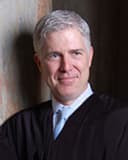
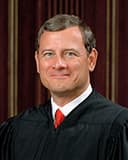
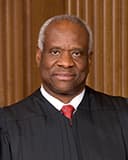
Thomas
·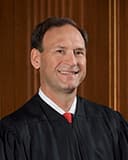
Alito
·
Sotomayor
·
Kagan
·
Kavanaugh
·
Barrett
·
Decided June 23, 2026
Majority Opinion— Justice Gorsuch
The Supreme Court held that individual state prison officers cannot be sued for money damages in their personal capacities under the Religious Land Use and Institutionalized Persons Act (RLUIPA). The case involved Damon Landor, a Rastafarian prisoner whose religious beliefs required him to keep his hair uncut. Despite being shown a court ruling protecting his right to do so, prison officers forcibly shaved his head. Landor sued both the Louisiana Department of Corrections (LDOC) and the individual officers for damages under RLUIPA.
The Court reasoned that RLUIPA was enacted under Congress's Spending Clause power, which allows Congress to attach conditions to federal funds but does not give Congress the power to directly regulate people's conduct. Because the Spending Clause works like a contract — binding only those who voluntarily and knowingly agree to its terms — only entities that actually accepted federal funds and agreed to RLUIPA's conditions can be held liable. LDOC, as the recipient of federal funds, agreed to these conditions, but the individual prison officers never personally entered into any agreement with the federal government. Without their voluntary and knowing consent, Congress cannot impose personal liability on them through a Spending Clause statute.
The Court rejected several counterarguments: that the officers could be liable as agents of LDOC (contract law does not make agents liable for their principal's contracts); that merely receiving a paycheck from a federally funded employer counts as receiving federal funds (which would give Congress virtually unlimited regulatory power); and that the Necessary and Proper Clause fills the gap (that clause allows Congress to protect federal funds from theft and fraud, not to impose liability on nonconsenting individuals for policy violations unrelated to safeguarding the money itself). The practical effect is that prisoners who suffer religious-liberty violations in state prisons will generally be unable to recover money damages from the individual officers responsible under RLUIPA.
Dissenting Opinions
Justice Jackson
Justice Jackson, joined by Justices Sotomayor and Kagan, argued that the majority fundamentally mischaracterized what Congress did when it enacted RLUIPA. Congress did not merely enter into a contract — it passed a law through the full legislative process. That law clearly authorizes individual-capacity damages suits against prison officials, using language the Court had already interpreted in a unanimous 2020 decision (Tanzin v. Tanvir) to permit exactly that kind of lawsuit under RLUIPA's sister statute, RFRA. The dissent emphasized that everyone — including the respondents — agreed that prison officials must comply with RLUIPA's substantive requirements. The dispute was solely about whether those officials could face personal financial consequences for violating the law. Jackson found it illogical and unprecedented to separate the duty to obey the law from any meaningful remedy for breaking it.
The dissent argued that the majority's rigid contract analogy contradicts decades of precedent. The Court had previously upheld Congress's ability to use the spending power to regulate the conduct of people who never directly received federal funds, including in South Dakota v. Dole (regulating underage drinkers) and Sabri v. United States (criminalizing bribery of employees at federally funded agencies). Even if the Spending Clause alone were insufficient, the Necessary and Proper Clause — which allows Congress to enforce its other powers through appropriate penalties — would supply the needed authority. Jackson warned that the majority's approach could weaken many important federal laws enacted under the spending power, including civil rights statutes, environmental laws, and healthcare legislation. She concluded that the decision would leave prisoners like Landor — whose faith was violated in the most direct way imaginable — with no effective remedy, undermining the very purpose of RLUIPA.
Background & Facts
Damon Landor was an inmate in a federally funded Louisiana state prison who practiced a religion requiring him to keep his hair long. When he handed prison officials a copy of controlling court precedent holding that RLUIPA protected his right to keep his hair, they threw it away, handcuffed him to a chair, and shaved him bald. He sued the warden and unnamed prison guards for damages under RLUIPA, which prohibits state prisons receiving federal funds from imposing substantial burdens on inmates' religious exercise without a compelling governmental interest.
The case was dismissed by the lower courts. The Fifth Circuit, consistent with every other federal circuit court, held that RLUIPA does not authorize individual capacity damages suits against state officials. The courts reasoned either that the statute's language ('appropriate relief') does not clearly authorize damages, or that Congress lacks constitutional authority under the Spending Clause to impose personal liability on state employees who are not themselves recipients of federal funds.
Landor petitioned the Supreme Court, arguing that RLUIPA's text expressly creates a cause of action against 'an official or any other person acting under color of state law,' which plainly encompasses individual capacity suits, and that 'appropriate relief' in that context clearly includes damages, especially in light of the Court's 2020 decision in Tanzin v. Tanvir interpreting identical language in RLUIPA's sister statute, RFRA.
Why This Case Matters
This case has the potential to reshape how Spending Clause legislation is enforced against state employees. A ruling for Landor would overturn a unanimous consensus among all federal circuit courts and establish that state prison officials can be personally liable for damages under RLUIPA. This would have ripple effects far beyond religious liberty law, potentially affecting enforcement of Title IX, Title VI, EMTALA, and dozens of other federal statutes enacted under the Spending Clause that impose conditions on recipients of federal funds.
A ruling for Louisiana, on the other hand, could call into question prior Supreme Court precedents like Salinas and Sabri that allowed Congress to reach non-recipients through the Necessary and Proper Clause in conjunction with spending power. The case also raises fundamental questions about the limits of the contract analogy for Spending Clause legislation — specifically whether individual state employees must personally consent to conditions that their employer agreed to when accepting federal funds, or whether their voluntary acceptance of employment is sufficient.
The Circuit Split
Circuits disagree on whether RLUIPA's text provides sufficiently clear notice to authorize damages claims against prison officials in their individual capacities, implicating Spending Clause limits on Congress's ability to impose personal liability on individuals who are not direct recipients of federal funds.
RLUIPA authorizes individual-capacity damages
Holds that RLUIPA's text and structure provide clear authorization for damages suits against state prison officials in their individual capacities.
RLUIPA does not authorize individual-capacity damages
Holds that RLUIPA does not clearly authorize individual-capacity damages suits against prison officials, and the Spending Clause limits Congress's ability to impose such liability on non-recipients of federal funds.
The Arguments
RLUIPA clearly authorizes individual capacity damages suits against state prison officials. The statute expressly creates a cause of action against 'an official or any other person acting under color of state law' for 'appropriate relief,' and in the context of individual capacity suits, appropriate relief has always included damages. This is constitutional because prison officials voluntarily accept employment in federally funded programs subject to the conditions Congress attached, and this Court has already upheld more expansive uses of spending power in cases like Salinas and Sabri.
- RLUIPA uses materially identical language to RFRA, which the Court unanimously held in Tanzin v. Tanvir authorizes individual capacity damages suits — they are 'twins separated at birth' and must mean the same thing.
- The statute expressly authorizes suit against 'an official or any other person acting under color of state law,' which obviously means individual capacity, and without damages such a provision would be meaningless since injunctive relief is already available in official capacity suits.
- Prison officials consent to RLUIPA's conditions by voluntarily accepting employment in a federally funded program, creating a chain of privity from the federal government through the state to individual employees.
- Congress can combine its Spending Clause power with the Necessary and Proper Clause to impose liability on individuals, as the Court upheld criminal liability in Salinas and civil penalties reaching members of the general public in Sabri.
Key Exchanges with Justices
Justice Kavanaugh
“How do you deal with the clear statement requirement when 'appropriate relief' is not as clear as it could be in encompassing damages?”
Tripp responded that the analysis must start with identifying the individual capacity action, after which damages are presumptively available under the Franklin presumption — the same approach Tanzin used.
Justice Barrett
“How could it have been clear to states when every circuit had said damages actions were not available under RLUIPA?”
Tripp argued that clarity is measured by the statutory text at enactment, not by subsequent circuit court interpretations, and that many circuits relied on constitutional rather than textual grounds.
Justice Gorsuch
“Where did the individual defendants agree with the federal government to be bound, and what notice did they have?”
Revealed Tripp's position that employees consent by voluntarily taking the job, but also that under cases like Sabri, formal consent may not even be required when Congress invokes the Necessary and Proper Clause.
RLUIPA clearly authorizes individual capacity damages suits. RFRA and RLUIPA are sister statutes with materially identical text, so Tanzin's interpretation of RFRA controls. Under the combined Spending and Necessary and Proper Clauses, Congress can create personal liability for state officials acting as agents of the state when they violate conditions on federal funding — and this case is far easier than Salinas or Sabri, which upheld criminal liability.
- The individual capacity action in RLUIPA is express, not implied, distinguishing this from cases like Medina where the Court found insufficient clarity for enforcement through Section 1983.
- Qualified immunity serves as an important backstop ensuring officials are only liable when they violate clearly established law.
- Ruling for Louisiana would be ground-breaking and could imperil dozens of federal statutes including the Federal Nursing Home Reform Act, EMTALA, Title X, and anti-bribery statutes like Section 666.
- The federal government does not want to fund institutions that violate religious liberty, so enforcing RLUIPA's conditions protects the integrity of federal spending programs.
Key Exchanges with Justices
Justice Gorsuch
“What do we do about the federal government's representation in Tanzin itself that RLUIPA does not clearly authorize suits against individual state employees?”
Baird candidly acknowledged the government lost 8-0 in Tanzin and has since taken the Court's decision to heart, but the prior inconsistency weakened the clarity argument.
Justice Barrett
“Your theory means no consent and no notice is required for employees — doesn't your logic also have to extend to members of the general public?”
Baird tried to limit the holding to government officials, suggesting the Necessary and Proper analysis might differ for members of the general public, but struggled to articulate a clear limiting principle.
Justice Kavanaugh
“If we conclude the statute does not clearly authorize damages, that avoids all the ground-breaking constitutional issues you've been discussing, correct?”
Baird acknowledged this but warned of downstream consequences for RLUIPA's alternative jurisdictional hooks under the Commerce Clause and land use provisions.
RLUIPA does not clearly and unambiguously create an individual capacity cause of action for damages, and even if it did, Congress exceeded its constitutional authority because individual state employees are non-recipients of federal funds who never consented to personal liability. The Spending Clause requires bilateral agreement, and no such agreement exists between individual prison guards and the federal government.
- Ten federal circuit courts have unanimously held for 25 years that RLUIPA does not provide individual capacity damages, including four circuits that reaffirmed this position after Tanzin.
- Salinas and Sabri are distinguishable because those statutes targeted corruption of federal funds and the Court expressly said they were not Spending Clause legislation but exercises of Necessary and Proper Clause power to protect federal dollars.
- Under contract principles, an agent who signs a contract on behalf of a principal is not personally bound — a fortiori, employees who had no involvement in the spending process cannot be personally liable.
- Louisiana has its own state RLUIPA equivalent that expressly provides for damages, so prisoners already have an available remedy.
Key Exchanges with Justices
Justice Kagan
“Your arguments about lack of notice would apply equally to Section 1983 suits, which exist and are brought against state officers all the time to enforce Spending Clause statutes.”
Aguiñaga tried to distinguish by arguing the antecedent question is whether Congress can create a substantive right running against individuals, but struggled to explain why RLUIPA is different from rights enforced through 1983.
Justice Sotomayor
“You admit the warden is bound by RLUIPA as the state, could be held in contempt for violating an injunction, but shouldn't know he's personally liable for damages too?”
Aguiñaga conceded the tension but relied on the unanimous circuit court consensus, revealing the difficulty of maintaining a distinction between official and individual capacity liability when the substantive obligation is identical.
Justice Jackson
“Didn't we answer this in Talevski by holding that Spending Clause legislation is treated like any other law for purposes of enforcement?”
Aguiñaga argued Talevski only involved suits against recipients, but this distinction appeared to satisfy few justices.
Precedent Cases Cited
Tanzin v. Tanvir
Held unanimously that RFRA's identical 'appropriate relief against a government' language authorizes individual capacity damages suits against federal officials. Petitioner argues RLUIPA must be read the same way as its 'sister statute.'
Salinas v. United States
522 U.S. 52
Upheld criminal liability for a state prison official in a federally funded program who accepted bribes, establishing that Congress can reach individual officers through the Necessary and Proper Clause to protect the integrity of federal programs.
Sabri v. United States
541 U.S. 600
Upheld Congress's power to criminalize bribery of officials in organizations receiving federal funds, even reaching members of the general public, as a valid exercise of the Necessary and Proper Clause. Respondents argue it is distinguishable because the Court said it was not Spending Clause legislation.
Sossamon v. Texas
563 U.S. 277
Held that RLUIPA's 'appropriate relief' language does not clearly waive state sovereign immunity for damages suits against states. Petitioner distinguishes it by arguing the context of suits against individuals is fundamentally different from suits against sovereigns.
South Dakota v. Dole
483 U.S. 203
Established the framework for evaluating Spending Clause conditions, including requirements of clear notice, germaneness, non-coercion, and no independent constitutional bar. Both sides rely on this framework.
Franklin v. Gwinnett County Public Schools
503 U.S. 60
Established the presumption that damages are available where Congress creates a right and a cause of action unless Congress says otherwise. Petitioner argues this presumption applies to RLUIPA's individual capacity action.
Health and Hospital Corp. of Marion County v. Talevski
Held that rights created by Spending Clause legislation can be enforced through Section 1983, rejecting the argument that the Spending Clause basis of a statute prevents 1983 enforcement. Both sides dispute its implications.
Cummings v. Premier Rehab Keller, P.L.L.C.
596 U.S. 212
Applied the contract analogy to hold that emotional distress damages are not available under Spending Clause antidiscrimination statutes because a reasonable funding recipient would not have understood they were agreeing to such liability. Respondents rely on its emphasis on bilateral agreement.
Legal Terminology
Analysis & Opinions
The Supreme Court ruled 6-3 that former Louisiana inmate Damon Landor cannot sue prison officials who shaved his head despite having a court order allowing him to keep long hair for religious reasons. The justices held that the federal law protecting prisoners' religious rights does not authorize Landor's lawsuit seeking damages from the officials.
The Supreme Court barred Damon Landor, a Rastafarian former Louisiana prisoner, from suing prison guards who shaved his dreadlocks in violation of his religious beliefs. The ruling held that federal religious freedom protections for prisoners did not provide a basis for his damages lawsuit against the officials.
The Supreme Court ruled that a Rastafarian man cannot sue Louisiana prison officials who shaved his dreadlocks, despite his religious objections. The decision, focused on legal technicalities of prisoner religious freedom statutes, marks a departure from the court's recent trend of expanding religious liberty protections.