Ahmad Abouammo v. United States
Whether the government may prosecute a foreign national for violating U.S. criminal law based on conduct occurring outside U.S. territory without adequate statutory authorization or constitutional safeguards.
The Decision
Per Curiam

Roberts
·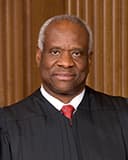
Thomas
·
Alito
·
Sotomayor
·
Kagan
·
Gorsuch
·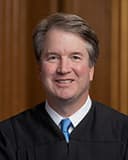
Kavanaugh
·
Barrett
·
Jackson
·Decided January 26, 2026
Majority Opinion
The Supreme Court reversed the Fourth Circuit's decision granting federal habeas relief to Charles Brandon Martin, who was convicted in Maryland state court as an accessory before the fact in the attempted murder of his pregnant girlfriend, Jodi Torok. Martin argued that the State violated his rights under Brady v. Maryland by failing to disclose a forensic report about a laptop that could have been used to impeach a prosecution witness named Sheri Carter, who testified that Martin had used the laptop to research gun silencers. The Maryland appellate court found the undisclosed report was not "material" under Brady because there was no reasonable probability the trial outcome would have been different given the strength of the other evidence. The Fourth Circuit disagreed, concluding the state court had applied the wrong legal standard and that every fair-minded jurist would find the report material.
The Supreme Court held that the Fourth Circuit failed to apply the strict deference required by the Antiterrorism and Effective Death Penalty Act (AEDPA). Under AEDPA, federal courts may only overturn a state court's decision on a constitutional claim if it was contrary to, or an unreasonable application of, clearly established federal law — a standard far more demanding than simple disagreement. The Court found that the Maryland appellate court correctly stated and applied the Brady materiality test, and that federal courts cannot reject a state court's reasoning merely because its written opinion was not sufficiently detailed or "nuanced." The Court further held that given the strong evidence against Martin — including DNA linking him to a modified Gatorade bottle likely used as a homemade silencer, eyewitness testimony, motive evidence, and evidence of his gun ownership — a fair-minded jurist could easily conclude that disclosure of the laptop report would not have changed the verdict. The practical effect is that Martin's conviction stands and he is not entitled to a new trial.
Oral Argument Recording
Via Spotify ↗
Background & Facts
Ahmad Abouammo, a foreign national, was prosecuted in federal court for criminal conduct allegedly related to his activities outside the United States. The case involves questions about the extraterritorial application of U.S. criminal statutes and the scope of federal jurisdiction over non-citizens for offenses committed abroad. The U.S. Court of Appeals for the Ninth Circuit upheld the conviction on December 4, 2024, and subsequently denied rehearing on March 18, 2025.
Abouammo filed a petition for certiorari seeking Supreme Court review, initially requesting an extension of time to file. The Court granted the extension and ultimately accepted the case for review, limiting it to Question 1 presented in the petition. The case raises fundamental questions about the constitutional limits on federal prosecutorial power when applied extraterritorially.
Why This Case Matters
This case addresses the scope of U.S. federal criminal jurisdiction over foreign nationals and conduct occurring outside U.S. borders—an issue with significant implications for international law, diplomatic relations, and the protection of constitutional rights. A decision upholding expansive extraterritorial jurisdiction could empower the government to prosecute individuals worldwide for violations of federal law, while a decision narrowing such jurisdiction could require clearer statutory language and constitutional protections before the U.S. can prosecute conduct abroad. The presence of amicus briefs from the National Association of Criminal Defense Lawyers and the Cato Institute underscores the importance of the case to civil liberties and criminal justice reform advocates.
The Arguments
The government lacks sufficient statutory authority to prosecute Abouammo, a foreign national, for conduct occurring outside U.S. territory, and applying U.S. criminal law extraterritorially without clear congressional intent raises constitutional concerns. Abouammo argues that federal statutes must be strictly construed to avoid applying them beyond U.S. borders unless Congress has expressly authorized such extraterritorial reach.
- Federal criminal statutes presumptively do not apply extraterritorially absent clear congressional authorization
- The government has not identified an explicit statutory provision authorizing prosecution for this conduct abroad
- Applying U.S. law to foreign nationals for foreign conduct raises due process and constitutional concerns
- Stricter construction is necessary to avoid conflicts with international law and other nations' sovereignty
The applicable federal statutes provide sufficient authority for prosecuting Abouammo's conduct, and the Constitution permits the exercise of jurisdiction over foreign nationals whose actions have effects within the United States or implicate U.S. interests. The government contends that the Ninth Circuit correctly upheld the conviction and that no extraordinary constitutional or statutory limitations should restrict prosecution.
- The relevant federal statutes contain language sufficient to authorize extraterritorial prosecution of the charged conduct
- The Constitution and international law permit jurisdiction based on effects within U.S. territory or injury to U.S. persons and interests
- The defendant's actions had direct connections to the United States, justifying federal jurisdiction
- Limiting prosecutorial reach would undermine the government's ability to protect national security and U.S. persons abroad
Precedent Cases Cited
United States v. Bowman
260 U.S. 94
Establishes the foundational principle that federal criminal statutes are presumed not to apply extraterritorially unless Congress clearly intends otherwise; directly relevant to determining the geographic scope of the statutes at issue.
Foley Bros., Inc. v. Filardo
336 U.S. 281
Reaffirms and clarifies the presumption against extraterritorial application of federal statutes, requiring clear statutory language for overseas application; foundational to petitioner's argument.
EEOC v. Aramco
499 U.S. 244
Modern application of the presumption against extraterritorial application; requires that statutes clearly evince congressional intent to apply abroad, directly supporting petitioner's statutory interpretation argument.
Morrison v. National Australia Bank Ltd.
561 U.S. 247
Reaffirms the strong presumption against extraterritorial application of federal statutes and requires clear statement of congressional intent; controls the analysis of statutory scope in this case.
United States v. Plesinger
947 F.3d 1066
Recent Ninth Circuit precedent addressing extraterritorial application of federal law; directly relevant to understanding the court of appeals reasoning that the petitioner challenges.
United States v. All Property and Assets Held at Bank Julius Baer, International, Ltd.
959 F.2d 451
Addresses the effects doctrine and jurisdiction over foreign conduct that affects U.S. interests; relevant to respondent's argument that Abouammo's conduct had sufficient U.S. nexus.
Legal Terminology
Analysis & Opinions
The Supreme Court unanimously ruled in Abouammo v. United States that federal prosecutors can only try a defendant in the district where the crime was actually committed, not where its intended effects were felt. Justice Kagan wrote the opinion, rejecting a lower court's interpretation that the intent element of a federal document-falsification statute allowed prosecution based on contemplated effects rather than the location of the criminal act itself.