Havana Docks Corp. v. Royal Caribbean Cruises, Ltd.
Whether a U.S. national whose time-limited property interest (concession/usufruct) in Cuban property was confiscated can bring a trafficking claim under Title III of the Helms-Burton Act against parties who used that property after the concession would have naturally expired.
The Decision
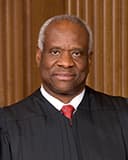


Roberts
·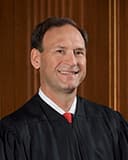
Alito
·
Gorsuch
·
Kavanaugh
·
Barrett
·
Jackson
·
Decided May 21, 2026
Majority Opinion— Justice Thomas
The Supreme Court ruled 8–1 in favor of Havana Docks Corporation, holding that four commercial cruise lines can be held liable under Title III of the Cuban Liberty and Democratic Solidarity Act for using docks at the Port of Havana that were confiscated by the Cuban Government in 1960. Havana Docks, a U.S. company, had built and operated the docks under a time-limited concession set to expire in 2004. After Castro's revolution, the Cuban Government seized the docks without compensation. Between 2016 and 2019, the cruise lines used those same docks to embark and disembark nearly a million passengers. The cruise lines argued they could not be liable because Havana Docks' property interest would have expired in 2004 anyway, even without confiscation. The Eleventh Circuit agreed with the cruise lines, but the Supreme Court reversed.
Justice Thomas, writing for the majority, explained that the statute imposes liability on anyone who traffics in "property which was confiscated by the Cuban Government"—and that "property" includes the physical docks themselves, not just the time-limited concession that Havana Docks once held. The Court found that the docks were confiscated when armed Cuban agents physically occupied them and expelled Havana Docks' representatives. Because the cruise lines admittedly used those confiscated docks without Havana Docks' authorization, they met the statutory definition of trafficking. The Court rejected the lower court's counterfactual approach—which asked whether the cruise lines' conduct would have violated Havana Docks' rights had there been no confiscation—calling it unworkable and inconsistent with the statute's text. The case was sent back to the appeals court to address remaining defenses not yet decided.
Concurring Opinions
Justice Sotomayor
Justice Sotomayor, joined by Justice Kavanaugh, agreed fully with the majority's decision but wrote separately to flag two significant concerns for future proceedings. First, she warned that Havana Docks' reading of the statute could lead to potentially unlimited recoveries—allowing the company to collect over $100 million from every single entity that ever uses the confiscated docks, possibly even individual passengers or third-party vendors. She noted that Congress likely did not intend someone who suffered a finite loss to reap infinite recoveries, and that such extreme penalties could raise constitutional due process concerns.
Second, Justice Sotomayor highlighted the unresolved question of whether the cruise lines' travel to Cuba fell within a statutory exception for "transactions and uses of property incident to lawful travel to Cuba." She pointed out that the Obama administration had actively encouraged cruise travel to Cuba, that one cruise line had received a specific government license authorizing its voyages, and that the State Department had previously indicated it would not pursue enforcement against the cruise lines. She suggested that holding the cruise lines liable for conduct the government had encouraged could raise its own due process problems, and urged the lower court to address these issues on remand.
Dissenting Opinions
Justice Kagan
Justice Kagan dissented, arguing that the majority misreads the statute by treating the physical docks as the "property which was confiscated" from Havana Docks. She emphasized that Havana Docks never owned the docks themselves—they always belonged to the Cuban Government. What Havana Docks owned was only a time-limited concession (essentially a long-term lease) to use and profit from the docks, set to expire in 2004. Since the cruise lines did not use the docks until 2016—more than a decade after that concession would have expired—they did not traffic in any property that was actually confiscated from Havana Docks.
Justice Kagan argued that the statute requires the defendant to traffic in the specific "property which was confiscated," not in some different, broader piece of property in which the plaintiff once had an interest. She compared the situation to spatial boundaries: just as Havana Docks could not sue someone for using a neighboring dock outside its concession area, it should not be able to sue for use of the docks during a time period outside its concession term. She warned that the majority's approach effectively converts every time-limited property interest into a perpetual one, allowing recovery "to infinity and beyond"—a result she believed Congress never intended.
Oral Argument Recording
Via Spotify ↗
Background & Facts
Havana Docks Corporation held usufruct rights—essentially a long-term lease—over dock facilities in Havana, Cuba. In 1960, the Cuban government sent armed soldiers to physically seize control of the docks, confiscating Havana Docks' interests without compensation. The concession would have naturally expired in 2004. The Foreign Claims Settlement Commission (FCSC) certified Havana Docks' claim, noting its time-limited nature and valuing the lost property interests.
Royal Caribbean and three other cruise lines paid the Cuban government approximately $130 million to use these same docks, generating roughly a billion dollars in revenue, primarily after 2004. Havana Docks sued under Title III of the Helms-Burton Act, which creates a private right of action against anyone who 'traffics' in property confiscated by the Cuban government. The district court awarded Havana Docks the full certified claim amount of approximately $9 million against each cruise line.
The Eleventh Circuit reversed in part, holding that because the concession expired in 2004, any use of the docks after that date did not constitute trafficking in 'confiscated property.' The court reasoned that the property interest had a temporal boundary, and once it expired, there was nothing left to traffic in. Havana Docks appealed to the Supreme Court, arguing this reading guts the statute's purpose of deterring exploitation of confiscated Cuban property.
Why This Case Matters
This case could significantly affect the scope and enforceability of the Helms-Burton Act's private right of action, which was suspended by successive presidents from 1996 until 2019. The outcome will determine whether time-limited property interests confiscated by Cuba can generate perpetual trafficking claims, or whether those claims expire when the underlying interest would have naturally ended. This has implications for thousands of certified claims against Cuba worth billions of dollars.
More broadly, the case tests the balance between the statute's foreign policy objectives—pressuring Cuba toward democracy by deterring commercial dealings involving confiscated property—and traditional property law principles about the temporal boundaries of property interests. The Court's decision will also clarify the role of the FCSC's certified claims in Title III litigation and could affect how American businesses assess legal risk when operating in or near Cuba.
The Arguments
The docks themselves are the confiscated property, and the certified FCSC claim creates an ongoing right to sue anyone who traffics in that property until Cuba pays compensation or returns the property. Even if the confiscated property is viewed as only the time-limited interest, the remedy functions like a takings claim that persists until payment is made, regardless of whether the underlying interest has expired.
- The statutory definition of 'confiscated' means property remains tainted until the claim is settled, property returned, or adequate compensation paid
- The FCSC's certified claim does not contain a termination date and continues to exist as a lien-like encumbrance on the property
- The Eleventh Circuit's reading would effectively gut the statute by freeing up all expired leases, life interests, and patents for exploitation
- Cruise lines were on notice of the risk, paid Cuba $130 million, and lobbied against lifting the suspension of the private right of action because they knew they were liable
Key Exchanges with Justices
Justice Jackson
“Isn't the other answer to Justice Thomas's concerns about property taken care of by the statute itself, since 'property' is a defined term that includes leaseholds and similar interests?”
Justice Jackson signaled strong support for the petitioner's position that the statute's defined terms resolve the property-type question.
Justice Kagan
“Isn't there a temporal boundary on the property interest, just like the spatial boundary in the blue-half/yellow-half hypothetical, so that once the concession expires, there's nothing left to complain about?”
It revealed the key analytical tension in the case—whether temporal and spatial boundaries on property interests should be treated identically for trafficking purposes.
Justice Barrett
“If the certified claim includes disparate property like a grocery store in the middle of the island that the cruise lines never touched, are they liable for that too?”
Petitioner's affirmative answer revealed a potentially unlimited scope of liability that concerned multiple justices.
The confiscated property interest was reduced to a certified claim at the moment of confiscation, and that claim persists as a lien-like encumbrance until Cuba compensates or returns the property. The statute is primarily a foreign policy tool designed to deter trafficking, not merely a compensation scheme, which justifies broad liability.
- Cuba seized control of docks Havana Docks built, which qualifies as confiscation even though Cuba owned the underlying property
- The 44-year interest was distilled into a claim at confiscation, and anyone who interferes with that claim is liable until compensation is paid
- Congressional findings show trafficking provides Cuba with badly needed financial benefits that undermine U.S. foreign policy
- Disagreed with petitioner on the grocery store hypothetical—trafficking must be in the specific property at issue, not the entire bundled claim
Key Exchanges with Justices
Justice Kagan
“Aren't you converting a time-limited interest into a perpetual interest because of the seizure?”
The government's response—that the claim entitles recovery for 44 years or return of those years, not perpetual ownership—was a key distinction in the case.
Justice Gorsuch
“Does the government believe the statute allows multiple recoveries from different traffickers?”
The government declined to take a firm position but suggested Congress was not concerned with multiple recoveries given the foreign policy deterrence objectives.
Justice Jackson
“Doesn't the enactment history show Congress was really trying to freeze and highlight confiscated property rather than create a compensation scheme?”
The government agreed, reinforcing the argument that the statute's broad scope is justified by foreign policy objectives rather than compensatory principles.
The statute requires a one-to-one correspondence between the specific property interest confiscated and the property interest trafficked in. Since 'property' is a defined term that includes time-limited interests like leaseholds, and the confiscated concession expired in 2004, post-2004 use of the docks does not constitute trafficking in the confiscated property.
- The statute uses 'the claim to such property,' with 'such property' referring back to the specific property interest confiscated, not the physical location
- Temporal limits on property interests function the same as spatial limits—trafficking in a neighbor's property or after a lease expires both fall outside the statute
- The certified claim itself included telephone stock and repudiated debts that cannot be trafficked in, showing the claim amount does not equal the scope of trafficking liability
- The statute contains moderating provisions like grace periods and statutes of limitations, showing it was not designed to be maximally punitive
Key Exchanges with Justices
Justice Gorsuch
“There was confiscation of a property interest in the docks, your client used the docks, there's a claim—what's missing?”
Clement's answer—that the missing element is the overlap between the specific property interest confiscated and the specific interest trafficked—crystallized the core dispute.
Justice Jackson
“Why doesn't the statute work if we understand the FCSC determines the person's property interest, rather than courts re-evaluating it?”
Clement's response that the FCSC itself recognized the time-limited nature of the interest showed he was not fighting the FCSC's certification but rather its implications.
Justice Alito
“Didn't Congress say that nobody is to use the property that was the subject of the concession until there's compensation, and cruise lines went in with their eyes open?”
Clement conceded it was a close question, acknowledging the weakness of the respondent's position on fair notice grounds.
Precedent Cases Cited
Tahoe-Sierra Preservation Council v. Tahoe Regional Planning Agency
Cited by respondent for the proposition that both spatial and temporal limits define the metes and bounds of property interests, supporting the argument that time-limited interests cannot generate perpetual trafficking claims.
Banco Nacional de Cuba v. Sabbatino
Cited by respondent as an example of confiscated property (sugar) that was perishable and no longer available for trafficking, illustrating that not all confiscated property generates perpetual trafficking claims.
Legal Terminology
Analysis & Opinions
This article discusses potential reforms to the Supreme Court's "shadow docket" and notes that the Court also addressed several cases, including one involving Cuban confiscation claims, a death-row intellectual disability dispute, and ERISA provisions. The references to a Cuban confiscation case and ERISA provisions likely correspond to cases on the current docket.
The Supreme Court ruled 8-1 in favor of Havana Docks Corporation, holding that the U.S. company may pursue compensation under a 1996 law for its dock operations in Havana that were confiscated by Cuba's communist government over 65 years ago. The decision allows claims against cruise lines like Royal Caribbean that allegedly profited from the confiscated property.
The Supreme Court allowed the Havana Docks Corporation to proceed with a lawsuit seeking compensation for U.S.-owned property confiscated by Fidel Castro's regime in 1960. The Trump administration backed the lawsuit, which targets entities that have profited from the seized Cuban assets.