First Choice Women's Resource Centers v. Platkin
Whether a nonprofit organization has Article III standing to challenge in federal court a state attorney general's administrative subpoena demanding donor information when the subpoena is allegedly non-self-executing and requires a state court order before penalties attach.
The Decision

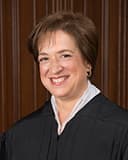
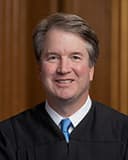


Decided April 29, 2026
Majority Opinion— Justice Gorsuch
The Supreme Court unanimously ruled that First Choice Women's Resource Centers, a religious nonprofit that counsels pregnant women in New Jersey, has the legal right (known as "standing") to challenge in federal court a subpoena issued by the New Jersey Attorney General demanding the personal information of the organization's donors. The Attorney General had created a "Reproductive Rights Strike Force" and served First Choice with a subpoena demanding 28 categories of documents, including the names, addresses, phone numbers, and employers of virtually all its donors — even though no public complaints had been filed against the group. First Choice sued in federal court, arguing the subpoena violated its First Amendment right to freedom of association. The lower courts dismissed the case, reasoning that because the subpoena had not yet been enforced by a state court, First Choice had not yet been injured.
The Supreme Court reversed, holding that the mere issuance of the subpoena — not its enforcement — was enough to cause a real, present injury to First Choice's constitutional rights. Drawing on decades of precedent, including landmark cases involving the NAACP and more recent cases like Americans for Prosperity Foundation v. Bonta, the Court explained that government demands for private donor information inevitably discourage people from associating with and donating to advocacy organizations. This chilling effect on association is itself a concrete injury under the First Amendment, regardless of whether the subpoena is immediately enforceable. The Court rejected the Attorney General's arguments that the subpoena was harmless because it was "non-self-executing," because it exempted one donation webpage, or because a future protective order might keep donor information confidential. The case was sent back to the lower courts to proceed on the merits of First Choice's constitutional claims.
Oral Argument Recording
Via Spotify ↗
Background & Facts
First Choice Women's Resource Centers is a pro-life pregnancy center in New Jersey. The New Jersey Attorney General issued a sweeping administrative subpoena demanding 28 categories of documents, including donor names, addresses, phone numbers, and places of employment, so the AG's office could contact and question them. The subpoena was issued in the context of the AG having previously published a consumer alert warning New Jerseyans to 'beware' of pregnancy centers and having assembled a 'strike force' against them. There were no specific complaints filed against First Choice.
First Choice filed a federal lawsuit under Section 1983 claiming the subpoena violated its First Amendment right of association by seeking to compel disclosure of its donors' identities. The lower federal courts dismissed the case, holding that First Choice lacked standing or that the case was not ripe because the subpoena was 'non-self-executing' — meaning no legal penalties attached until a state court ordered compliance. The AG had already initiated enforcement proceedings in state court, which had been ongoing for over two years without the state court ordering production.
The central dispute is whether First Choice can bring its First Amendment challenge in federal court now, or must wait until a state court actually orders disclosure — at which point res judicata and Younger abstention would likely bar federal review, effectively trapping the organization in state court.
Why This Case Matters
This case could significantly affect how nonprofits and advocacy organizations can protect their donor privacy when facing government subpoenas. If the Court rules that organizations must wait for state court enforcement before challenging subpoenas in federal court, it could create a 'preclusion trap' where groups lose access to federal courts entirely for First Amendment claims. The ACLU filed an amicus brief warning of 'suppression by subpoena' and 'censorship by intimidation.'
The case also raises broader questions about Article III standing doctrine in the context of administrative subpoenas, potentially affecting tens of thousands of subpoenas issued annually by state agencies. The Court must decide whether to recognize standing based on a 'chill' theory (the subpoena itself chills First Amendment rights), a 'credible threat of enforcement' theory, or both — each with different implications for the scope of federal court access.
The Arguments
The AG's subpoena demanding donor information violates the First Amendment right of association and First Choice has Article III standing under two independent theories: the subpoena created an objective chill on associational rights from the moment of receipt, and there is a credible threat of enforcement satisfying pre-enforcement review standards.
- The subpoena twice commands compliance 'on pain of contempt' and threatens business dissolution — the death knell for nonprofits
- Under SBA List, a credible threat of enforcement makes injuries sufficiently imminent, including litigation burdens, imminent disclosure orders, and chilling effects
- Even an unenforceable threat may chill First Amendment freedoms, as recognized in Bantam Books
- Requiring state court litigation first creates a preclusion trap inconsistent with Knick and Section 1983's guarantee of a federal forum
Key Exchanges with Justices
Justice Barrett
“Would a letter have been sufficient for ripeness under your theory, or does anything turn on the fact that it was a subpoena?”
Hawley conceded a letter could suffice under Bantam Books if issued under apparent state authority, meaning her theory doesn't depend on the subpoena form.
Justice Jackson
“What has happened to the imminence requirement in your argument? Ordinarily, for risks of future injury, we require a really clear showing that the feared event is imminent.”
Revealed the tension between traditional standing requirements and the credible-threat doctrine, with Hawley arguing SBA List's credible threat substitutes for imminence.
Justice Sotomayor
“How is there a burden when you're going to litigate the same questions in state or federal court? Every subpoena implicating an alleged constitutional violation would end up in federal court.”
Pushed Hawley to rely more heavily on the chilling effect theory rather than mere litigation costs as the injury.
A plaintiff has Article III standing to challenge a subpoena as long as there is a credible threat that it will be enforced. The chill theory is unnecessary for standing because the credible-threat/pre-enforcement framework is well-developed, though chill remains relevant to irreparable harm and the merits.
- The credible threat of enforcement theory is a well-developed doctrine from this Court's many pre-enforcement challenge cases
- The chill theory risks conflating Article III requirements with merits requirements and requires difficult line-drawing between subjective and objective chill
- The irreparable injury requirement for preliminary injunctions is the main gatekeeper preventing a flood of non-First-Amendment subpoena challenges
- Federal subpoenas are treated differently because the APA and existing statutory schemes provide different enforcement mechanisms
Key Exchanges with Justices
Justice Kagan
“Would you have picked this theory if you were standing in the same shoes as the state, given that the federal government is in a different position due to the APA?”
Exposed that the government's preference for the credible-threat theory over the chill theory may be motivated by protecting federal investigative subpoenas from challenge.
Justice Gorsuch
“If the only remedy at law comes at the end of the case after the chill damage is done, can't equity step in? You're not suggesting the federal government has more ability to infringe the First Amendment than states do?”
Revealed that under the government's theory, someone facing an abusive federal subpoena chilling First Amendment rights would have essentially no pre-enforcement remedy, which Suri acknowledged was 'very narrow.'
Justice Barrett
“If there's no possibility of getting a preliminary injunction because you can never show irreparable harm, is the case redressable?”
Suri maintained redressability exists because standing assumes the plaintiff's merits arguments are correct, even if they ultimately fail.
The subpoena is non-self-executing under New Jersey law, meaning no legal obligation or penalties attach until a state court orders compliance. First Choice's complaint fails to allege that anyone was actually or objectively likely to be chilled by the subpoena itself, and the credible-threat theory would flood federal courts with challenges to the tens of thousands of administrative subpoenas issued annually.
- The complaint's allegation that the subpoena 'may cause' donors to stop contributing uses contingent language that has never been sufficient for Article III standing
- Under Clapper, standing cannot rest on guesswork about actions of independent decision-makers like courts, which must approve enforcement
- The state court has repeatedly declined to order production over two years, demonstrating the outcome is not predetermined
- Accepting the pre-enforcement theory would expose tens of thousands of routine subpoenas to federal challenges — one state agency alone issued 500+ subpoenas this year
Key Exchanges with Justices
Justice Gorsuch
“The statute says the AG's subpoenas 'have the force of law' and failure to obey can lead to contempt. How do you read that as non-self-executing? What authority besides one Superior Court decision supports you?”
The AG struggled to cite strong authority, eventually pointing to Silverman v. Berkson and 'background constitutional principles,' revealing the weakness of the non-self-executing characterization.
Justice Kagan
“An ordinary person receiving this subpoena and told 'don't worry, it has to be stamped by a court' is not going to find that very reassuring — so why isn't that enough for standing?”
Forced the AG to argue that state court enforcement rates are not predetermined, but the argument appeared strained given the common-sense chilling effect.
Justice Jackson
“At the point when a state court orders compliance and rejects the First Amendment claim, isn't the petitioner precluded from going to federal court? You've made it impossible for them to make their claim in federal court.”
The AG conceded that under New Jersey preclusion principles, First Choice would likely be precluded, but argued that Article III rules shouldn't be bent to avoid that result.
Precedent Cases Cited
Susan B. Anthony List v. Driehaus
573 U.S. 149
Established the framework for pre-enforcement standing, holding that a credible threat of enforcement satisfies Article III's imminence requirement and identified injuries like litigation burdens and imminent adverse orders.
Knick v. Township of Scott
588 U.S. 180
Petitioner argued that requiring state court litigation before federal review creates the same 'preclusion trap' this case rejected — where plaintiffs lose federal forum access because state court preclusion bars later federal claims.
Clapper v. Amnesty International USA
568 U.S. 398
Respondent relied on it to argue that harms contingent on future independent court decisions are too speculative for Article III standing; petitioner distinguished it as not controlling First Amendment associational claims.
Americans for Prosperity Foundation v. Bonta
594 U.S. 595
Both sides acknowledged it supplies the relevant merits framework for evaluating compelled donor disclosure under the First Amendment, including narrow tailoring requirements.
Bantam Books, Inc. v. Sullivan
372 U.S. 58
Petitioner cited it to show that even informal government communications issued under apparent authority can chill First Amendment rights and give rise to standing, even without formal legal penalties.
NAACP v. Alabama ex rel. Patterson
357 U.S. 449
Petitioner invoked it as foundational precedent protecting the right of association by shielding membership and donor lists from compelled government disclosure.
Laird v. Tatum
408 U.S. 1
The government cited it as establishing that a merely subjective chill on First Amendment activity is insufficient for Article III standing, requiring an objective showing of harm.
Smith & Wesson Brands, Inc. v. Attorney General of New Jersey
The Third Circuit decision by Judge Hardiman that held New Jersey AG subpoenas are non-self-executing; the AG took the opposite position in that case but lost, and now relies on that holding.
Legal Terminology
Analysis & Opinions
The Supreme Court unanimously ruled in First Choice Women's Resource Centers v. Davenport that faith-based pregnancy centers have standing to challenge New Jersey's demands for fundraising information in federal court. Justice Gorsuch wrote the opinion, reversing lower courts that had found the centers lacked sufficient injury from the subpoena to bring the case.
The Supreme Court sided with an anti-abortion crisis pregnancy center in New Jersey in a dispute over donor records, ruling that the organization could bring a federal lawsuit challenging the state's demand for donor information. The case involves First Choice Women's Resource Centers challenging New Jersey officials' requirements regarding donor disclosure.
The Supreme Court ruled that an antiabortion crisis pregnancy center can challenge a subpoena seeking disclosure of its donors' names. The case pitted the center against New Jersey's attorney general and drew support from advocacy groups across the political spectrum concerned about donor privacy and First Amendment rights.