Case v. Montana
What standard of certainty must police meet before making a warrantless entry into a home under the emergency aid exception to the Fourth Amendment — probable cause, reasonable suspicion, or the 'objectively reasonable basis' standard articulated in Brigham City v. Stuart?
The Decision
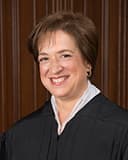

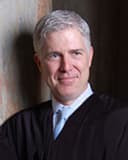
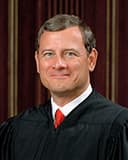
Roberts
·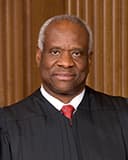
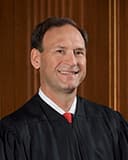
Thomas
·
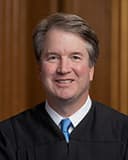
Alito
·
Kavanaugh
·
Barrett
·
Jackson
·Decided January 14, 2026
Majority Opinion— Justice Kagan
In Case v. Montana, the Supreme Court unanimously held that police officers may enter a home without a warrant to provide emergency aid if they have an "objectively reasonable basis for believing" that someone inside is seriously injured or faces imminent serious harm. The Court reaffirmed the standard it first set out in Brigham City v. Stuart (2006) and rejected two alternative interpretations: Montana's lower "reasonable suspicion" standard (similar to what police need for a brief street stop) and the petitioner's argument that officers need "probable cause" (the higher standard typically required for criminal investigations). The Court explained that probable cause is rooted in the criminal investigation context and doesn't translate well to non-criminal, non-investigatory emergency situations.
The case arose when Montana police officers responded to a 911 call reporting that William Case was threatening suicide and may have already shot himself. After arriving at his home, the officers knocked, called out, and observed through windows an empty gun holster, beer cans, and what appeared to be a suicide note — but got no response from Case. They entered the home to render emergency aid. When Case burst out of a closet holding what appeared to be a gun, an officer shot him. Case was charged with assaulting a police officer and argued that all evidence should be suppressed because the warrantless entry violated the Fourth Amendment. The Court found the entry was constitutional, concluding that the totality of the circumstances — including the ex-girlfriend's account of the phone call, the officers' knowledge of Case's history, and the visual evidence at the scene — gave the officers an objectively reasonable basis to believe Case had shot himself or was about to. The Court also noted that the emergency-aid exception only permits officers to do what is reasonably necessary to address the emergency, not to conduct a broader search of the home.
Concurring Opinions
Justice Sotomayor
Justice Sotomayor joined the majority opinion in full but wrote separately to highlight the special risks that arise when police respond to mental-health crises. She pointed to studies showing that people with serious mental-health conditions are far more likely to be injured or killed during police encounters, and that in many cases, officers responding to calls for help have ended up shooting and killing the very people they were called to assist. She noted that the presence of firearms in the home can further escalate these situations, with officers adopting more forceful tactics and occupants in crisis reacting unpredictably.
Justice Sotomayor urged that before entering a home, officers should consider alternatives such as speaking with the person from a distance or by phone, contacting family or friends, calling in crisis-intervention specialists, or working with mental-health professionals. She acknowledged that on the specific facts of this case — particularly the strong evidence that Case may have already shot himself — the entry was justified. But she emphasized that a different set of facts might lead to the opposite conclusion, especially where the primary danger to the occupant would be created by the officers' entry itself. She stressed that the "objectively reasonable basis" standard demands careful, case-by-case attention to the particular risks that mental-health emergencies present.
Justice Gorsuch
Justice Gorsuch concurred to explain why, in his view, the emergency-aid exception to the warrant requirement is grounded not merely in the Justices' personal sense of what is "reasonable," but in longstanding common-law principles. He traced the rule back to English and early American law, which has long recognized that a person may enter another's property when reasonably necessary to prevent serious physical harm. Courts historically judged such entries by the reasonableness of the person's belief at the time, not by whether the emergency actually existed in hindsight.
Justice Gorsuch noted that the common law has also long held that police officers generally enjoy the same legal privileges as private citizens — meaning they can do what any private person could lawfully do, but no more. He argued that the Court's decision aligns with this common-law tradition and that Fourth Amendment rights should be understood through the lens of these historical legal principles rather than through more subjective judicial intuitions about "reasonable expectations of privacy."
Oral Argument Recording
Via Spotify ↗
Background & Facts
Trevor Case's ex-girlfriend called police for a wellness check after Case told her he was going to kill himself. During the phone call, she heard him rack the action on a handgun and then heard a popping sound before the line went dead. Officers responded to Case's home, knocked on the door, and received no response. They observed empty beer cans outside, his vehicle parked nearby, and his keys on a table alongside an empty holster and what appeared to be a suicide note, all visible through the window.
Critically, several of the responding officers had extensive prior experience with Case spanning years or even decades. They knew he had a history of threatening suicide without following through and had previously attempted to provoke confrontations with police — what officers called 'suicide by cop.' On body camera footage, officers can be heard saying things like 'He ain't got the guts' and 'He's been suicidal forever and he hasn't done it.' After approximately 40 minutes of deliberation, officers entered the home without a warrant, and Case was shot during the encounter.
The Montana Supreme Court upheld the warrantless entry under a standard that the Petitioner argues was equivalent to or below reasonable suspicion, citing language about 'objective, specific, and articulable facts from which an experienced officer would suspect that a citizen is in need of help.' The court also cited its own precedent in Lovegren, which characterized community caretaking stops as less intrusive than a Terry stop. Case appealed, arguing the correct standard should be probable cause.
Why This Case Matters
This case addresses a fundamental question at the intersection of the Fourth Amendment's protection of the home and the government's interest in saving lives during emergencies. The Court's decision will set the standard for when police and first responders can enter homes without a warrant to assist people in crisis — a scenario that arises frequently in suicide calls, wellness checks, domestic violence situations, and cases involving elderly or disabled individuals.
The practical stakes are enormous. A standard that is too lax risks enabling pretextual entries and dangerous confrontations — the Petitioner cites data showing people with serious mental illness are 16 times more likely to be killed during police encounters. A standard that is too demanding could leave officers paralyzed outside the homes of people who are dying. The case also matters because of widespread confusion in lower courts about what the Brigham City standard actually requires, with some applying probable cause and others applying reasonable suspicion or even less.
The Arguments
The emergency aid exception requires probable cause — a fair probability or substantial chance — that an occupant is seriously injured or imminently threatened with such injury before police can enter a home without a warrant. The Montana Supreme Court applied a standard akin to or below reasonable suspicion, which violates the Fourth Amendment's deep-rooted protection of the home.
- The Brigham City 'objectively reasonable basis' formulation naturally maps onto probable cause, just with a different object (danger rather than crime), as the government itself argued in its Brigham City brief
- Officers on the scene, drawing on decades of experience with Case, concluded he was unlikely to actually harm himself and was more likely trying to provoke a suicide-by-cop confrontation, undermining any claim of probable cause
- A vague reasonableness or sliding-scale standard invites abuse and confusion, as illustrated by the swatting hypothetical where severe threats could justify entry without any corroboration
- At common law, the necessity defense required the defendant to actually be correct that a necessity existed, a standard even more stringent than probable cause
Key Exchanges with Justices
Justice Alito
“Given all the facts — the suicide threat, the gun racking, the popping sound, the dead phone line, the suicide note, the empty holster — what more did the police need before entering?”
Revealed the tension at the heart of Petitioner's case: the facts appear very strong for entry, and Petitioner's argument depends almost entirely on the officers' prior knowledge suggesting Case was bluffing.
Justice Jackson
“Without the suicide-by-cop knowledge, would the other facts — the girlfriend's call, observations at the scene — satisfy probable cause under your own test?”
Petitioner essentially conceded that without the officers' prior experience suggesting Case was bluffing, probable cause likely existed, narrowing the dispute to how countervailing evidence should be weighed.
Justice Kagan
“Why not just reaffirm the Brigham City standard using its own language rather than importing 'probable cause' from an irrelevant criminal context with inapplicable precedent?”
Showed significant skepticism among the Justices about whether the label 'probable cause' adds anything meaningful to the already-articulated Brigham City standard.
The Fourth Amendment's text enshrines reasonableness, not a rigid warrant requirement, for all searches. Brigham City already set the correct standard — objective reasonableness — for emergency aid entries, and grafting probable cause onto this non-criminal context has no basis in text, history, or precedent.
- At common law, both officers and private citizens could enter homes when reasonably necessary to preserve life, and the necessity defense operated on a reasonableness standard
- Objective reasonableness allows a progressive analysis where officers can take escalating investigative steps as they gather information, unlike the single-threshold determination of probable cause
- The facts here overwhelmingly satisfy any standard: the suicide threat, gun sounds, popping noise, dead phone line, no response, empty holster, and suicide note all visible at the scene
- Requiring probable cause of peril would force officers to calculate legal thresholds outside a dying person's door instead of saving their life
Key Exchanges with Justices
Justice Sotomayor
“You say you're not asking for reasonable suspicion, but you also said in some cases the standard can look like reasonable suspicion — isn't that a qualifier that reveals you actually want reasonable suspicion?”
Exposed ambiguity in Montana's position and forced the state to clarify it was not equating Brigham City with reasonable suspicion, though its formulation left room for results that might look similar.
Justice Barrett
“Wouldn't you be better off just sticking with Brigham City's 'objectively reasonable basis to believe' language and putting a period on it, rather than muddying the waters?”
Montana agreed, suggesting a possible consensus outcome where the Court simply reaffirms Brigham City without equating it to either traditional standard.
Justice Thomas
“Isn't it our normal practice, if we're not certain about the standard, to send the case back for the lower court to apply the correct standard?”
Montana urged the Court to apply the standard directly to these facts to provide guidance, arguing the facts clearly satisfy any standard the Court might adopt.
The Court should reaffirm Brigham City's objective reasonableness standard rather than requiring probable cause of danger. The standard is flexible enough to account for both the severity of a threat and the reliability of the information, without being pegged to criminal-law concepts that don't fit emergency situations.
- The Fourth Amendment's text links probable cause to warrants, not to searches generally, so requiring probable cause for warrantless emergency entries has no textual basis
- The Framers adopted the Fourth Amendment to guard against overzealous criminal investigation, not to prevent officers from providing life-saving aid
- A sliding-scale approach accounts for the reality that not all serious injuries are alike and the amount of corroboration needed may vary with the severity of the threat
- The government has changed its position from the Brigham City briefing where it equated the standard with probable cause, now maintaining the two are distinct
Key Exchanges with Justices
Justice Sotomayor
“In your Brigham City brief, you said the emergency aid standard was essentially probable cause with a different object — have you changed your position?”
The government candidly admitted it had changed its position after the Brigham City decision, acknowledging the shift undermines Petitioner's argument that Brigham City itself contemplated probable cause.
Justice Gorsuch
“I don't understand the sliding scale — the severity of the harm is fixed by Brigham City at serious injury to life or limb, so what's actually sliding?”
Forced the government to clarify that the scale refers to the amount and reliability of information needed, not variation in the severity of the harm required, though not all serious injuries require the same quantum of evidence.
Justice Jackson
“Would you object to the Court specifically saying officers must have more than reasonable suspicion that an emergency is occurring?”
The government objected, arguing that pegging the standard to any criminal-law concept does more harm than good and that the Brigham City formulation should stand alone.
Precedent Cases Cited
Brigham City v. Stuart
The foundational case establishing the standard for emergency aid entries — that officers may enter a home without a warrant when they have an 'objectively reasonable basis for believing that an occupant is seriously injured or imminently threatened with such injury.' The central dispute is what this standard actually requires.
Michigan v. Fisher
Reaffirmed the Brigham City standard and stated that officers do not need 'ironclad proof' that someone is dying before entering, and should not walk away from potentially dangerous situations just because they have imperfect information.
Caniglia v. Strom
Rejected the idea that a freestanding 'community caretaking' exception permits warrantless home entries, reinforcing that any such entry must satisfy recognized exceptions like the emergency aid doctrine.
Illinois v. Gates
462 U.S. 213
Petitioner drew on its articulation of probable cause as a 'fair probability' and 'substantial chance' to argue those concepts should apply to emergency aid entries.
Payton v. New York
Cited by Petitioner in rebuttal for the proposition that the Fourth Amendment draws a firm line at the entrance to the house, emphasizing the heightened protection afforded to the home.
Dunaway v. New York
Petitioner cited it for the principle that probable cause provides the 'relative simplicity and clarity necessary to the implementation of a workable rule,' arguing against open-ended balancing tests.
Minnesota v. Olson
Petitioner cited it as an exigent circumstances case where the Court required probable cause that an exigency existed, supporting the argument that probable cause applies to emergency entries.
Terry v. Ohio
392 U.S. 1
The Montana Supreme Court's formulation — 'objective, specific, and articulable facts from which an experienced officer would suspect' — was criticized as tracking Terry's reasonable suspicion language rather than the Brigham City standard.