Barrett v. United States
Whether the Double Jeopardy Clause bars cumulative convictions and punishments under both 18 U.S.C. § 924(c)(1)(A) (using or possessing a firearm during a crime of violence) and § 924(j) (killing someone during a § 924(c) violation) for the same fatal shooting.
The Decision



Roberts
·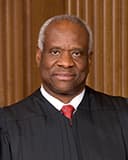
Thomas
·
Alito
·
Sotomayor
·
Kagan
·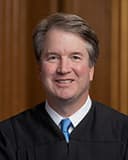
Kavanaugh
·
Barrett
·Decided January 14, 2026
Majority Opinion— Justice Jackson
The Supreme Court held that a defendant who commits a single act violating both 18 U.S.C. §924(c)(1)(A)(i) (using, carrying, or possessing a firearm during a federal crime of violence or drug trafficking crime) and §924(j) (which prescribes different penalties, including potentially the death penalty, when such a violation causes death) may be convicted under only one of those provisions, not both. The Court found that Congress did not clearly authorize stacking two convictions for what is essentially one offense.
The Court's reasoning centered on the long-established Blockburger test, which presumes that Congress does not intend to punish the same offense under two different statutes. Everyone agreed that §924(c)(1)(A)(i) and §924(j) define the "same offense" under this test because §924(j) is simply a more serious version of §924(c)(1)(A)(i) — a classic greater offense containing a lesser included offense. The key question was whether Congress clearly expressed an intent to override that presumption. The Court concluded it did not. Notably, Congress knew how to authorize dual convictions — it did so elsewhere in §924 using explicit "in addition to" language — but included no such language for the relationship between subsections (c)(1) and (j). The Court also rejected arguments based on the consecutive-sentencing mandate in §924(c), noting that mandate addresses how to arrange sentences, not whether two convictions are permissible in the first place. The Court reversed the Second Circuit's contrary ruling and sent the case back for further proceedings.
Concurring Opinions
Justice Gorsuch
Justice Gorsuch agreed that one of Barrett's two convictions must be thrown out, but wrote separately to flag a deeper unresolved problem in the Court's double jeopardy case law. He noted that when the government prosecutes someone for the same offense in two separate trials, the Blockburger test is a hard constitutional rule — the second prosecution is simply forbidden. But when both charges are brought in the same trial (as happened here), the Court has treated Blockburger as merely a presumption about what Congress intended, which Congress could theoretically override with clear enough language. Gorsuch questioned why the same constitutional phrase — "the same offence" — should mean different things depending on whether the charges come in one proceeding or two.
Gorsuch suggested that the better approach would be to treat Blockburger as a firm constitutional rule in all contexts: if two charges are the same offense, a defendant cannot be convicted and punished on both, period, regardless of what Congress says. He acknowledged the Court did not need to resolve this tension today since Barrett wins either way, but urged that the issue be confronted in a future case. In his view, Barrett was charged twice, convicted twice, and was set to be punished twice for one offense — and that is double jeopardy no matter how you frame it.
Oral Argument Recording
Via Spotify ↗
Background & Facts
Dwayne Barrett and his crew used guns to rob Gamar Dafalla. When Dafalla resisted, one of the crew members shot and killed him within seconds or minutes of the robbery. Barrett was convicted under both § 924(c)(1)(A), which punishes using or possessing a firearm during a crime of violence, and § 924(j), which punishes killing someone in the course of a § 924(c) violation. He received separate sentences for both.
The Second Circuit upheld the dual convictions, reasoning that after the Supreme Court's decision in Lora v. United States — which held that § 924(j) has its own independent penalty scheme separate from § 924(c) — Congress intended these to be different crimes subject to different punishment schemes. Barrett argues that possessing a gun under § 924(c) is a lesser-included offense of fatally using it under § 924(j), making them the same offense for double jeopardy purposes, and that Congress never clearly authorized cumulative punishment for both.
In an unusual posture, the United States government agrees with Barrett that cumulative punishment is not authorized, so the Court appointed amicus curiae Charles McCloud to defend the Second Circuit's judgment below.
Why This Case Matters
This case addresses a fundamental question about the scope of the Double Jeopardy Clause's protection against multiple punishments for the same offense, specifically in the context of federal gun crimes. It tests the strength and source of the Blockburger presumption against cumulative punishments when Congress has enacted overlapping criminal statutes — one targeting gun possession during a crime and another targeting fatal gun use during the same crime.
The case also has implications for how courts interpret congressional silence regarding cumulative punishment. Several justices, particularly Justice Gorsuch, probed whether the Blockburger test is merely a presumption that Congress can overcome (as stated in Hunter) or a constitutional mandate rooted in the Double Jeopardy Clause itself (as suggested in Pearce and Shiro), revealing an unresolved tension in the Court's precedents. The practical impact may be limited, as both the government and amicus acknowledged that sentencing judges can likely achieve appropriate sentences under either statute alone, but the legal principle at stake affects how overlapping federal criminal statutes interact throughout the federal code.
The Arguments
Possessing a gun in violation of § 924(c)(1)(A) is a lesser-included offense of fatally using it in violation of § 924(j), making them the same offense under the Blockburger test. Because Congress never clearly indicated it wanted cumulative punishment for both offenses in a single fatal shooting, the Double Jeopardy Clause bars dual convictions.
- When Congress enacted § 924(j) in 1994, it specifically rejected a proposal to impose multiple punishments for a fatal shooting, and the Supreme Court in Lora confirmed that § 924(j)'s penalties were designed to stand alone.
- The consecutive sentencing provision in § 924(c)(1)(D)(ii) is a procedural instruction about how sentences run, not a substantive authorization for dual convictions — you must first have a valid conviction before reaching sentencing questions.
- Congress knows how to authorize cumulative punishment when it wants to, as shown by the 'in addition to' language in § 924(c)(1)(A) for the predicate offense and § 924(c)(5) for armor-piercing ammunition killings, but included no such language for § 924(j).
- Justice can be done under either statute alone since § 924(j) allows up to life in prison or death, and no real-world example exists of a fatal shooting defendant receiving an inappropriately light sentence.
Key Exchanges with Justices
Justice Kavanaugh
“How is § 924(c)(1)(D)(ii), which says 'no term of imprisonment imposed on a person under this subsection shall run concurrently with any other term,' not a clear enough indication of Congress's intent to authorize cumulative punishment?”
Petitioner drew a crucial distinction: the provision addresses how a sentence runs after a valid conviction, but does not answer whether a conviction can be imposed under § 924(c) alongside one under § 924(j) in the first place.
Justice Gorsuch
“Where does the presumption against cumulative punishment come from — is it lenity, or does the Double Jeopardy Clause itself prohibit two punishments for one offense?”
Petitioner acknowledged the tension, agreeing the Court has 'consistently understood' the clause as a check on courts rather than the legislature, while also embracing lenity and separation of powers as supporting the presumption.
Justice Jackson
“Is your argument that the Double Jeopardy Clause question is about whether you can have two separate convictions, not about whether sentences from two valid convictions can run concurrently or consecutively?”
Petitioner confirmed this is exactly the point — the consecutive sentencing provision is irrelevant because it only applies if a valid conviction exists under both statutes, which is the very question at issue.
The government agrees that § 924(c)(1)(A) is a lesser-included offense of § 924(j), triggering the Blockburger presumption against cumulative punishments. Nothing in the statutory text, structure, or history rebuts that presumption, and the authorizing language in § 924(c)(1)(A) for cumulative punishment with the predicate offense does not extend to § 924(j).
- Congress expressly authorized cumulative punishments for § 924(c) and its predicate offense using 'in addition to' language, but omitted that language when enacting § 924(j), indicating different intent.
- The Lora decision rejected the government's prior position that the statutory construction question and double jeopardy question rise and fall together, and the Court found § 924(j)'s independent penalty scheme plausible.
- If § 924(c)(1)(D)(ii) were sufficient to authorize cumulative punishment on its own, the 'in addition to' language in § 924(c)(1)(A) would be superfluous — a superfluity that existed when Congress enacted the statute.
- Practically, the government retains the ability to dismiss counts before sentencing to choose which punishment scheme applies, so the ruling will not significantly affect sentencing outcomes.
Key Exchanges with Justices
Justice Kavanaugh
“Can you explain how the government changed its position from the Lora oral argument, where it argued the Court should make clear these are separate offenses for Blockburger purposes?”
The government explained that the Lora Court rejected the premises underlying its prior position — particularly that the statutory construction and double jeopardy questions were intertwined — leading it to reassess and adopt the current view.
Justice Gorsuch
“Would the government object to a footnote acknowledging that the Court has spoken out of both sides of its mouth on whether the Blockburger presumption is constitutional or merely a statutory interpretation tool?”
The government accepted applying the presumption but resisted the idea that the Double Jeopardy Clause itself compels the result, suggesting the issue could be revisited in future cases where it is fully briefed.
Justice Kagan
“Are cumulative punishments also not authorized between § 924(j) and its predicate offense (e.g., the underlying robbery)?”
The government confirmed its position is consistent — because § 924(j) was placed outside § 924(c), the 'in addition to' language in § 924(c)(1)(A) does not extend to § 924(j) and its predicates either.
Congress intended § 924(c) and § 924(j) violations to be punished separately. The consecutive sentencing mandate in § 924(c) shows Congress wanted that provision to impose additional punishment on top of any other offense, and after Lora confirmed these are different offenses, cumulative punishment is proper without magic-words authorization.
- Section 924(c)(1)(D)(ii)'s consecutive sentencing mandate, combined with Congress's amendment expanding it to cover 'any other offense' (not just the predicate), shows congressional intent for unavoidable additional punishment.
- Blockburger is a linguistic tool of statutory construction, not a conclusive presumption or clear statement rule, and precedent like Garrett shows Congress can indicate cumulative punishment intent through structure and purpose without specific 'in addition to' language.
- Petitioner's interpretation creates the irrational result that the way to avoid § 924(c)'s mandatory penalties is to kill someone, and the manslaughter provisions in § 924(j)(2) create particularly stark anomalies where maximums under § 924(j) could be lower than minimums under § 924(c).
- The 31-years-without-change argument is misleading because prior to Lora, every circuit except the Eleventh merged § 924(c) and § 924(j) penalties, so the issue only arose post-Lora.
Key Exchanges with Justices
Justice Jackson
“Isn't the question whether the defendant can receive additional punishment under § 924(j) given the Blockburger test, and couldn't Congress have relied on § 3553(a) to trust sentencing judges to impose proportionate sentences without needing cumulative convictions?”
The amicus conceded this was plausible for murder under § 924(j)(1) but argued the manslaughter provisions in § 924(j)(2) create anomalies a district court could not reconcile, weakening the reliance on judicial discretion alone.
Justice Kavanaugh
“Does this really matter practically, given that district judges who want to sentence heavily for a killing can do so regardless?”
The amicus agreed that practically prosecutors and courts could work around it, but maintained the operative question is what Congress intended, not what operational workarounds exist.
Justice Gorsuch
“You need some account for why we have the Blockburger canon in the double jeopardy context but not in other contexts of statutory interpretation.”
The amicus acknowledged this area of precedent is 'under-theorized' and that the Court has not reached a satisfactory resolution, but argued Blockburger is a useful linguistic tool even if it sometimes obscures congressional intent in compound-predicate-offense cases.
Precedent Cases Cited
Blockburger v. United States
284 U.S. 299
Establishes the foundational test for determining whether two offenses are the 'same offense' for double jeopardy purposes: each must require proof of an element the other does not. All parties agree § 924(c)(1)(A) and § 924(j) fail this test because possessing a gun is a lesser-included element of fatally using one.
Lora v. United States
Central to the case. The Court held that § 924(j) has its own independent penalty scheme that does not incorporate § 924(c)'s mandatory minimums or consecutive sentencing requirements. The Second Circuit relied on Lora to conclude these are separate offenses, while petitioner argues Lora supports the opposite conclusion.
Whalen v. United States
445 U.S. 684
Established that the Blockburger presumption requires 'special authorization' from Congress to impose cumulative punishments for the same offense. Petitioner relies on its reasoning about lesser-included offenses in the rape/felony-murder context.
Rutledge v. United States
517 U.S. 292
Key precedent showing that 'notwithstanding any other provision of law' language and mandatory minimum provisions in overlapping drug statutes were insufficient to constitute a clear indication of congressional intent to authorize cumulative punishment.
Garrett v. United States
471 U.S. 773
Cited as an example where cumulative punishment was authorized without explicit 'in addition to' language, based on statutory structure and purpose — a continuing criminal enterprise spanning years was held to be a different offense from a single predicate drug importation.
Missouri v. Hunter
459 U.S. 359
Established the principle that the Double Jeopardy Clause does not prohibit cumulative punishments for the same offense if the legislature clearly intended them. Justice Gorsuch questioned whether Hunter remains good law after Dixon overruled Grady.
Ball v. United States
470 U.S. 856
Established that for double jeopardy purposes, the conviction itself is part of the punishment, not just the sentence — meaning even concurrent sentences cannot cure a double jeopardy violation.
United States v. Dixon
509 U.S. 688
Overruled Grady v. Corbin and restored the Blockburger test as the authoritative standard under the Double Jeopardy Clause, which Justice Gorsuch noted may undermine Hunter's treatment of Blockburger as merely a presumption.