Bowe v. United States
Whether Section 2244(b)(1)'s bar on relitigating previously raised claims in habeas proceedings applies to federal prisoners filing motions under Section 2255, and whether the Supreme Court has jurisdiction to review this question.
The Decision

Roberts
·
Thomas
·
Alito
·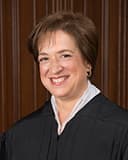
Kagan
·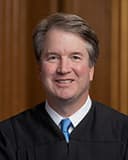
Kavanaugh
·
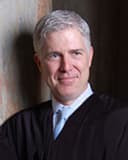
Barrett
·
Decided January 9, 2026
Majority Opinion— Justice Sotomayor
The Supreme Court held that it has jurisdiction to hear this case and that a federal statute barring "old" or repeat claims in second or successive habeas applications (28 U.S.C. §2244(b)(1)) does not apply to federal prisoners seeking postconviction relief under §2255. Michael Bowe, a federal prisoner serving a 24-year sentence, sought to challenge a 10-year mandatory consecutive sentence imposed under §924(c) for using a firearm in connection with a "crime of violence." After later Supreme Court decisions (Davis and Taylor) called into question whether his underlying offenses still qualified as crimes of violence, Bowe repeatedly sought permission from the Eleventh Circuit to file a second or successive motion for relief. Each time, the court dismissed his claims, in part by applying §2244(b)(1)'s bar on claims that had been raised before — a provision that, by its own terms, applies to state prisoners filing habeas applications under §2254.
The Court first addressed whether §2244(b)(3)(E) — which prohibits certiorari review of a court of appeals' decision granting or denying authorization to file a second or successive habeas application — bars the Court from hearing Bowe's case. The Court held it does not, because §2244(b)(3)(E) on its face applies only to state prisoners' "applications," not federal prisoners' "motions." The cross-reference in §2255(h) to §2244 incorporates only the certification procedures a panel follows, not the certiorari bar. The Court stressed that stripping the Supreme Court of jurisdiction requires a clear indication from Congress, and that the statutory text here is at most ambiguous on this point.
On the merits, the Court held that §2244(b)(1)'s old-claim bar applies only to state prisoners. That provision specifically references "habeas corpus application[s] under section 2254," which only state prisoners file. Congress deliberately distinguished between §2254 applications and §2255 motions elsewhere in the statute. Nor does §2255(h)'s cross-reference to §2244 import §2244(b)(1)'s bar, because the cross-reference is narrow — it incorporates only the panel certification procedures, not all the substantive requirements of §2244(b). The case was sent back to the Eleventh Circuit to decide whether Bowe should be authorized to file a second or successive motion under the correct legal standard.
Concurring Opinions
Justice Jackson
Justice Jackson agreed with the majority's holdings but wrote separately to offer an additional reason why the Court has jurisdiction. In her view, §2244(b)(3)(E) bars certiorari review only when a three-judge panel has actually made a proper "grant or denial" of an authorization request — meaning the panel went through the correct statutory procedures and applied the right legal criteria. Here, the Eleventh Circuit panel never evaluated Bowe's motion under the applicable standards for federal prisoners in §2255(h). Instead, it erroneously dismissed the motion under §2244(b)(1), a provision that applies only to state prisoners. Because the panel never made a "statutorily relevant" denial, there was no authorization decision of the kind Congress intended to insulate from further review.
Justice Jackson argued that this reading fits naturally within the gatekeeping scheme Congress designed. Congress set up a detailed, multi-step screening process and made panel decisions final to promote efficiency — but only when the panel actually follows the prescribed procedures. It would make no sense, she reasoned, for Congress to shield from all review a panel decision that ignored or misapplied the statutory framework entirely. She noted that this approach is consistent with the Court's reasoning in Castro v. United States, where the Court similarly found that §2244(b)(3)(E) did not apply because the lower court had not made the type of decision the statute was designed to insulate.
Dissenting Opinions
Justice Gorsuch
Justice Gorsuch, joined by Justices Thomas and Alito (and by Justice Barrett on the jurisdictional question), dissented on both issues. On jurisdiction, he argued that the Court plainly lacks the power to hear this case. Section 2255(h) requires a federal prisoner's second or successive motion to be "certified as provided in section 2244," and §2244(b)(3)(E) expressly bars certiorari review of panel certification decisions. He contended that every court of appeals to consider the issue has applied this bar to federal prisoners, and that the Court's own prior decisions in Castro and Hohn assumed as much. He criticized the majority's "clear indication" requirement as invented out of thin air, lacking any grounding in constitutional avoidance or any other recognized legal doctrine. He noted that the circuit split could still be resolved through other means, such as certified questions under §1254(2), without ignoring the statute's jurisdictional limits.
On the merits, Justice Gorsuch argued that §2244(b)(1)'s bar on repeat claims applies to federal prisoners through the cross-reference in §2255(h). He walked through the statutory chain: §2244(b)(3)(C) — which everyone agrees applies to federal prisoners — requires a prima facie showing that the filing satisfies "the requirements of this subsection," and one of those requirements is §2244(b)(1)'s prohibition on do-over claims. He argued that Congress designed AEDPA to impose strict limits on repetitive postconviction litigation for all prisoners, and that the majority's interpretation would allow federal prisoners — but not state prisoners — to file the same losing claims over and over. He called the majority's reading inconsistent with AEDPA's text, structure, and purpose of promoting finality in criminal cases.
Oral Argument Recording
Via Spotify ↗
Background & Facts
Michael Bowe, a federal prisoner, sought to file a second or successive motion to vacate his sentence under 28 U.S.C. § 2255, which is the primary vehicle for federal prisoners to challenge their convictions after direct appeal. Before a federal prisoner can file such a motion, they must obtain authorization from a three-judge panel of the court of appeals. The Eleventh Circuit dismissed Bowe's request for authorization, applying Section 2244(b)(1) — a provision that bars relitigating claims already raised in a prior habeas petition. On its face, (b)(1) refers to 'habeas corpus application[s] under section 2254,' which is the statute governing state prisoners.
The case presents two intertwined questions. First, does the Supreme Court even have jurisdiction to hear this case, given that Section 2244(b)(3)(E) bars certiorari review of decisions granting or denying authorization to file successive petitions? Second, on the merits, does Section 2244(b)(1)'s 'do-over bar' apply to federal prisoners at all, given that it expressly references only Section 2254 (the state prisoner statute)? Six circuits apply (b)(1) to federal prisoners, while three do not, creating a deep and entrenched split.
Notably, the federal government agrees with the petitioner that (b)(1) should not apply to federal prisoners, but disagrees on jurisdiction. The Court appointed amicus counsel Kasdin Mitchell to defend the lower court's judgment that (b)(1) does apply to federal prisoners.
Why This Case Matters
This case could resolve a longstanding 6-to-3 circuit split on whether federal prisoners face a stricter gatekeeping requirement than Congress intended when trying to bring successive collateral attacks on their convictions. If (b)(1) applies, federal prisoners are categorically barred from raising any claim they previously presented — a bar that exists in addition to the separate requirements in Section 2255(h). If it does not apply, federal prisoners need only satisfy 2255(h)'s requirements of showing newly discovered evidence or a new rule of constitutional law.
The jurisdictional question is equally significant. It tests the limits of Congress's power under the Exceptions Clause to strip the Supreme Court of certiorari jurisdiction over an entire category of cases, potentially leaving deep circuit splits permanently unresolved. The case also raises questions about whether the Court can effectively resolve legal questions through dicta when it lacks jurisdiction to issue a binding ruling on the merits.
The Circuit Split
A 6-to-3 circuit split exists on whether federal prisoners face the additional gatekeeping requirement of § 2244(b)(1) — which categorically bars previously presented claims — when bringing successive § 2255 motions. If it applies, federal prisoners cannot relitigate any previously raised claim even if they meet § 2255(h)'s separate requirements.
Section 2244(b)(1) applies to § 2255 motions
Holds that the categorical bar on previously raised claims in § 2244(b)(1) applies to federal prisoners' successive § 2255 motions, imposing an additional gatekeeping requirement beyond § 2255(h).
Section 2244(b)(1) does not apply to § 2255 motions
Holds that § 2244(b)(1)'s categorical bar does not apply to federal prisoners' § 2255 motions, and such prisoners need only satisfy § 2255(h)'s requirements of newly discovered evidence or a new rule of constitutional law.
The Arguments
Section 2244(b)(1) applies by its plain text only to state prisoners filing habeas applications under Section 2254, not to federal prisoners filing motions under Section 2255. Federal prisoners have their own separate gatekeeping requirements in 2255(h), and the Supreme Court has jurisdiction to resolve this question because the certiorari bar in (b)(3)(E) was not properly incorporated into the federal prisoner context.
- The text of (b)(1) expressly limits itself to 'habeas corpus application under section 2254,' and everyone agrees that (b)(2) — which uses the same limiting language — does not apply to federal prisoners.
- Congress treated state and federal prisoners differently throughout AEDPA due to federalism concerns and differing finality interests, so differential treatment in (b)(1) is consistent with the statutory scheme.
- The court of appeals dismissed the case rather than granting or denying authorization on the merits, which means (b)(3)(E)'s finality bar — which speaks of grants or denials — was not triggered.
- Under Castro, even if there was a denial of authorization, the subject of the cert petition is the antecedent question of whether (b)(1) applies at all, not the individualized authorization determination.
Key Exchanges with Justices
Justice Sotomayor
“Isn't it true that the cross-reference barring jurisdiction does not unambiguously incorporate the cert bar, because the statute speaks of certification 'by a panel of the appropriate court of appeals,' and this Court is not a panel of a court of appeals?”
Justice Sotomayor signaled strong interest in petitioner's jurisdictional argument, noting that the Court requires clarity before jurisdiction can be stripped.
Justice Jackson
“Isn't your narrow jurisdictional argument essentially that (E)'s finality requirement is triggered only when the panel actually applies the substantive criteria and makes a merits determination, not when it dismisses for some other reason?”
This revealed a potential narrow path to jurisdiction that could command broader support on the Court.
Justice Gorsuch
“Why doesn't the mention of Section 2254 in (b)(1) and (b)(2) actually make those provisions more applicable to federal prisoners, since 2254 signals post-conviction relief — the same category as 2255 — while (b)(3) and (b)(4) cover all habeas including pre-conviction?”
This revealed a potential weakness in petitioner's merits argument: that the 2254 reference might signal relevance to post-conviction proceedings rather than exclusion of federal prisoners.
The government agrees with petitioner that Section 2244(b)(1) does not apply to federal prisoners, but argues the Supreme Court lacks jurisdiction because 2255(h) incorporates the entire certification process in 2244(b)(3), including (b)(3)(E)'s bar on certiorari review. The government suggests the Court could effectively resolve the (b)(1) issue in the course of its jurisdictional analysis.
- The certification 'process' described in 2244(b)(3) naturally includes (E), which tells courts when the process ends — allowing certiorari would blow apart the 30-day time limit Congress imposed on the panel's screening decision.
- The distinct language in (b)(3) and (b)(4) — using 'second or successive application' and 'authorization' without referencing Section 2254 — maps directly onto 2255, while (b)(1) and (b)(2) with their express 2254 language do not.
- At the founding, there was no right to appeal habeas denials, so barring certiorari in this context raises no serious Exceptions Clause problem.
- Other avenues exist for the Court to resolve splits, including certified questions from courts of appeals, merits review when authorization is granted, sua sponte rehearing, and the All Writs Act.
Key Exchanges with Justices
Justice Kagan
“Castro — which deals with this very provision — says you need a 'clear indication' before interpreting the statute to limit the Court's jurisdiction. How do you get around that?”
The government struggled to explain away Castro's clear statement language, suggesting it was 'isolated' and not followed — a position that appeared to draw skepticism.
Justice Sotomayor
“Does it make any sense that there has been no review of the merits of this case at all by the court of appeals, and you're claiming we have no jurisdiction?”
This revealed the fundamental awkwardness of the government's position: agreeing the lower court erred but arguing the Supreme Court is powerless to fix it.
Justice Kavanaugh
“What would we do if lower courts didn't follow our dicta on the (b)(1) question? And what if the question isn't certified to us?”
It exposed the fragility of the government's proposed workaround and the risk that lower courts could simply ignore non-binding guidance.
Section 2244(b)(1)'s do-over bar applies to federal prisoners through a chain of cross-references: 2255(h) incorporates 2244(b)(3)(C), which directs courts to apply 'the requirements of this subsection' — subsection (b) — which includes (b)(1). Congress enacted AEDPA in the wake of the Oklahoma City bombing specifically to advance finality, and there is no reason to think it eliminated the do-over bar for federal prisoners like McVeigh.
- When (b)(3)(C) says to evaluate the 'requirements of this subsection,' 'subsection' means subsection (b) — as the Court held in Cyan — which includes (b)(1).
- The word 'application' in 2244 on its face refers to state habeas petitions; it applies to federal 'motions' only through the cross-reference in 2255(h), so the 2254 language in (b)(1) is no barrier.
- The prior standalone successive bar in 2255 had been marginalized by the Court in Sanders, so Congress routed federal prisoners through the same provisions as state prisoners.
- In the three months after the Court's Welch decision, the Eleventh Circuit alone received 1,800 applications for Johnson-based review, showing the do-over bar serves a real practical need.
Key Exchanges with Justices
Justice Jackson
“Isn't it odd that Congress would try to reach (b)(1) in the federal context through two cross-references rather than simply writing it directly into 2255(h)?”
This highlighted the central weakness in amicus's argument: that the path to applying (b)(1) to federal prisoners requires navigating multiple statutory cross-references.
Justice Gorsuch
“Isn't it inconsistent to read all of (b)(3) as a unified piece for jurisdiction but then split up subsection (b) on the merits?”
This revealed skepticism about the coherence of treating (b)(1) differently from (b)(3) when both are part of the same subsection.
Justice Sotomayor
“Wouldn't collateral estoppel apply to successive positions in federal court, getting you to the same place through a different route?”
Amicus effectively rebutted this by explaining that res judicata has traditionally not applied in habeas proceedings, which is precisely why Congress codified (b)(1).
Precedent Cases Cited
Castro v. United States
Cited extensively for the proposition that the Supreme Court has jurisdiction to review antecedent questions about whether gatekeeping requirements apply, even if (b)(3)(E) bars review of the denial of authorization itself. Also cited for the clear statement rule regarding limits on the Court's jurisdiction.
Stewart v. Martinez-Villareal (referred to as 'Stuart')
Cited for the principle that when a court of appeals dismisses without ruling on the merits of an authorization request, the disposition is not a 'grant' or 'denial' that triggers (b)(3)(E)'s finality bar.
Cyan, Inc. v. Beaver County Employees Retirement Fund
Cited by amicus for the principle that when Congress says 'subsection,' it means 'subsection' — supporting the argument that (b)(3)(C)'s reference to 'this subsection' encompasses all of subsection (b), including (b)(1).
Jones v. Hendrix
Cited for the concern that if original habeas petitions are unavailable to federal prisoners after this decision, and certiorari is also barred, there may be no way for the Supreme Court to resolve circuit splits on AEDPA issues affecting federal prisoners.
Sanders v. United States
Cited by amicus to show that the prior standalone successive bar in Section 2255 had been marginalized by the Court, which gave Congress reason to route federal prisoners through Section 2244's more robust provisions when enacting AEDPA.
Felker v. Turpin
Cited by petitioner for the principle that there should be no implied repeals of habeas jurisdiction, supporting the argument that (b)(3)(E) should not be read to strip Supreme Court certiorari jurisdiction without a clear statement.
Utah v. Evans
Cited by both sides in the dispute over the clear statement rule: the government argued it supports a narrower reading of Castro's language, while petitioner relied on it for the principle against reading an unexpressed intent to bar previously exercised jurisdiction.
Gonzalez v. Crosby
Cited by the government for the proposition that a dismissal is effectively a denial of an application, countering petitioner's argument that the court of appeals' dismissal did not trigger (b)(3)(E).