Learning Resources v. Trump
Does the International Emergency Economic Powers Act (IEEPA) authorize the President to impose tariffs on imported goods by declaring a national emergency?
The Decision
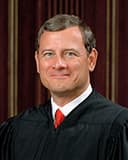
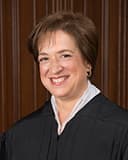
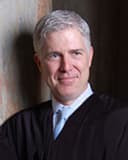


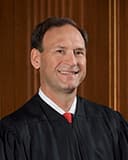
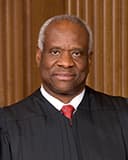
Alito
·
Sotomayor
·
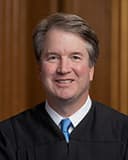
Decided February 20, 2026
Majority Opinion— Justice Roberts
The Supreme Court held that the International Emergency Economic Powers Act (IEEPA) does not authorize the President to impose tariffs. After taking office, President Trump declared national emergencies over illegal drug trafficking from Canada, Mexico, and China, and over persistent trade deficits. He then used IEEPA to impose sweeping tariffs—25% on most Canadian and Mexican imports, varying rates on Chinese imports (eventually reaching 145%), and at least 10% on imports from all other trading partners. Several small businesses and states challenged these tariffs in court.
The Court, in an opinion by Chief Justice Roberts, reasoned that the Constitution gives Congress alone the power to tax, and tariffs are clearly a form of taxation. IEEPA grants the President power to "regulate... importation" during declared emergencies, but the Court found this language insufficient to authorize tariffs. The word "regulate" does not naturally include the power to tax—no other federal statute uses "regulate" to mean "impose taxes"—and IEEPA never mentions tariffs or duties. When Congress has delegated tariff authority in other statutes, it has always done so explicitly and with strict limits on amount, duration, and scope. Applying the "major questions doctrine," the Court held that such an extraordinary claim of power—allowing the President to unilaterally impose unlimited tariffs on any product from any country—required clear congressional authorization, which IEEPA does not provide.
As a practical matter, the decision invalidates all tariffs the President imposed under IEEPA. The Court affirmed the Federal Circuit's judgment striking down the tariffs and vacated the D.C. district court's ruling for lack of jurisdiction, directing that case be dismissed and refiled in the Court of International Trade.
Concurring Opinions
Justice Gorsuch
Justice Gorsuch wrote a lengthy concurrence fully joining the majority opinion and its application of the major questions doctrine. He argued that the doctrine is not a recent invention but has deep roots in common law, tracing clear-statement rules back to English corporate law, agency law, and early American cases involving delegated authority. When an agent claims extraordinary power from a principal, the common law has long required express authorization—and the same principle applies when the executive branch claims Congress delegated it sweeping powers.
Gorsuch also responded to various colleagues. He noted that justices who previously criticized the major questions doctrine effectively applied it here by reading IEEPA's broad language narrowly—an approach inconsistent with their past dissents in cases like West Virginia v. EPA and Biden v. Nebraska. He pushed back on Justice Barrett's suggestion that the doctrine is merely "common sense," arguing it necessarily relies on the substantive constitutional value of Article I's vesting of legislative power in Congress. He also rejected the dissenters' proposed foreign affairs exception, noting that while the President has some inherent foreign affairs powers, the Constitution gives the tariff power exclusively to Congress, making a clear-statement requirement especially important.
Justice Barrett
Justice Barrett wrote a concurrence joining the majority opinion in full but reiterating her view that the major questions doctrine is best understood not as a special clear-statement rule imposed from outside the statute, but as an application of ordinary, commonsense principles of statutory interpretation. She argued that context—including constitutional structure, the history of how Congress delegates, and practical expectations about legislative behavior—naturally leads an interpreter to read IEEPA as not granting tariff authority, without needing to invoke an extra-textual "thumb on the scale." In her view, when Congress makes a big-time policy call like delegating the taxing power, a reasonable reader would expect clear language, and IEEPA's generic reference to "regulate... importation" falls short of that expectation as a matter of straightforward textual analysis.
Justice Kagan
Justice Kagan, joined by Justices Sotomayor and Jackson, concurred in the Court's holding that IEEPA does not authorize tariffs but declined to join the portions of the opinion invoking the major questions doctrine. She argued that ordinary tools of statutory interpretation—text, context, structure, and how Congress has used similar language in other statutes—amply demonstrate that "regulate... importation" does not include the power to impose tariffs. In her view, there was no need to apply a heightened clear-statement rule because the statute's plain meaning, read in context, already excludes tariff authority.
Kagan emphasized that IEEPA never mentions tariffs or duties, that Congress consistently uses explicit language when delegating tariff power, and that the word "regulate" is never used elsewhere in federal law to mean "tax." She also noted the extraordinary and unprecedented nature of the President's claimed authority—imposing tariffs of any amount on any product from any country—as contextual evidence that Congress did not intend such a delegation. While she agreed with the result, she maintained her view that the major questions doctrine as a separate canon was unnecessary to reach it.
Justice Jackson
Justice Jackson wrote separately to note that she would also consult legislative history to confirm that IEEPA does not authorize tariffs. She pointed to the House and Senate committee reports that accompanied both IEEPA and its predecessor statute, the Trading with the Enemy Act (TWEA), which she argued showed that Congress did not intend to grant the Executive the power to impose tariffs. In her view, this legislative history reinforced the conclusion reached through textual analysis and provided additional evidence of Congress's intent in enacting IEEPA.
Dissenting Opinions
Justice Thomas
Justice Thomas filed a separate dissent arguing that Congress may delegate most of its powers to the President, including the tariff power, without the constraints imposed by the major questions doctrine. He sought to sidestep the major questions doctrine altogether, contending that the nondelegation doctrine—not the major questions doctrine—is the proper constitutional check on congressional delegations of power, and that Congress's delegation of authority in IEEPA to "regulate... importation" was sufficiently broad to encompass tariffs. In his view, the Court's application of the major questions doctrine improperly limited Congress's ability to grant the President broad emergency powers.
Justice Kavanaugh
Justice Kavanaugh, joined by Justices Thomas and Alito, filed the principal dissent. While he endorsed the major questions doctrine in general, he argued that IEEPA clearly authorizes the President to impose tariffs. He contended that the word "regulate" naturally encompasses tariffs because tariffs are a tool for regulating importation, and because IEEPA grants power on a spectrum from compelling to prohibiting transactions—with tariffs falling as a less extreme measure in between. He also relied on historical practice, including President Nixon's use of IEEPA's predecessor (TWEA) to impose tariffs in 1971, and the Court of Customs and Patent Appeals' decision in Yoshida upholding that action.
Kavanaugh further argued that the major questions doctrine should not apply—or should apply with less force—in cases involving foreign affairs and national security, areas where Congress has historically granted the President broad discretion. He contended that the Court's decision improperly second-guessed Congress's intent to give the President flexible emergency economic tools and noted that the President could likely impose most of the same tariffs under other existing statutes. He warned that the majority's holding would hamstring the President's ability to respond to foreign threats and represented an unwarranted judicial intrusion into trade and foreign policy.
Oral Argument Recording
Via Spotify ↗
Background & Facts
On April 2, 2025, President Trump declared that exploding trade deficits and the fentanyl crisis constituted national emergencies threatening economic and national security. Using this declaration, he invoked IEEPA to impose sweeping tariffs on imports from virtually every country in the world — the so-called 'reciprocal tariffs.' These tariffs had no percentage cap, no time limit, and applied to any product from any country. The administration argued these were 'regulatory tariffs' authorized by IEEPA's grant of power to 'regulate importation,' not revenue-raising taxes.
Learning Resources, Inc. and other private companies, along with several states led by Oregon, challenged the tariffs as exceeding the President's authority under IEEPA. They argued that IEEPA is a sanctions statute designed to let presidents freeze foreign assets and block transactions during emergencies — not to impose taxes on Americans. The challengers pointed out that Congress has always used explicit language like 'tariff,' 'duty,' or 'tax' when delegating tariff authority, and that every other tariff statute includes meaningful limits such as percentage caps and time restrictions.
The case reached the Supreme Court on an expedited schedule. The government defended the tariffs by arguing that 'regulate importation' has historically included the power to tariff, citing President Nixon's 1971 tariffs under the predecessor statute (TWEA) and a long history of broad delegations of foreign commerce power to the President.
Why This Case Matters
This case has enormous implications for the separation of powers, the scope of presidential emergency authority, and the American economy. If the Court rules for the government, any future president could declare a national emergency and impose unlimited tariffs on any country without congressional approval — effectively giving the executive branch unilateral control over trade policy and the power to raise hundreds of billions in revenue. Multiple justices noted this would be a 'one-way ratchet' because no president would willingly sign legislation to surrender such power.
The case also tests the limits of the major questions doctrine and nondelegation doctrine in the foreign affairs context. The government argued these doctrines apply with less force when the President acts in foreign affairs, while challengers argued that tariffs are fundamentally taxes — a quintessential congressional power under Article I — regardless of their foreign-facing nature. The outcome will shape the balance of power between Congress and the President over trade and economic policy for generations.
The Arguments
IEEPA's phrase 'regulate importation' naturally includes the power to impose tariffs, which are the most traditional method of regulating imports. The major questions doctrine and nondelegation doctrine apply with reduced force in foreign affairs, where the President has inherent constitutional authority.
- President Nixon imposed tariffs under the identical 'regulate importation' language in TWEA, upheld by the CCPA in Yoshida, and Congress re-enacted that same language in IEEPA two years later
- Historical sources from Gibbons v. Ogden through the founding era show tariffing is a core application of regulating importation
- These are regulatory tariffs aimed at changing trade behavior, not revenue-raising taxes — they would be most effective if nobody ever paid them
- IEEPA has its own constraints: formal emergency declaration, congressional oversight, foreign-facing domain limitation, and consultation requirements
Key Exchanges with Justices
Justice Gorsuch
“Could Congress delegate to the President the power to regulate commerce with foreign nations or lay and collect duties as he sees fit? What stops wholesale abdication?”
Forced the Solicitor General to retreat from his position that nondelegation essentially does not apply in foreign affairs, conceding some limit must exist.
Justice Jackson
“IEEPA was designed to constrain presidential authority after abuses under TWEA. How can you interpret a constraining statute as granting essentially unlimited authority?”
Highlighted the tension between the government's expansive reading and Congress's documented purpose of limiting presidential emergency powers.
Justice Kagan
“Is there any place in the entire Code where 'regulate' used just as 'regulate' includes taxing power? And why would any president ever use the limited tariff statutes in Title 19 if IEEPA provides unlimited authority?”
Exposed the superfluity problem: if IEEPA authorizes unlimited tariffs, Congress's carefully limited tariff statutes become meaningless.
Tariffs are taxes, and the Constitution assigns taxing power exclusively to Congress. IEEPA is a sanctions statute that has never been used to impose tariffs in its 50-year history, and the word 'regulate' has never meant 'impose taxes' anywhere in the U.S. Code.
- Congress uses 'regulate' approximately 1,499 times in the Code and never once to include taxes or revenue-raising
- Every tariff delegation statute in 238 years has used explicit language like 'tariff,' 'duty,' or 'tax' and always includes limits such as percentage caps and time restrictions
- IEEPA's predecessor statute (TWEA) was about wartime asset freezing, and Nixon did not initially rely on it for his tariffs — it was only a litigating position
- If the government wins, this creates an irreversible one-way ratchet: no president would sign legislation to surrender tariff power, requiring a veto-proof supermajority to reclaim it
Key Exchanges with Justices
Justice Alito
“Suppose there's an imminent threat of war with a powerful enemy whose economy depends on U.S. trade. Could a president impose a tariff under IEEPA to stave off that war?”
Katyal held firm that tariffs could not be imposed even in that scenario because they are categorically different as revenue-raising, though quotas and embargoes would be permitted.
Justice Kavanaugh
“Why didn't Congress change the 'regulate importation' language when re-enacting it in IEEPA if Nixon had just used that language to impose tariffs?”
Katyal responded that Nixon himself never relied on the statute, that Yoshida was merely an intermediate court decision, and that Congress showed no evidence of ratifying that interpretation.
Justice Gorsuch
“The statute says the President may 'by means of licenses or otherwise regulate importation.' Could 'otherwise' encompass tariffs given the similarity between licenses and tariffs?”
Katyal argued licenses are nouns describing means, not expanding the verbs, and that reading 'otherwise' to include tariffs would create the same open-ended power problem.
The states supported the private parties' position that IEEPA does not authorize tariffs, arguing from the perspective of state economies harmed by the tariffs.
- States have independent standing to challenge tariffs that harm their economies and residents
- The tariffs imposed under IEEPA lack any of the procedural or substantive guardrails found in legitimate tariff statutes
Precedent Cases Cited
Dames & Moore v. Regan
453 U.S. 654
The government cited it for the proposition that IEEPA's 'sweeping and unqualified language' grants presidential actions the strongest presumption of validity. Challengers cited it to show the Court rejected expansive readings of IEEPA even in a genuine national security emergency.
Youngstown Sheet & Tube Co. v. Sawyer
343 U.S. 579
Both sides relied on Justice Jackson's concurrence framework. The government placed the tariffs in Zone 1 (President acts with congressional authorization). Challengers argued this is Zone 3 (President acts contrary to Congress's will) because Congress reserved tariff power to itself.
Federal Energy Administration v. Algonquin SNG, Inc.
426 U.S. 548
The government argued Algonquin supports reading 'adjust imports' to include tariff-like fees, and that 'regulate importation' is even broader. Challengers distinguished the case because 'adjust imports' appeared in a duties-specific statutory context and the fees were characterized as license fees, not tariffs.
United States v. Curtiss-Wright Export Corp.
299 U.S. 304
The government relied on its holding that the nondelegation doctrine does not apply with the same force in foreign affairs as in domestic affairs, supporting broader presidential discretion under IEEPA.
J.W. Hampton, Jr., & Co. v. United States
276 U.S. 394
Justice Kagan noted this tariff case established the standard nondelegation 'intelligible principle' test without applying any special deference for foreign affairs, undermining the government's claim that tariff delegations deserve relaxed scrutiny.
Yoshida International, Inc. v. United States
The government's key precedent: this CCPA decision upheld Nixon's 1971 tariffs under TWEA's 'regulate importation' language, and Congress re-enacted that language in IEEPA two years later. Challengers argued it was merely an intermediate appellate decision with important limiting language.
Gibbons v. Ogden
22 U.S. 1
The government cited it to establish that regulating imports has historically been understood to include tariffing, as part of the broader commerce power.
Consumers' Research v. FCC
Justice Kagan cited it to argue that even a much smaller tax with no ceiling raises delegation problems, undermining the government's position that IEEPA can authorize unlimited tariffs without nondelegation concerns.
Legal Terminology
Analysis & Opinions
An analysis piece examines the Supreme Court's increasing reliance on "common sense" reasoning in its decisions, a trend commentators are beginning to scrutinize. The article highlights the tariffs case Learning Resources v. Trump as a particularly striking example of this approach, alongside other salient areas of law. The piece raises questions about the implications of grounding legal holdings in appeals to common sense.