Watson v. Republican National Committee
Whether Mississippi's law requiring absentee ballots to be received by Election Day — rather than merely postmarked by Election Day — violates federal law, specifically the Uniformed and Overseas Citizens Absentee Voting Act (UOCAVA) or the National Voter Registration Act (NVRA).
The Decision

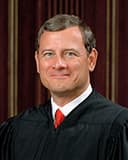
Roberts
·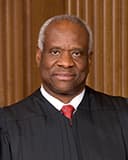
Thomas
·
Sotomayor
·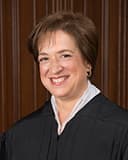
Kagan
·
Gorsuch
·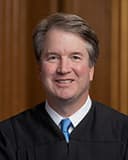
Kavanaugh
·
Jackson
·
Decided June 29, 2026
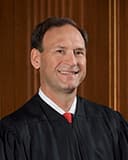
Majority Opinion— Justice Barrett
The Supreme Court ruled 5–4 that federal election-day statutes do not prevent states from counting absentee ballots that are postmarked by Election Day but received up to five days later. The case involved a Mississippi law that allows certain absentee voters to mail their ballots by Election Day, with officials accepting them up to five business days afterward. The Republican National Committee and others argued that federal law, which sets a single Tuesday in November as the day for the "election" of federal officeholders, requires all ballots to be physically received by that date. The Court disagreed, holding that the word "election" has always meant the act of choosing — that is, the voters' casting of their ballots — not the government's receipt of those ballots.
Justice Barrett, writing for the majority, relied on dictionary definitions, prior Supreme Court precedent, and the structure of related federal statutes. She noted that a companion law, the Uniformed and Overseas Citizens Absentee Voting Act (UOCAVA), repeatedly references state-law deadlines for ballot receipt, which would be pointless if federal law already imposed a uniform receipt deadline. The Court also pointed to the Constitution's electoral-college system, in which electors vote on a uniform day but their votes are transmitted and received later — showing that the founding framework already separated the act of voting from the act of receiving votes. The practical effect of the decision is that roughly 30 states that currently count late-arriving absentee ballots postmarked by Election Day may continue to do so without running afoul of federal law. The Court emphasized that Congress, not the judiciary, is the proper body to impose a nationwide ballot-receipt deadline if one is desired.
Dissenting Opinions
Justice Alito
Justice Alito, joined by Justices Thomas, Gorsuch, and (in large part) Kavanaugh, dissented. He argued that the electorate's "choice" — which is what an "election" means — is not complete until all ballots have been collected by election officials. In his view, when a state accepts ballots days after Election Day, it effectively postpones the election past the federally mandated date. He pointed to two centuries of historical practice in which states uniformly required ballots to be received by Election Day, including during the Civil War when states went to great lengths to ensure soldiers' mail-in ballots arrived on time rather than simply extending the deadline. He also cited 19th-century legal dictionaries and court decisions defining an "election" as including both the casting and the receipt of ballots.
Alito criticized the majority for ignoring this history and for relying too heavily on UOCAVA, a statute enacted decades after the election-day laws. He warned that the decision opens the door to troubling scenarios: states could potentially accept ballots weeks after Election Day, allow third parties like political operatives to deliver ballots, or face situations in which election outcomes appear to flip long after polls close — all of which he said would undermine public confidence in elections and create opportunities for fraud. He argued that the majority's reading leaves virtually no federal limit on when ballots must be received, creating uncertainty for state legislatures and election officials.
Oral Argument Recording
Via Spotify ↗
Background & Facts
Mississippi law requires that absentee ballots be received by election officials no later than Election Day in order to be counted. In practice, this means that ballots postmarked before or on Election Day but arriving afterward are rejected. Federal law — specifically the Uniformed and Overseas Citizens Absentee Voting Act (UOCAVA), which protects the voting rights of military personnel and Americans living abroad — requires states to accept and count ballots from covered voters that are timely submitted. The Republican National Committee and other plaintiffs sued Mississippi Secretary of State Michael Watson, arguing that the state's receipt deadline unlawfully prevented valid UOCAVA ballots from being counted and violated federal statutes protecting absentee voters.
The United States District Court sided with the plaintiffs, and the Fifth Circuit Court of Appeals affirmed, holding that Mississippi's strict Election Day receipt deadline could not be applied to ballots protected under UOCAVA because it conflicted with federal law. The Fifth Circuit reasoned that federal law preempts state deadlines that effectively disenfranchise military and overseas voters whose ballots were sent on time but arrived late due to mail delays. The court's October 2024 decision prompted Mississippi's Secretary of State to seek Supreme Court review, which was granted in November 2025.
Why This Case Matters
This case could have major implications for how states administer elections, particularly the balance of power between state election laws and federal statutes protecting military and overseas voters. If the Supreme Court sides with Mississippi, states would have broader authority to enforce strict receipt deadlines, potentially resulting in more ballots from military and overseas citizens being rejected. Conversely, a ruling for the respondents would reinforce federal protections requiring states to accommodate late-arriving ballots from UOCAVA-covered voters, affecting election administration in many states with similar laws.
Beyond UOCAVA, the case touches on broader questions about federal preemption of state election laws and the extent to which Congress can override state deadlines in the name of protecting voting rights. With military and overseas voters casting tens of thousands of ballots in close elections, the Court's decision could prove decisive in future elections and will shape the legal landscape for absentee voting nationwide.
The Arguments
Mississippi's Election Day receipt deadline for absentee ballots is a valid, neutral state election administration rule that federal law does not preempt. UOCAVA guarantees military and overseas voters the opportunity to vote, but does not override a state's reasonable deadline requiring ballots to be received — not merely mailed — by Election Day. States have broad authority under the Elections Clause and the Constitution to set the rules for when ballots must be received.
- UOCAVA requires states to allow covered voters to submit ballots, but does not mandate that states count ballots arriving after Election Day.
- States have historically held broad authority to set election administration rules, including receipt deadlines, under the Elections Clause of the Constitution.
- Requiring states to count ballots arriving after Election Day creates administrative chaos and undermines election finality, as results cannot be certified until an indefinite post-election window closes.
- The Fifth Circuit's ruling improperly used federal statute to override a neutral, generally applicable state election rule, setting a dangerous precedent for federal intrusion into state election administration.
Mississippi's strict Election Day receipt deadline violates UOCAVA because it effectively prevents military and overseas voters — who face unique mailing delays outside their control — from having their ballots counted even when timely submitted. Federal law preempts the state deadline to the extent it conflicts with UOCAVA's mandate to protect the voting rights of covered voters.
- UOCAVA was enacted precisely to address the unique challenges faced by military and overseas voters, including mail delays that are often beyond their control.
- Applying a rigid Election Day receipt deadline to UOCAVA voters conflicts with the statute's purpose and its requirement that states provide meaningful absentee voting opportunities.
- The Supremacy Clause requires that the state receipt deadline yield to the contrary federal mandate protecting military and overseas voters.
- Invalidating the receipt deadline as applied to UOCAVA voters is a narrow remedy that preserves state authority in all other respects while vindicating critical federal rights.
Precedent Cases Cited
Uniformed and Overseas Citizens Absentee Voting Act (statutory construction cases)
52 U.S.C. § 20301 et seq.
UOCAVA is the central federal statute at issue, requiring states to provide absentee voting opportunities to military and overseas citizens and forming the basis for the respondents' preemption argument.
Purcell v. Gonzalez
549 U.S. 1
Petitioner invokes this case for the principle that federal courts should be cautious about ordering changes to state election laws close to an election, supporting deference to state election administration rules.
Arizona v. Inter Tribal Council of Arizona, Inc.
570 U.S. 1
This case addressed the scope of federal preemption of state voter registration requirements under the National Voter Registration Act and the Elections Clause, which is directly relevant to the preemption analysis here.
Brnovich v. Democratic National Committee
594 U.S. 647
Both sides cite this case regarding the standards for evaluating state voting restrictions under federal law and the scope of states' authority to set election administration rules.
Foster v. Love
522 U.S. 67
This case established that federal law governs the timing of federal elections and that state election rules that conflict with federal statutes setting Election Day are preempted.
Smiley v. Holm
285 U.S. 355
This case is cited for the scope of state authority under the Elections Clause of the Constitution, relevant to the petitioner's argument that states have broad power to administer federal elections.
Legal Terminology
Analysis & Opinions
The Dispatch clarifies what the Supreme Court's decision on mail ballots does and does not mean, pushing back on overreading of the ruling. The article argues the court neither asserted broad state control over elections nor endorsed the slow counting of mail-in ballots. The piece aims to correct misinterpretations of the decision circulating in public discourse.
The Supreme Court upheld, by a 5-4 vote, a Mississippi law allowing mail-in ballots to be counted if postmarked by Election Day and received within five days. In Watson v. Republican National Committee, the Court rejected the argument that federal law requires mail-in ballots to be received by Election Day, a significant ruling ahead of the 2026 midterms.
The Supreme Court ruled that state laws allowing mail-in ballots to arrive after Election Day are legal, providing relief to 18 states with similar provisions. The decision represents another setback for President Trump's efforts to impose stricter election regulations.
The Supreme Court upheld the grace period allowing mail-in ballots that arrive after Election Day to still be counted, as long as they are postmarked on time. The ruling validates the practices of multiple states that allow such late-arriving ballots.