United States v. Hemani
Whether the federal law prohibiting unlawful users of controlled substances from possessing firearms, 18 U.S.C. § 922(g)(3), violates the Second Amendment as applied to a person who uses marijuana.
The Decision
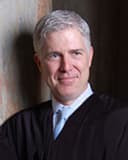
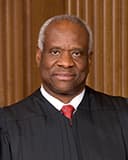
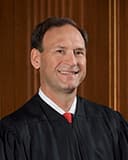


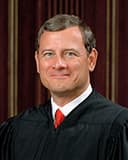
Roberts
·
Kagan
·
Kavanaugh
·
Barrett
·Decided June 18, 2026
Majority Opinion— Justice Gorsuch
The Supreme Court held that the federal government's prosecution of Ali Hemani under 18 U.S.C. §922(g)(3)—which bans "unlawful users" of controlled substances from possessing firearms—violated the Second Amendment. Hemani, a Texas-born dual citizen, used marijuana about every other day and kept a gun in his home. After a search of his family's home for unrelated terrorism suspicions, the government charged him solely for possessing a firearm while being an unlawful drug user, even though it never alleged he was an addict, dangerous, or had misused a gun. The Court found that the Second Amendment presumptively protects Hemani's right to keep a firearm, and the government failed to justify stripping that right by pointing to historical analogues.
Under the framework from District of Columbia v. Heller, New York State Rifle & Pistol Assn. v. Bruen, and United States v. Rahimi, the government needed to show that its regulation was consistent with the Nation's historical tradition of firearm regulation. The government relied on historical "habitual drunkard" laws—vagrancy statutes, civil-commitment laws, and surety-of-good-behavior laws—as analogues. But the Court found these analogies failed on every metric. Historically, "habitual drunkards" were people so severely impaired they could not manage their own affairs, not merely regular drinkers. The historical laws served purposes like promoting productivity, protecting drunkards from themselves, or preventing scandals—not disarming categorically dangerous people. Those laws also required some legal process before someone lost liberties, whereas §922(g)(3) automatically strips gun rights without any pre-deprivation hearing. The Court also questioned whether the government could credibly claim all regular marijuana users are categorically dangerous when the government itself has relaxed marijuana enforcement, most states have legalized it to some degree, and the drug was recently rescheduled. The Court emphasized its ruling was narrow: it did not address bans on addicts, people who are currently intoxicated, convicted felons, or prosecutions where the government provides individualized proof that a defendant's drug use makes him dangerous.
Concurring Opinions
Justice Thomas
Justice Thomas joined the majority opinion in full but wrote separately to raise a different constitutional concern: whether §922(g) exceeds Congress's power under the Commerce Clause. The statute makes it a federal crime for certain people to possess firearms that have at any point traveled in interstate commerce. Thomas argued that merely possessing a gun that once crossed state lines is not "economic activity" and does not substantially affect interstate commerce, meaning Congress lacks authority to criminalize it. He traced this argument through the Court's precedents in United States v. Lopez and United States v. Morrison, contending that lower courts have wrongly treated a prior statutory interpretation case (Scarborough v. United States) as settling the constitutional question.
Thomas also rejected the idea that §922(g)'s "jurisdictional hook"—its requirement that the firearm previously traveled in interstate commerce—is enough to save the statute. He argued that if Congress could regulate anything that ever crossed state lines, the Commerce Clause would become a limitless general police power with no meaningful boundaries. While acknowledging the issue was not directly presented in this case, Thomas urged the Court and lower courts to revisit §922(g)'s constitutionality under the Commerce Clause in a future case.
Justice Jackson
Justice Jackson, joined by Justice Sotomayor, joined the majority opinion but wrote separately to reiterate her view that the Court's historical-tradition framework from Bruen is fundamentally flawed and should eventually be replaced with means-end scrutiny. She argued that Bruen forces judges to act as historians, sifting through centuries-old evidence to answer contested questions, which leads to inconsistent results across courts. She noted that lower courts have reached starkly different conclusions about the same laws using the same historical test, illustrating its unworkability.
Jackson argued that means-end scrutiny—the approach courts used before Bruen—would be more rational and is already how courts evaluate restrictions on other constitutional rights like free speech and equal protection. Under that framework, courts would ask how severely a law burdens Second Amendment rights and whether the law is sufficiently tailored to the government's justification. She observed that even the majority's reasoning implicitly engaged in this kind of tailoring analysis by questioning whether §922(g)(3) actually serves its stated purpose. Jackson called on the Court to consider retiring the Bruen framework in a future case and returning to explicit means-end scrutiny.
Justice Sotomayor
Justice Sotomayor joined Justice Jackson's concurring opinion, which argued that the Bruen historical-tradition framework is unworkable and should eventually be replaced with means-end scrutiny—the approach courts use for other constitutional rights. She did not write separately but signaled her agreement that the current test forces judges into an unfamiliar role as historians and leaves no room to consider the real-world stakes of modern gun violence.
Justice Alito
Justice Alito, joined by Justice Kagan, concurred in the judgment but would have decided the case on narrower grounds. He agreed that the government's historical analogues failed because habitual-drunkard laws targeted people whose extreme alcohol use left them practically incapacitated and unable to manage their affairs—a far cry from someone like Hemani who used marijuana every other day with no evidence of impairment. Alito emphasized that the government presented no information about how much marijuana Hemani used, its potency, or its effect on his judgment, making it impossible to analogize him to the habitual drunkards regulated by historical laws.
Alito drew a parallel between marijuana today and alcohol at the founding: both are widely used, increasingly socially accepted, and largely tolerated by law enforcement. He argued this similarity only highlighted the weakness of the government's position, since the historical laws it cited required extreme, incapacitating use before any liberty could be restricted. Alito would have affirmed solely on this analogical mismatch without reaching the majority's broader discussion, and he stressed that the decision should not cast doubt on other provisions of §922(g) that disarm felons or the mentally ill.
Oral Argument Recording
Via Spotify ↗
Background & Facts
Ali Danial Hemani was charged under 18 U.S.C. § 922(g)(3), a federal law that makes it illegal for anyone who is 'an unlawful user of or addicted to any controlled substance' to possess a firearm. Marijuana remains a Schedule I controlled substance under federal law, making its use illegal federally even in states where it has been legalized. Hemani challenged his prosecution, arguing that applying this firearms ban to marijuana users violates the Second Amendment right to keep and bear arms.
The United States District Court for the Eastern District of Texas sided with the government, upholding the law. However, Hemani appealed to the Fifth Circuit Court of Appeals, which reversed the lower court. The Fifth Circuit, in a January 31, 2025 decision, found that the government had failed to demonstrate that the prohibition on firearms possession by marijuana users was consistent with the nation's historical tradition of firearm regulation, as required by the Supreme Court's 2022 ruling in New York State Rifle & Pistol Association v. Bruen.
The federal government then petitioned the Supreme Court to review the Fifth Circuit's decision, and the Court agreed to hear the case. The case now presents the Supreme Court with a significant opportunity to clarify how the historical tradition test from Bruen applies to categorical bans on gun ownership by people engaged in disfavored or illegal conduct.
Why This Case Matters
This case is one of the most consequential Second Amendment cases since the Supreme Court's landmark 2022 Bruen decision, which required courts to evaluate gun laws based on whether they fit within America's historical tradition of firearm regulation. The outcome will determine whether the federal government can continue to enforce one of its most broadly applied gun prohibitions — § 922(g)(3) — against the millions of Americans who use marijuana, including in states where it is legal under state law. Circuit courts have been deeply divided on this question, and a ruling here will set binding precedent nationwide.
Beyond marijuana, the Court's reasoning could have sweeping implications for other categorical firearms bans in § 922(g), such as those covering felons and people with mental illness, since they all rest on similar justifications about disarming persons deemed dangerous or untrustworthy. A decision that strictly limits how the government may justify such prohibitions could reshape federal gun law fundamentally, while a ruling that provides the government more latitude could stabilize the existing framework. The case also sits at the intersection of federal drug policy and Second Amendment rights, touching on the ongoing national debate over marijuana legalization.
The Circuit Split
Following the Supreme Court's decision in Bruen, circuits have split on whether § 922(g)(3)'s prohibition on firearm possession by users of controlled substances — particularly marijuana — is constitutional. Some circuits have upheld the law under historical tradition analysis, while others have found it unconstitutional as applied to marijuana users.
Section 922(g)(3) is constitutional
Holds that § 922(g)(3)'s prohibition on firearm possession by unlawful drug users is consistent with the nation's historical tradition of firearm regulation and survives Second Amendment scrutiny.
Section 922(g)(3) is unconstitutional as applied
Holds that § 922(g)(3) violates the Second Amendment as applied to marijuana users because the government has not demonstrated a historical tradition of disarming persons who use intoxicating substances.
The Arguments
The federal government argues that § 922(g)(3) is constitutional because the Founders understood that the right to keep and bear arms did not extend to persons who posed a danger to society, and that drug users — who are subject to intoxication and impaired judgment — fall within this historical category. The government contends that the Fifth Circuit applied Bruen too rigidly by demanding a historical twin to the modern statute rather than looking at broader historical principles. Courts should uphold reasonable, principle-based analogies to founding-era laws rather than require identical historical precursors.
- Historical laws disarming 'dangerous' or 'unvirtuous' persons provide sufficient analogical support for § 922(g)(3).
- The Founders recognized that intoxication and impaired judgment were grounds for restricting civic participation, including arms-bearing.
- Bruen requires a 'relevantly similar' historical tradition, not an exact historical duplicate of modern statutes.
- Striking down § 922(g)(3) would threaten the constitutionality of other longstanding § 922(g) prohibitions and undermine public safety.
Hemani argues that the government cannot identify a sufficiently analogous historical tradition of disarming marijuana or drug users, and therefore § 922(g)(3) is unconstitutional as applied to him. Under Bruen's test, the government bears the burden of showing that a modern gun restriction is consistent with the historical tradition of firearm regulation, and a broad categorical ban on all drug users lacks any clear founding-era parallel. Because marijuana use alone does not make someone dangerous in a way that historically justified disarmament, the Second Amendment protects his right to possess firearms.
- The government has not identified a founding-era law that categorically disarmed substance users or drug users.
- Historical laws cited by the government — such as laws disarming the intoxicated — applied only during actual intoxication, not as a permanent status-based ban.
- Marijuana users are not categorically dangerous, and dangerousness must be individually assessed, not presumed from status.
- Bruen forbids the government from relying on broad historical principles untethered to specific historical analogues to justify modern arms restrictions.
Precedent Cases Cited
New York State Rifle & Pistol Association, Inc. v. Bruen
597 U.S. 1
Bruen established the controlling legal test: modern gun regulations are constitutional only if the government can demonstrate they are consistent with the historical tradition of firearm regulation at the time of the founding. This is the framework both parties invoke to argue their positions.
District of Columbia v. Heller
554 U.S. 570
Heller first recognized an individual right to keep and bear arms under the Second Amendment, and its dicta noting that certain 'presumptively lawful' regulations — including prohibitions on possession by felons and the mentally ill — inform the debate over whether similar categorical bans on drug users are constitutional.
McDonald v. City of Chicago
561 U.S. 742
McDonald incorporated the Second Amendment against the states through the Fourteenth Amendment, confirming that the individual right recognized in Heller applies nationwide and reinforcing the constitutional baseline at issue in this case.
United States v. Rahimi
602 U.S. 680
Rahimi upheld the federal law prohibiting gun possession by persons subject to domestic violence restraining orders, clarifying that Bruen's historical tradition test does not require a precise historical twin but rather a 'relevantly similar' analogue. Both sides cite Rahimi to support their competing interpretations of how strictly the government must match historical precedent.
United States v. Vongxay
594 F.3d 1111
This Ninth Circuit case upholding the felon-in-possession ban is frequently cited in debates over categorical § 922(g) prohibitions, as lower courts have used its reasoning to extend similar logic to drug users, though its pre-Bruen methodology is now contested.
Range v. Attorney General
69 F.4th 96
The Third Circuit's en banc decision in Range — holding that a non-violent felon retained Second Amendment rights — is frequently cited to show that the historical tradition test can limit categorical firearms bans, supporting the respondent's argument that marijuana users cannot be permanently disarmed by status alone.
Legal Terminology
Analysis & Opinions
The Supreme Court decided United States v. Hemani in favor of the defendant, who had been prosecuted for possessing a firearm as an unlawful user of a controlled substance based on his regular marijuana use. The Court found that the government's case was insufficient, providing a victory for the defendant but offering limited guidance to lower courts on the broader legal questions involved.
In United States v. Hemani, Justices Gorsuch, Jackson, and Alito each agreed on the outcome of the Second Amendment case but took different analytical approaches. The majority examined justifications behind Founding-era historical analogues, Jackson favored means-end scrutiny, and Alito preferred a narrower ruling focused on the government's failure to support its claims on the record. Despite the different reasoning, all three agreed the government had not met its burden.
The Supreme Court ruled in United States v. Hemani that the federal government cannot prosecute a Texas man for possessing a gun while being a user of illegal drugs. Justice Gorsuch wrote the opinion holding that the federal law barring drug users from possessing firearms violates the Second Amendment, at least as applied to this defendant.
The New York Times reported that the Supreme Court narrowed the federal law banning drug users from owning guns, siding with a Texas gun owner who faced criminal charges after admitting to marijuana use. The justices found that the federal gun law violated the Second Amendment as applied to him.
The Washington Post reported that the Supreme Court ruled the government cannot restrict gun ownership based on marijuana use, deciding in favor of a Texas man prosecuted under a federal law prohibiting habitual drug users from owning firearms. The decision found the law unconstitutional as applied to the defendant.
The Supreme Court is expected to rule soon in United States v. Hemani, a case addressing whether drug users can be prohibited from possessing firearms under the Second Amendment. The decision is anticipated to reignite debates over both the Court's Second Amendment jurisprudence and whether justices apply a different legal standard in cases involving drugs.