Hunter v. United States
Whether the Double Jeopardy Clause bars the government from prosecuting a defendant who pleaded guilty under a plea agreement that the government later moved to withdraw before sentencing.
The Decision

Roberts
·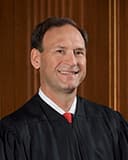
Alito
·
Sotomayor
·
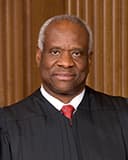
Jackson
·
Decided June 18, 2026
Majority Opinion— Justice Kagan
The Supreme Court held that a criminal defendant's agreement to waive the right to appeal a sentence — a common feature of federal plea bargains — cannot be enforced when doing so would result in a "miscarriage of justice." This means the waiver can be set aside if the sentence contains the kind of egregious, obvious error that would bring the judicial system into disrepute. The Court adopted the approach already used by most federal appeals courts, rejecting both the Government's position that valid appeal waivers are always enforceable and the Fifth Circuit's rule that allowed exceptions only for sentences exceeding the statutory maximum or tainted by ineffective counsel.
The Court reasoned that because judges play a central role in approving plea agreements and enforcing appeal waivers — and because enforcing a waiver effectively cements a sentence in place without any review — courts have an institutional interest in not rubber-stamping obviously unlawful or outrageous sentences. The Court gave examples of the kind of extreme errors that could qualify: a sentence exceeding the legal maximum, a sentence based on a constitutionally forbidden factor like race, a patently unconstitutional condition of supervised release (such as barring a defendant from becoming pregnant), or a sentence imposed without basic fair procedures. However, the Court emphasized this is a high bar — routine sentencing mistakes would not qualify. The Court also ruled that the trial judge's mistaken statement at sentencing that Hunter had a right to appeal, and the prosecutor's silence in response, did not undo the appeal waiver. The case was sent back to the Fifth Circuit to decide whether Hunter's challenge to a mandatory psychiatric medication condition meets the miscarriage-of-justice standard.
Concurring Opinions
Justice Gorsuch
Justice Gorsuch, joined by Justices Sotomayor and Jackson, agreed with the Court's result but wrote separately to place it in a broader context. He traced the dramatic rise of plea bargaining in the American justice system, noting that roughly 95% of federal convictions now come through plea deals rather than jury trials, and argued that the Court itself bears some responsibility for allowing increasingly coercive prosecutorial tactics. He highlighted how Hunter's case illustrated common features of the modern system: prosecutors brought 10 overlapping charges carrying up to 300 years in prison, then offered a deal on a single count, and Hunter was ultimately sentenced based on conduct from charges that were dropped or never even filed.
Gorsuch argued that the majority's examples of miscarriages of justice should be read broadly by lower courts, encompassing not just sentences above the statutory maximum but also sentences imposing penalties not authorized for the defendant's offense, sentences violating established constitutional rights, serious procedural errors, plain errors in calculating sentencing guidelines, and conditions of supervised release wholly unrelated to legitimate sentencing purposes. He also raised deeper questions for future cases, including whether a defendant can truly "knowingly" waive the right to appeal a sentence that hasn't been determined yet, and whether prospective appeal waivers should be treated as invalid — as the Court has done with prospective waivers of statutory rights in other contexts like employment discrimination and antitrust law.
Justice Kavanaugh
Justice Kavanaugh, joined by Justices Alito and Barrett, joined the Court's opinion in full but wrote briefly to note a disagreement with Justice Gorsuch's concurrence. Kavanaugh emphasized that the majority opinion sets a deliberately "high bar" for the miscarriage-of-justice exception, limited to "extreme cases" involving "egregious" and "obvious" errors that undermine public confidence in the judiciary. He expressed concern that Justice Gorsuch's concurrence would lower that bar, potentially making it easier for defendants to overcome appeal waivers than the majority intended. Kavanaugh stated that the Court's opinion speaks for itself and should be read on its own terms.
Justice Barrett
Justice Barrett wrote separately to address the legal foundation for the Court's decision. She agreed with Justice Thomas that the Court likely does not possess an inherent "supervisory power" over lower federal courts, but she clarified that she does not understand today's opinion to rely on such a power. Instead, she viewed the decision as grounded in longstanding waiver principles — part of the body of procedural common law that courts have developed over centuries. Barrett cited established authorities recognizing that while most rights can be waived, there are some circumstances where enforcing a waiver would so discredit the courts that it should not be allowed. She characterized the miscarriage-of-justice standard as a natural application of these traditional principles to the specific context of appeal waivers, noting the emerging consensus among lower courts that had already adopted this approach.
Dissenting Opinions
Justice Thomas
Justice Thomas dissented, arguing that Hunter's knowing and voluntary appeal waiver should have been enforced without exception. He emphasized that for over 100 years after the founding, federal defendants had no right to appeal their sentences at all — Congress created that right by statute, and like any statutory procedural right, it can be waived. Thomas noted that Hunter received an enormous benefit from his plea deal: his maximum prison exposure dropped from 300 years to 30, and he was sentenced to just 51 months. Having accepted those benefits, Thomas argued, Hunter should not be allowed to renege on his end of the bargain.
Thomas challenged the Court's miscarriage-of-justice exception on multiple grounds. He argued the Court identified no constitutional text, statute, or established common-law doctrine supporting such an exception. He contended that the Court appeared to be relying on its claimed "supervisory power" over lower federal courts — a power Thomas views as constitutionally dubious and historically unsupported. Even if such a power existed, he argued, it would extend only to regulating court procedures, not to rewriting the substantive terms of binding plea agreements. He further noted that the Federal Rules of Criminal Procedure's advisory committee had already considered and declined to adopt a rule like the one the Court created, and that the Court should not circumvent that deliberative rulemaking process. Thomas warned that the new exception would invite defendants to appeal despite their waivers and would undermine the certainty that makes plea bargaining workable for both sides.
Oral Argument Recording
Via Spotify ↗
Background & Facts
Munson P. Hunter III entered into a plea agreement with the federal government, pleading guilty to federal criminal charges. Before Hunter was sentenced, the government moved to withdraw from the plea agreement, effectively seeking to nullify the deal it had struck with him. The district court granted the government's motion, allowing the prosecution to proceed as if no plea had occurred. Hunter argued that allowing the government to back out of the agreement after he had pleaded guilty and given up his constitutional rights violated his Fifth Amendment protection against double jeopardy — the constitutional rule that prohibits the government from prosecuting a person twice for the same offense.
The United States Court of Appeals for the Fifth Circuit ruled against Hunter, holding that the Double Jeopardy Clause did not bar the government from withdrawing from the plea agreement and continuing to prosecute him. The Fifth Circuit's decision allowed the government to proceed with prosecution notwithstanding Hunter's earlier guilty plea under the now-voided agreement. Hunter then petitioned the Supreme Court for review.
The Supreme Court granted certiorari in October 2025, agreeing to hear the case. The case attracted significant attention from criminal defense organizations, civil liberties groups, and academic institutions, all of which filed amicus briefs supporting Hunter's position. The government, represented by the Solicitor General, opposes review and defends the Fifth Circuit's ruling.
Why This Case Matters
This case has major implications for the integrity of the federal plea bargaining system, which resolves the vast majority of criminal cases in the United States — roughly 97% of federal convictions come through guilty pleas. If the government can walk away from a plea deal after a defendant has already pleaded guilty and surrendered constitutional rights, defendants face a serious asymmetry: they are bound by their admissions while the government retains the power to continue pursuing maximum punishment. A ruling for Hunter could establish that the Double Jeopardy Clause provides defendants meaningful protection once a guilty plea is entered under a plea agreement.
Conversely, a ruling for the government could reinforce prosecutorial flexibility in managing plea agreements prior to sentencing, but critics warn it would undermine the reliability of the plea bargaining process. Defense attorneys, civil liberties organizations, and legal scholars argue that allowing the government to vacate plea agreements it no longer finds advantageous — after the defendant has performed his side of the bargain — is fundamentally unfair and constitutionally impermissible. The Court's decision will likely clarify the scope of double jeopardy protections in the modern plea-bargaining context.
The Arguments
Hunter argues that once he pleaded guilty pursuant to a plea agreement, jeopardy attached and the Double Jeopardy Clause bars the government from withdrawing from the agreement and subjecting him to further prosecution for the same offenses. He contends that allowing the government to void the plea after he surrendered his constitutional rights creates an unconstitutional asymmetry that the Fifth Amendment was designed to prevent.
- Jeopardy attaches upon entry of a guilty plea in federal court, triggering full Double Jeopardy Clause protections.
- The government cannot unilaterally rescind a plea agreement after a defendant has performed his obligations under it, including pleading guilty.
- Permitting the government to withdraw exposes defendants to the very risk of successive prosecution the Double Jeopardy Clause prohibits.
- Allowing such withdrawals creates a fundamental unfairness: defendants are bound by their admissions while the government retains unchecked leverage.
The government argues that the Double Jeopardy Clause is not violated when a guilty plea is vacated before sentencing because no final judgment has been entered and jeopardy has not terminated. The government contends that courts have discretion to permit withdrawal of plea agreements under appropriate circumstances without offending constitutional double jeopardy principles.
- Double jeopardy protections in the plea context are triggered only upon the entry of a final judgment of conviction, which had not occurred here.
- Courts have long recognized the authority to permit withdrawal of guilty pleas before sentencing, and this practice does not implicate double jeopardy.
- Plea agreements are contracts, and contract-law principles govern disputes about their enforcement rather than constitutional double jeopardy doctrine.
- Extending double jeopardy protections to pre-sentencing plea withdrawals would unduly restrict the government's ability to manage cases and correct errors in the plea process.
Precedent Cases Cited
United States v. Scott
437 U.S. 82
Establishes principles for when jeopardy terminates and what constitutes an acquittal for double jeopardy purposes, relevant to whether Hunter's guilty plea constitutes a jeopardy event that bars further prosecution.
Ricketts v. Adamson
483 U.S. 1
Addressed the enforceability of plea agreements and double jeopardy, holding that a defendant who breaches a plea agreement can be reprosecuted; cited for its treatment of the intersection of plea bargains and double jeopardy.
Santobello v. New York
404 U.S. 257
Established that plea agreements must be honored by the government and that breach by the prosecution entitles the defendant to relief, foundational to Hunter's argument that the government cannot walk away from its bargain.
United States v. Broce
488 U.S. 563
Addressed the finality and binding effect of guilty pleas in the double jeopardy context, relevant to whether Hunter's plea bars subsequent prosecution.
Menna v. New York
423 U.S. 61
Held that a double jeopardy claim survives a guilty plea because it challenges the government's power to prosecute at all, supporting Hunter's argument that his double jeopardy claim is not waived by his plea.
Ohio v. Johnson
467 U.S. 493
Examined when jeopardy attaches in the context of guilty pleas and the protections afforded once a plea is accepted, relevant to the threshold question of whether double jeopardy bars the government's withdrawal here.
Legal Terminology
Analysis & Opinions
The Supreme Court ruled 8-1 in Hunter v. United States that a "miscarriage of justice" exception exists to waivers of appeal, which are standard in federal criminal plea bargains. Despite the lopsided vote, the decision masks deep divisions among the justices and is considered the most important criminal case of the term.
In Hunter v. United States, the Supreme Court ruled that a federal defendant's waiver of appellate review is unenforceable if enforcing it would result in a miscarriage of justice. The majority described the circumstances meeting this standard as 'rare' and involving 'extreme cases,' and outlined three general examples that would qualify. The Court did not decide whether the defendant's specific waiver constituted such a miscarriage.
The Supreme Court ruled 8-1 in Hunter v. United States that defendants can sometimes appeal a sentencing condition even when they previously agreed to an appellate waiver as part of a plea deal. The case involved a Texas man who pleaded guilty to aiding and abetting wire fraud and sought to challenge a condition imposed during sentencing; the Court sent the case back to the lower court for further review.