Keathley v. Buddy Ayers Construction, Inc.
Whether a debtor's personal injury lawsuit is property of the bankruptcy estate when the debtor filed for bankruptcy before the lawsuit arose but the case was still open at the time the cause of action accrued.
The Decision

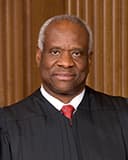

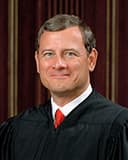
Roberts
·
Alito
·
Kagan
·
Gorsuch
·
Kavanaugh
·
Barrett
·Decided June 11, 2026
Majority Opinion— Justice Jackson
The Supreme Court unanimously ruled that the Fifth Circuit Court of Appeals used the wrong legal test when it applied the doctrine of judicial estoppel to dismiss Thomas Keathley's personal injury lawsuit. Keathley had been in an ongoing Chapter 13 bankruptcy when he was injured in a car accident. He sued the other driver's employer, Buddy Ayers Construction, but failed to disclose this lawsuit to the bankruptcy court as required. When Buddy Ayers Construction discovered the open bankruptcy, it argued Keathley should be barred from pursuing the lawsuit under judicial estoppel — a legal principle that prevents people from taking contradictory positions in different court proceedings. The Fifth Circuit agreed, using a rule that treated the omission as intentional simply because Keathley knew about his claim and could hypothetically benefit from hiding it.
The Supreme Court held that this two-factor test was both too rigid and too broad. It was too rigid because judicial estoppel is rooted in equity, which requires courts to be flexible and consider all relevant facts and circumstances on a case-by-case basis — not just two narrow criteria. It was too broad because nearly every debtor will know about their own claims and could theoretically benefit from concealing them, meaning the test would almost always treat omissions as deliberate, even when they were genuinely accidental. The Court ruled that courts must instead look at the "totality of the circumstances" to determine whether a debtor's failure to disclose was truly inadvertent or a mistake. The case was sent back to the lower courts for reconsideration under this more flexible standard. Notably, the Court did not decide whether judicial estoppel should apply in bankruptcy cases at all, leaving that broader question for another day.
Concurring Opinions
Justice Thomas
Justice Thomas, joined by Justice Gorsuch, agreed with the Court's decision but wrote separately to raise deeper concerns about the entire doctrine of judicial estoppel. He noted that the doctrine originated from a single 1857 Tennessee state court decision, was considered a fringe legal theory for over a century, and has only recently become widely used in federal courts. He questioned what legal authority gives federal courts the power to dismiss cases based on judicial estoppel, observing that the doctrine is not grounded in any statute, rule of procedure, or well-established historical practice.
Justice Thomas also pointed out that the Supreme Court has only applied judicial estoppel once before, in a case between two states that was quite different from a situation like Keathley's, where a debtor's omission in bankruptcy is used to block a completely unrelated lawsuit against a different party. He argued that applying the doctrine in cases like this one — where the defendant who benefits from dismissal was never involved in or affected by the bankruptcy proceedings — is hard to justify on equitable grounds. He urged the Court to take a closer look at the foundations of judicial estoppel in a future case.
Justice Sotomayor
Justice Sotomayor agreed with the majority but wrote separately to make two broader points. First, she argued that applying judicial estoppel while a bankruptcy case is still open may never make sense because it tends to hurt the very people it is supposed to protect — the creditors. In Keathley's case, dismissing his personal injury lawsuit meant he could not recover any money that might have been used to pay creditors faster or with interest. Meanwhile, the company that allegedly caused his injuries received a windfall by escaping liability entirely, even though it had nothing to do with the bankruptcy. She emphasized that bankruptcy courts already have plenty of tools to punish debtors who fail to disclose claims, including sanctions, plan modifications, and even criminal referrals for perjury.
Second, Justice Sotomayor stressed that any test for judicial estoppel — in bankruptcy or any other context — must consider the full picture of facts and circumstances rather than relying on narrow, mechanical rules. She praised the Eleventh Circuit's revised approach, which examines all relevant facts including what happened after the omission was discovered, as more consistent with the flexible, case-by-case analysis that equity demands.
Oral Argument Recording
Via Spotify ↗
Background & Facts
Thomas Keathley filed for Chapter 7 bankruptcy protection at some point before he suffered a personal injury. After his bankruptcy case was filed but while it was still open, he was injured in an incident involving Buddy Ayers Construction, Inc. He subsequently filed a personal injury lawsuit against the construction company to recover damages for those injuries. The central dispute is whether that lawsuit — which arose after the bankruptcy petition was filed but while the case remained pending — belongs to Keathley personally or to the bankruptcy estate (which is administered for the benefit of his creditors).
The United States Court of Appeals for the Fifth Circuit ruled against Keathley, holding that his personal injury claim was property of the bankruptcy estate because the estate's legal boundaries extended to cover causes of action that arose during the pendency of the open bankruptcy case. Keathley argued that because his injury occurred after he filed for bankruptcy, the lawsuit was his alone and not subject to the claims of his creditors. The Fifth Circuit denied rehearing in March 2025, and Keathley petitioned the Supreme Court for review.
The Supreme Court agreed to hear the case in October 2025. The United States government filed a brief supporting Keathley's position (supporting vacatur of the Fifth Circuit's decision), and several groups representing bankruptcy trustees, consumer bankruptcy advocates, retired bankruptcy judges, and trial lawyers also filed amicus briefs, reflecting the significant practical importance of the question to the administration of bankruptcy cases nationwide.
Why This Case Matters
This case matters because it affects the rights of ordinary people who file for bankruptcy and later suffer accidents or other injuries while their cases are still pending. If the Fifth Circuit's rule stands, a debtor's post-petition personal injury recovery — money meant to compensate them for pain, lost wages, or medical bills from a new injury — could be seized by creditors from a prior debt, leaving the debtor with nothing even though the injury had nothing to do with the debts that drove them into bankruptcy. The answer determines who gets the money: the injured debtor or their pre-existing creditors.
The Court's decision will also resolve uncertainty across federal circuits about the scope of the bankruptcy estate under Section 541 of the Bankruptcy Code. A ruling that post-petition causes of action belong to the debtor rather than the estate would provide important protections for debtors and bring clarity to bankruptcy trustees, courts, and creditors about which assets are available for distribution. Conversely, a ruling in favor of including such claims in the estate could expand the pool of assets available to creditors but at the cost of leaving injured debtors without recourse.
The Arguments
Keathley argues that his personal injury lawsuit, which arose after he filed for bankruptcy, is not property of the bankruptcy estate because the Bankruptcy Code limits the estate to property and interests that existed at the time of filing. Because he had no cause of action — and indeed no injury — when he filed his petition, the later-arising claim was never captured by the estate and belongs to him personally.
- The Bankruptcy Code's estate provision (11 U.S.C. § 541) is tied to property existing 'as of the commencement of the case,' which cannot include a cause of action that did not yet exist.
- The 'fresh start' policy underlying bankruptcy law supports allowing debtors to keep assets and claims arising from post-petition events unconnected to pre-petition debts.
- Requiring debtors to turn over post-petition injury recoveries to the estate undermines the rehabilitative purpose of bankruptcy and leaves injured people without compensation.
- The Fifth Circuit's rule creates perverse incentives and conflicts with the treatment of similar post-petition interests in other circuits.
Buddy Ayers Construction argues that under the Bankruptcy Code and Fifth Circuit precedent, causes of action that arise during a pending bankruptcy case — before the debtor receives a discharge or the case is closed — are properly included in the bankruptcy estate and available to creditors. The respondent contends that the statutory framework and equitable principles of equal treatment among creditors support this result.
- The bankruptcy estate is broad and encompasses all legal interests of the debtor, including contingent and future interests that mature during the pendency of the case.
- Permitting debtors to retain post-petition windfalls while creditors go unpaid undermines the equal distribution principles at the heart of bankruptcy law.
- The Fifth Circuit's interpretation is consistent with the broad language of Section 541 and longstanding circuit precedent.
- Closing the estate to post-petition claims would create opportunities for abuse, as debtors could strategically delay lawsuits until after discharge.
Precedent Cases Cited
Butner v. United States
440 U.S. 48
Establishes that property rights in bankruptcy are generally determined by reference to applicable non-bankruptcy law, relevant to defining what interests a debtor holds at the time of filing.
Segal v. Rochelle
382 U.S. 375
An older Supreme Court precedent interpreting the scope of the bankruptcy estate to include certain interests that arose post-petition, relevant to the historical debate about what 'property' the estate captures.
Cusano v. Klein
264 F.3d 936
A circuit court decision often cited for the proposition that causes of action that are sufficiently 'rooted' in pre-petition conduct become property of the estate, illustrating the circuit split on this issue.
Harris v. Viegelahn
575 U.S. 510
The Supreme Court's interpretation of the boundaries of the bankruptcy estate and debtors' rights to post-petition wages, relevant to understanding how the Code treats property acquired after filing.
Telfair v. First Union Mortgage Corp.
216 F.3d 1333
Illustrates circuit-level analysis of when a cause of action accrues for purposes of determining whether it is part of the bankruptcy estate under Section 541.
Board of Trade of Chicago v. Johnson
264 U.S. 1
An early Supreme Court case addressing the scope of the bankruptcy estate and whether certain future or contingent interests fall within it, cited for historical context on estate property definitions.
Legal Terminology
Analysis & Opinions
The Supreme Court decided Keathley v. Buddy Ayers Construction, rejecting a "rigid" judicial estoppel rule that lower courts used to punish bankrupt debtors who failed to disclose potential assets. The case involved a debtor who did not inform the bankruptcy court about a possible car accident lawsuit that could have generated additional assets for creditors. The Court found the lower court's approach too inflexible.