Flower Foods, Inc. v. Brock
Whether workers who distribute baked goods to retail stores qualify as 'transportation workers engaged in foreign or interstate commerce' under Section 1 of the Federal Arbitration Act, thereby exempting them from mandatory arbitration agreements.
The Decision





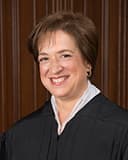
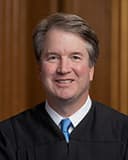


Decided May 28, 2026
Majority Opinion— Justice Gorsuch
The Supreme Court unanimously held that a worker who transports goods entirely within one state can still qualify for the Federal Arbitration Act's (FAA) exemption from mandatory arbitration, even if that worker never crosses state lines or interacts with vehicles that do. The case involved Angelo Brock, a franchisee who distributes Flowers Foods' baked goods to stores in the Denver area. Brock picks up products from a Colorado warehouse and delivers them locally, never leaving the state. When Brock sued Flowers for underpayment, Flowers tried to force the dispute into arbitration based on their distribution agreement. Brock argued he was exempt under Section 1 of the FAA, which excludes "contracts of employment" of workers "engaged in interstate commerce" from the law's arbitration requirements.
Writing for a unanimous Court, Justice Gorsuch rejected Flowers' argument that a worker must either physically cross state lines or handle goods directly from a vehicle that crossed state lines to count as "engaged in interstate commerce." The Court looked at the ordinary meaning of these terms when the FAA was enacted in 1925, finding that interstate commerce includes the entire journey of goods from a point in one state to a point in another — including portions of that journey that happen entirely within a single state. The Court pointed to an 1871 case, The Daniel Ball, where a steamboat operating entirely within Michigan was held to be engaged in interstate commerce because it carried goods destined for or arriving from other states. Several other historical cases supported the same principle.
The practical effect of this ruling is that delivery workers and distributors who handle goods on intrastate segments of interstate shipments may be exempt from mandatory arbitration under the FAA, even if they personally never leave their home state. The Court noted that Flowers raised other potentially relevant arguments — such as the fact that Brock technically buys and resells the products rather than simply transporting them — but since Flowers did not ask the Court to decide those issues, they were left unresolved for future cases.
Oral Argument Recording
Via Spotify ↗
Background & Facts
Angelo Brock worked as a distributor for Flower Foods, Inc., a large commercial bakery. Like many such distributors, Brock was classified as an independent contractor rather than an employee. He operated under a distributor agreement that required him to resolve any disputes through binding arbitration rather than in court. Brock purchased a route from Flower Foods and was responsible for delivering bread and other baked goods to retail grocery stores and similar locations within a defined territory in Colorado.
Brock filed a lawsuit against Flower Foods in federal court, arguing he had been misclassified as an independent contractor and was actually an employee entitled to various wage protections. Flower Foods moved to compel arbitration under the Federal Arbitration Act (FAA), which generally requires courts to enforce arbitration agreements. Brock opposed, arguing that he fell within a statutory exemption in Section 1 of the FAA that excludes 'contracts of employment of seamen, railroad employees, or any other class of workers engaged in foreign or interstate commerce' from the FAA's coverage.
The federal district court initially sided with Flower Foods, but the Tenth Circuit Court of Appeals reversed, ruling that Brock's work distributing goods that had crossed state lines made him part of the 'last leg' of an interstate journey, qualifying him as a transportation worker exempt from the FAA. The Tenth Circuit concluded that Brock need not personally cross state lines—it was enough that the goods he delivered had traveled in interstate commerce. Flower Foods petitioned the Supreme Court, which agreed to hear the case.
Why This Case Matters
This case has major implications for the gig economy and the millions of workers classified as independent contractors who deliver goods, food, or packages for large companies. If the Supreme Court rules broadly in favor of Brock, many last-mile delivery workers—including those who deliver for Amazon, grocery chains, or food distributors—could escape mandatory arbitration clauses and instead bring their claims in court, often as class actions. This would make it significantly easier for workers to challenge misclassification and wage theft.
Conversely, a ruling for Flower Foods could preserve mandatory arbitration for most independent contractor distributors, keeping their disputes out of court and in private arbitration proceedings. Companies that rely on independent contractor distribution networks have a strong financial interest in the outcome, as the ability to enforce arbitration agreements limits their exposure to large class-action lawsuits. The case also requires the Court to clarify the scope of the FAA's transportation worker exemption, a question that has divided lower courts for years and affects a rapidly growing sector of the American economy.
The Circuit Split
Circuits disagree on the scope of the FAA's Section 1 transportation worker exemption, specifically whether workers who distribute goods to retail stores as part of a broader interstate distribution chain are 'transportation workers engaged in interstate commerce.' The split affects the enforceability of arbitration agreements for a broad class of last-mile delivery workers.
Broad interpretation — last-mile workers exempt
Holds that workers who distribute goods to retail stores as part of an interstate distribution chain are transportation workers engaged in interstate commerce exempt from the FAA.
Narrow interpretation — last-mile workers not exempt
Holds that workers who merely distribute goods locally to retail stores are not transportation workers engaged in interstate commerce and remain subject to FAA arbitration agreements.
The Arguments
Brock does not qualify for the FAA's Section 1 exemption because he is a local distributor whose work is confined to a defined geographic territory and does not personally engage in interstate transportation. The exemption should be limited to workers in industries traditionally understood as transportation—like railroads and shipping—not local delivery workers whose goods merely originated out of state.
- The Section 1 exemption applies only to workers in the 'transportation industry' whose job is to move goods across state lines, not local distributors operating fixed routes within a single state.
- Brock never personally crossed state lines; he picked up baked goods from a local warehouse and delivered them to nearby retail stores, making his work purely local in character.
- The Tenth Circuit's 'last leg' theory stretches the exemption far beyond its original meaning, which was intended to cover workers like seamen and railroad workers who physically move goods between states.
- Extending the exemption to all workers who happen to deliver goods that once traveled in interstate commerce would swallow the FAA's general rule favoring arbitration.
Brock is engaged in interstate commerce because he plays an integral role in the final delivery of goods that traveled across state lines, making him a transportation worker exempt from the FAA's mandatory arbitration requirement. The text and history of Section 1 support a reading that covers workers who, like Brock, are part of a continuous interstate commercial chain.
- The Supreme Court's decision in Circuit City Stores v. Adams established that the Section 1 exemption covers any 'class of workers engaged in foreign or interstate commerce,' not just those in specific named industries.
- Brock's work is the final link in an unbroken chain of interstate commerce—goods manufactured out of state pass through a distribution network that ends with Brock's deliveries to retail stores.
- Limiting the exemption only to workers who physically cross state lines ignores modern commercial realities, where goods routinely travel through multiple workers' hands before reaching consumers.
- Denying the exemption would allow companies to use mandatory arbitration to shield themselves from accountability for labor law violations, undermining the rights of workers who cannot afford individual arbitration.
Precedent Cases Cited
Circuit City Stores, Inc. v. Adams
532 U.S. 105
This is the foundational precedent defining the scope of the FAA Section 1 exemption; the Court held the exemption applies to transportation workers broadly but limited its reach, and both parties rely on its reasoning to support their interpretations.
Southwest Airlines Co. v. Saxon
596 U.S. 450
The Court's most recent interpretation of the Section 1 exemption, holding that ramp supervisors who load and unload cargo on planes that travel interstate are transportation workers exempt from the FAA, providing a framework both sides use to argue about Brock's status.
New Prime Inc. v. Oliveira
586 U.S. 105
Established that the Section 1 exemption applies to independent contractors as well as employees, directly relevant because Brock was classified as an independent contractor by Flower Foods.
Shanks v. Delmarva Chicken Ass'n
A lower court decision cited for the circuit split on whether local delivery workers who transport goods that originated in interstate commerce qualify for the Section 1 exemption, illustrating the conflicting approaches across the federal courts.
Moses H. Cone Memorial Hospital v. Mercury Construction Corp.
460 U.S. 1
Established the strong federal policy favoring arbitration under the FAA, which petitioner relies on to argue that exemptions to the FAA should be construed narrowly.
Epic Systems Corp. v. Lewis
584 U.S. 497
Reaffirmed that the FAA requires enforcement of arbitration agreements as written, including class action waivers, underscoring the stakes of whether the Section 1 exemption applies to workers like Brock.
Legal Terminology
Analysis & Opinions
The Supreme Court unanimously ruled in Flower Foods v. Brock that the Federal Arbitration Act's exemption for interstate transportation workers applies to "last-mile" drivers who don't personally cross state lines, as long as the goods they deliver are on an interstate journey. This means these drivers can bring disputes against their employers in court rather than being forced into arbitration. Justice Gorsuch wrote the opinion for the unanimous court.
The Supreme Court released four opinions on Thursday covering cases involving shortening prison sentences, jury selection, and last-mile delivery drivers. The article also notes that a justice was called for jury duty. The opinions appear to include rulings in cases such as Flower Foods v. Brock and Pitchford v. Cain among others from the current term.