Urias-Orellana v. Bondi
Whether federal courts should review de novo or under a deferential substantial evidence standard the BIA's determination that a set of undisputed facts does or does not constitute 'persecution' under the Immigration and Nationality Act.
The Decision



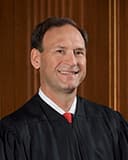


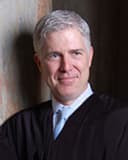
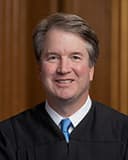

Decided March 4, 2026
Majority Opinion— Justice Jackson
The Supreme Court unanimously held that federal appeals courts must use the deferential "substantial evidence" standard when reviewing an immigration agency's determination of whether an asylum seeker has experienced "persecution" under the Immigration and Nationality Act (INA). This means that a court can overturn the agency's decision only if the evidence is so strong that no reasonable person could have reached the same conclusion as the agency. The Court rejected the argument that judges should review persecution determinations independently (de novo), even though such determinations involve applying legal standards to facts — a so-called "mixed question" of law and fact.
The case involved a Salvadoran family — Douglas Humberto Urias-Orellana, his wife, and their child — who sought asylum after being targeted by a hitman in El Salvador. An immigration judge found their testimony credible but concluded the threats and harm they experienced did not rise to the level of "persecution" required by the statute. The Board of Immigration Appeals and the First Circuit Court of Appeals both agreed, applying the substantial-evidence standard. The Supreme Court affirmed, finding the First Circuit used the correct standard of review.
In reaching its decision, the Court relied heavily on its 1992 precedent in INS v. Elias-Zacarias, which had applied a similar deferential standard to the entire persecution inquiry. The Court explained that when Congress amended the INA in 1996, it effectively codified that approach in the statute's current language requiring that agency "findings of fact" be treated as conclusive unless no reasonable person could disagree. The Court also distinguished its prior decisions in Wilkinson v. Garland and Guerrero-Lasprilla v. Barr, noting those cases dealt with whether courts have jurisdiction to hear certain claims at all — a different question from what standard of review applies once a court does have jurisdiction.
Oral Argument Recording
Via Spotify ↗
Background & Facts
Douglas Humberto Urias-Orellana, a citizen of El Salvador, sought asylum in the United States claiming he suffered past persecution. His half-brothers were shot due to a dispute between their father and a sicario (hitman). Urias-Orellana himself received credible death threats and demands for money. However, his mother, stepsister, and stepfather were never threatened, and both he and his half-brothers lived in peace after moving away from their hometown. The immigration judge found his testimony credible but determined that the threats he experienced, while menacing, did not rise to the legal level of 'persecution' required for asylum.
The Board of Immigration Appeals (BIA) affirmed the immigration judge's decision, and the First Circuit Court of Appeals upheld it, applying a deferential 'substantial evidence' standard of review — meaning it only asked whether the BIA's conclusion was reasonable, not whether it was correct. Urias-Orellana argues that the court should have independently decided whether the undisputed facts amounted to persecution as a matter of law.
The case reaches the Supreme Court because federal appeals courts are deeply divided on this question. Some circuits review de novo (independently), while others defer to the BIA. Even the government agreed the confusion warranted Supreme Court review.
Why This Case Matters
This case will determine how much power federal courts have to second-guess the BIA when deciding whether an asylum seeker's undisputed experiences qualify as 'persecution.' If the Court sides with the petitioner, courts would independently decide this legal question, potentially leading to more consistent and precedent-building decisions across circuits. If the Court sides with the government, the BIA's factual judgments will receive significant deference, limiting judicial oversight of asylum determinations.
The decision carries enormous practical consequences for thousands of asylum seekers whose cases turn on whether their experiences meet the persecution threshold. It also implicates broader questions about the boundary between law and fact in administrative review, the role of federal courts in immigration cases, and the legacy of IIRIRA — the 1996 law that significantly curtailed judicial review of immigration decisions.
The Arguments
Whether undisputed facts qualify as 'persecution' under the INA is a legal question that courts should decide independently (de novo), not defer to the BIA. The statute's deference provision covers only 'findings of fact,' and even the BIA itself treats this determination as a question of law, not fact.
- The BIA reviews this question de novo when reviewing immigration judges, proving it is not a 'finding of fact'
- Courts develop auxiliary legal principles (about threats, sexual violence, religious persecution) when applying the persecution standard, which is the hallmark of legal work under U.S. Bank
- Analogous mixed questions like fair use and antitrust are reviewed de novo on undisputed facts
- The government concedes courts owe no deference to the BIA in interpreting the persecution standard, which itself departs from how many circuits currently operate
Key Exchanges with Justices
Justice Kagan
“Why is this primarily legal? Courts have an auxiliary legal principle that threats count as persecution if sufficiently menacing, and the remaining question — were these threats that menacing — sounds really factual.”
It revealed the petitioner's argument depends on showing that persecution is a term of art requiring legal analysis, not a commonsense factual assessment.
Justice Jackson
“Why doesn't Section 1252(b)(4)(C), which says decisions on eligibility for admission are conclusive unless manifestly contrary to law, prescribe the standard of review here?”
It forced the petitioner to argue that asylum eligibility is legally distinct from admission eligibility — a distinction neither party had briefed.
Justice Kavanaugh
“On pages 4 and 40 of the government's brief, they make what you call a concession about legal arguments — how is that going to apply in practice?”
It highlighted that even the government's position represents a change from the status quo in many circuits, potentially giving the petitioner a partial win.
Whether undisputed facts amount to 'persecution' is a primarily factual inquiry requiring weighing of evidence and drawing inferences, which Congress intended to be reviewed under the deferential substantial evidence standard. Courts can still review purely legal questions de novo, but the ultimate application of the persecution standard to particular facts warrants deference.
- Congress in Section 1158 described the asylum inquiry as one for the 'trier of fact,' and codified the Elias-Zacarias substantial evidence standard in IIRIRA
- This Court in Wilkinson already applied deferential review to the analogous 'extreme hardship' mixed question under the INA
- The particular facts here — balancing threats against evidence the family was fine after relocating — require classic fact-weighing and inference-drawing
- De novo review would be a sea change irreconcilable with IIRIRA's thrust of limiting judicial review of immigration decisions
Key Exchanges with Justices
Justice Gorsuch
“So you agree that the question of whether any reasonable fact finder could reach the conclusion reached by the BIA is a legal question that courts can review?”
The government confirmed this is a legal question courts can decide, aligning their position with the traditional jury-verdict review standard from Elias-Zacarias.
Justice Kavanaugh
“Why does the BIA review these kinds of questions de novo? What is the underlying rationale?”
The government struggled to explain why the same question transforms from a legal/judgment question internally to a factual one for court review, relying on the distinction between internal agency structure and statutory review standards.
Justice Kagan
“Would your position have every mixed question receive substantial evidence review? You don't seem to have examples of mixed questions that wouldn't get deference.”
The government could not name a single immigration mixed question that would get de novo review, undermining their claim that their position is narrower than the petitioner's.
Precedent Cases Cited
INS v. Elias-Zacarias
502 U.S. 478
Central precedent applying substantial evidence review to an asylum eligibility determination. The government argues it controls this case; petitioner argues it was limited to the factual question of the persecutor's subjective motive.
U.S. Bank N.A. v. Village at Lakeridge, LLC
Provides the framework both sides rely on for determining whether a mixed question of law and fact should be reviewed de novo or deferentially, based on whether the work involved is primarily legal or primarily factual.
Google LLC v. Oracle America, Inc.
Petitioner cited it as an example where the Court reviewed a mixed question (fair use) de novo despite extensive fact-intensive analysis, arguing the persecution question deserves the same treatment.
Wilkinson v. Garland
The government cited it as applying deferential review to the analogous 'extreme hardship' determination under the INA, arguing it supports the same approach for persecution.
Guerrero-Lasprilla v. Barr
Both sides referenced it as addressing the scope of judicial review of mixed questions under the INA, with the Court holding that not all mixed questions receive the same standard of review.
TSC Industries, Inc. v. Northway, Inc.
The government cited it as an example where materiality — a question of whether facts meet a legal standard — is treated as a factual question for the jury, analogous to the persecution determination.
Icicle Seafoods, Inc. v. Worthington
Petitioner cited it as another example of a mixed question — whether workers qualified as 'seamen' under the Fair Labor Standards Act — that courts review de novo when facts are undisputed.
INS v. Orlando Ventura
The government cited it for the principle that the agency has expertise in immigration matters and courts should generally defer to agency determinations.
Legal Terminology
Analysis & Opinions
SCOTUSblog explores the constitutional meaning of "the people" in the context of the Second Amendment's right to keep and bear arms. The article examines how the Supreme Court interprets who is protected under this phrase, likely in connection with a case involving non-citizens' gun rights.