Hain Celestial Group v. Palmquist
Whether a federal court's final judgment must be vacated when the court erroneously dismissed a non-diverse defendant as fraudulently joined, even though only completely diverse parties remained at the time of final judgment.
The Decision

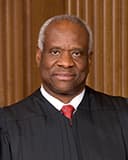

Roberts
·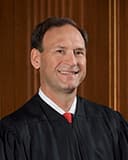
Alito
·
Kagan
·
Gorsuch
·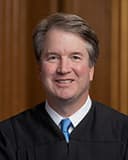
Kavanaugh
·
Barrett
·
Jackson
·Decided February 24, 2026
Majority Opinion— Justice Sotomayor
The Supreme Court unanimously held that when a federal district court erroneously dismisses a nondiverse defendant (a defendant from the same state as the plaintiff) to create the appearance of diversity jurisdiction, and that error is later reversed on appeal, the district court's final judgment must be vacated because the court never actually had jurisdiction. The case involved the Palmquist family, who sued baby food maker Hain Celestial Group and retailer Whole Foods in Texas state court after their son developed serious health conditions allegedly linked to heavy metals in baby food. Hain removed the case to federal court, but because both Whole Foods and the Palmquists were Texas citizens, there was no complete diversity of citizenship as required for federal jurisdiction. The district court wrongly dismissed Whole Foods from the case, found jurisdiction, and then ruled in Hain's favor after trial.
The Court, led by Justice Sotomayor, explained that under its earlier decision in Caterpillar Inc. v. Lewis, a jurisdictional defect can be "cured" before final judgment — but only through a proper and final dismissal of the nondiverse party, such as a voluntary settlement. Here, the dismissal of Whole Foods was erroneous and merely interlocutory (meaning it merged into the final judgment and was reviewable on appeal). When the Fifth Circuit correctly reversed the dismissal and restored Whole Foods to the case, the lack of complete diversity was revealed to have persisted throughout the entire proceeding. The Court also rejected Hain's argument that Federal Rule of Civil Procedure 21 could be used to drop Whole Foods from the case over the Palmquists' objections, emphasizing that plaintiffs are the "masters of the complaint" and have the right to choose their forum. As a practical matter, the case must now be sent back to Texas state court, where the Palmquists originally filed it.
Concurring Opinions
Justice Thomas
Justice Thomas joined the majority opinion in full but wrote separately to express serious doubts about the "improper joinder" doctrine that lower federal courts widely use. Under this doctrine, federal courts can dismiss nondiverse defendants — and thus claim diversity jurisdiction — by evaluating whether the plaintiff's claims against those defendants are strong enough on the merits. Thomas argued that this practice appears to let federal courts expand their own jurisdiction by ruling on the merits of claims they don't actually have the power to hear, which conflicts with the principle that federal courts must establish jurisdiction before doing anything else.
Thomas traced the doctrine back to early Supreme Court cases involving "fraudulent joinder," but argued those older cases were limited to situations involving actual bad faith or fraud by the plaintiff — such as lying about a party's citizenship or conduct — not simply having weak legal claims. He noted that modern lower courts have stretched the doctrine far beyond its original scope by conducting what amounts to a merits analysis of state-law claims against nondiverse defendants. He urged the Court to take up the validity of the improper joinder doctrine in a future case where the issue is fully briefed and directly presented.
Oral Argument Recording
Via Spotify ↗
Background & Facts
Sarah Palmquist sued The Hain Celestial Group and Whole Foods in Texas state court over allegedly harmful baby food. Hain Celestial removed the case to federal court, arguing that Whole Foods — a Texas company whose presence would destroy the complete diversity needed for federal jurisdiction — had been fraudulently joined as a defendant. The district court agreed, dismissed Whole Foods from the case, and kept the lawsuit in federal court.
The case then proceeded for two years of litigation and went to trial with only Hain Celestial as a defendant. After hearing all the evidence, the district court ruled against the plaintiffs, finding they had failed to prove that the baby food caused the child's condition. The plaintiffs appealed to the Fifth Circuit.
The Fifth Circuit reversed the fraudulent joinder ruling, concluding that Whole Foods should not have been dismissed and that the plaintiffs had a valid claim against them. Because Whole Foods' presence in the case would have destroyed diversity jurisdiction, the Fifth Circuit held that the jurisdictional defect was never cured and vacated the entire final judgment. Hain Celestial then petitioned the Supreme Court, arguing that the final judgment should be preserved because only diverse parties were present at the time it was entered.
Why This Case Matters
This case addresses a significant gap in federal jurisdiction law: what happens when a federal court erroneously removes a non-diverse party through a fraudulent joinder ruling, proceeds through a full trial, and enters final judgment — only for the appellate court to later determine the removal was wrong. The outcome will determine whether years of litigation and a final judgment can survive such an error or must be entirely vacated.
The decision will have broad implications for removal practice, fraudulent joinder doctrine, and the balance between principles of judicial efficiency and finality on one hand, and the plaintiff's right to choose their forum and structure their lawsuit on the other. It will also clarify the relationship between the Court's recent Royal Canin decision about supplemental jurisdiction and diversity jurisdiction, potentially reshaping how federal courts handle contested removals going forward.
The Arguments
The final judgment should stand because at the time it was entered, only completely diverse parties remained, satisfying diversity jurisdiction requirements. For nearly 200 years, the Court has held that a final judgment should be preserved if the court had jurisdiction over the case in the form it took at final judgment. Alternatively, the Court can preserve the judgment under Newman-Green by dismissing Whole Foods now.
- When a defendant is dismissed as fraudulently joined, it never enters the federal court — the case proceeds as a suit between diverse parties, and there is no lingering jurisdictional defect.
- Treating the dismissed non-diverse defendant as a party through final judgment would destroy the fraudulent joinder doctrine entirely, because jurisdiction could never exist until the dismissal was affirmed on appeal.
- The absence of Whole Foods had no effect on the trial outcome — plaintiffs lost on causation, which had nothing to do with Whole Foods' presence or absence.
- Caterpillar held that principles of finality, efficiency, and economy override the plaintiff's choice of forum when a final judgment has been entered among diverse parties.
Key Exchanges with Justices
Justice Kagan
“Under Royal Canin, when federal claims drop out, supplemental jurisdiction over state claims remains because the federal claims can re-emerge on appeal. Shouldn't the same logic apply here — the dismissed party can come back and destroy diversity?”
Harrington struggled to distinguish Royal Canin, drawing a distinction between merits-based dismissals and fraudulent joinder dismissals that several Justices found unpersuasive.
Justice Jackson
“Is there any possibility of preclusion in a subsequent Whole Foods lawsuit, and wouldn't that constitute prejudice to the plaintiffs who wanted to bring one lawsuit against both defendants?”
Harrington conceded preclusion was possible under state law but argued it wouldn't constitute prejudice, just the ordinary consequence of losing at trial — a position that drew skepticism.
Justice Barrett
“If the remedy depends on showing prejudice, isn't this really not about jurisdiction at all? We don't normally think of jurisdiction as dependent on whether there is prejudice to a party.”
It revealed the awkwardness of Petitioner's case-specific, prejudice-dependent approach to what is ordinarily treated as a bright-line jurisdictional question.
Federal courts cannot acquire jurisdiction through error. The erroneous, involuntary dismissal of Whole Foods did not cure the lack of complete diversity, and the jurisdictional defect persisted through final judgment. Under Royal Canin's rationale, a dismissed party retains jurisdictional significance while subject to appellate review.
- Unlike Caterpillar, where the non-diverse defendant voluntarily left the case before final judgment, here the defect was never cured because the dismissal was erroneous and involuntary.
- A fraudulently joined party remains in the case subject to appellate review — as shown by Mecom v. Fitzsimmons, where the Court reversed a fraudulent joinder ruling, necessarily meaning the party remained in the case all along.
- The plaintiff is the master of her complaint and structured the suit to remain in state court; that right was improperly taken away by the defendant's erroneous removal.
- Rule 54(b) certification was available to resolve jurisdictional uncertainty early — the defendants chose not to seek it and assumed the risk.
Key Exchanges with Justices
Justice Thomas
“This would be a much cleaner case if you had appealed the dismissal. Why didn't you?”
Post effectively responded by citing Caterpillar's holding that there is no obligation to seek immediate review to preserve the right to ultimate appeal on jurisdictional issues.
Justice Barrett
“Isn't the prejudice you're describing very abstract — you can't point to anything showing the outcome would have been different?”
Post acknowledged the prejudice was primarily jurisdictional in nature but argued that as a practical matter, plaintiffs were unable to develop evidence about Whole Foods' role in misrepresenting baby food quality.
Justice Alito
“Did you suggest that the standard for judgment as a matter of law might be different in Texas state courts than in federal courts?”
Post confirmed this was a possibility, suggesting the plaintiffs might have fared differently under Texas sufficiency standards — adding a concrete dimension to the prejudice argument.
Precedent Cases Cited
Caterpillar Inc. v. Lewis
519 U.S. 61
Central precedent for both sides. Petitioner argued it supports preserving final judgments when only diverse parties remain; Respondent argued it only applies when the jurisdictional defect is cured before final judgment through voluntary dismissal.
Newman-Green, Inc. v. Alfonzo-Larrain
490 U.S. 826
Petitioner argued that even if jurisdiction is doubtful, the final judgment can be preserved by having the appellate court dismiss the non-diverse party now.
Royal Canin U.S.A., Inc. v. Wullschleger
Respondent argued its rationale controls: just as a dismissed federal claim retains jurisdictional significance for supplemental jurisdiction purposes while subject to appellate review, a dismissed non-diverse party retains jurisdictional significance until the dismissal is finally resolved.
Lexecon Inc. v. Milberg Weiss Bershad Hynes & Lerach
523 U.S. 26
Justice Gorsuch raised it as a case where a judgment was vacated and sent back because the plaintiff's choice of forum was denied, even though both forums were federal courts.
Mecom v. Fitzsimmons
284 U.S. 183
Respondent cited it to show that a party found to be fraudulently joined remains in the case subject to appellate review — the Court reversed the fraudulent joinder ruling, necessarily meaning the party had remained in the case throughout.
Kettelhake v. American Car & Foundry Co.
Respondent cited it from the voluntary/involuntary line of authority to show that even a formal involuntary non-suit of a non-diverse defendant under state procedure did not resolve the jurisdictional issue.
Curtiss-Wright Corp. v. General Electric Co.
Respondent cited it to show that district courts should consider judicial administrative interests when deciding whether to certify partial final judgments under Rule 54(b), which could resolve jurisdictional uncertainty early.