Villarreal v. Texas
Does a trial judge's order prohibiting defense counsel from discussing a criminal defendant's ongoing testimony during an overnight recess violate the Sixth Amendment right to counsel?
The Decision

Roberts
·
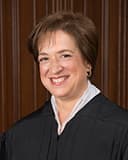
Sotomayor
·
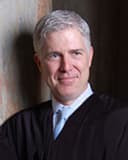
Kagan
·
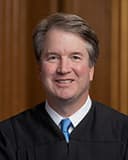
Gorsuch
·
Kavanaugh
·
Barrett
·Decided February 25, 2026
Majority Opinion— Justice Jackson
The Supreme Court ruled that a trial judge may prohibit a criminal defendant's lawyers from coaching or managing the defendant's testimony during an overnight break in that testimony, as long as the defendant is still allowed to talk with his lawyers about other important matters like trial strategy, plea bargaining, and other witnesses. David Villarreal was on trial for murder and took the stand in his own defense. When an overnight recess interrupted his testimony, the judge told his lawyers they could not "manage" his testimony but could still talk to him about other topics. Villarreal argued this violated his Sixth Amendment right to counsel.
The Court, in a 7-2 opinion by Justice Jackson, held that the order was constitutional. The Court explained that two earlier cases — Geders v. United States (1976) and Perry v. Leeke (1989) — established that while a defendant always has the right to consult with his lawyer about trial strategy, plea deals, and other non-testimony matters, the Constitution does not protect the right to discuss and refine the testimony itself while the defendant is still in the middle of testifying. The key distinction is not simply about how long the recess lasts, but about what is being discussed. Discussion of testimony "for its own sake" — practicing answers, debriefing what was said, adjusting the story — is not constitutionally protected during a break in testimony. But a lawyer and client must remain free to talk about everything else, even if those conversations touch on testimony incidentally.
The practical effect of this decision is that trial judges across the country now have clear authority to issue limited "no testimony coaching" orders during overnight recesses that interrupt a defendant's testimony. These orders must be carefully tailored: they can prohibit discussion aimed at shaping what the defendant will say next on the stand, but they cannot cut off all communication or prevent discussion of trial strategy, potential plea deals, or other legitimate legal topics.
Concurring Opinions
Justice Alito
Justice Alito agreed with the result but wrote separately to lay out a practical framework for how courts should think about these restrictions. He emphasized that when a defendant takes the stand, the jury is entitled to hear the defendant's own story in his own words — not a version scripted or polished by a lawyer. A break in testimony should not change that basic principle. During a short break, it is almost certain that any conversation between a defendant and his lawyer would be about the testimony, which is why a total ban on communication is permissible in that setting.
For overnight breaks, Alito acknowledged that a defendant and his lawyer will likely need to discuss other matters beyond the testimony, which is why a total communication ban is not allowed. However, any efforts to shape, improve, or coach the defendant's upcoming testimony remain off limits — whether done directly or indirectly. He gave concrete examples: a lawyer may discuss whether to seek a plea deal, but may not frame that discussion by pointing out specific mistakes the defendant made on the stand that day and suggesting how to fix them. Alito joined the majority opinion with the understanding that it draws this same line.
Justice Thomas
Justice Thomas, joined by Justice Gorsuch, agreed that the trial judge's order was constitutional but would not have gone as far as the majority opinion did. Thomas argued that the existing precedents from Geders and Perry already clearly answered this case: a defendant has no right to discuss his ongoing testimony with his lawyer, and the trial judge's order simply enforced that rule while leaving all other topics open for discussion. In Thomas's view, the majority unnecessarily expanded the law by opining on hypothetical situations not raised by the facts, such as when incidental discussion of testimony might be protected.
Thomas was particularly critical of the majority for announcing new rules about when discussion of testimony becomes constitutionally protected if it is "incidental" to other topics. He pointed out that Perry straightforwardly said a defendant has no constitutional right to discuss his testimony while it is in progress, and he saw no reason for the Court to go beyond that. He also noted that the majority's approach finds no support in the original meaning of the Sixth Amendment and was unnecessary to resolve a case where everyone agreed the order was constitutional.
Oral Argument Recording
Via Spotify ↗
Background & Facts
During the criminal trial of David Asa Villarreal in Texas, the trial judge issued an order allowing defense counsel to talk with Villarreal about anything during an overnight recess except his ongoing testimony. The judge instructed counsel not to discuss anything they couldn't discuss with the defendant while he was on the stand in front of the jury, essentially barring counsel from managing or coaching the defendant's testimony overnight. Defense counsel complied with the order and did not discuss the testimony.
The Texas Court of Criminal Appeals upheld the trial court's order, framing the question as whether a judge's order allowing conferral on everything except the defendant's ongoing testimony violated the Sixth Amendment. When trial resumed the next day, neither the defense nor the prosecution raised any issues about the order, and no motion for a new trial was filed. The case reached the Supreme Court to resolve whether such 'qualified conferral orders' are constitutionally permissible during overnight recesses.
The case sits at the intersection of two prior Supreme Court decisions: Geders v. United States, which held that a complete ban on attorney-client communication during an overnight recess violates the Sixth Amendment, and Perry v. Leeke, which held that restricting all communication during a brief daytime recess does not violate the Sixth Amendment.
Why This Case Matters
This case has the potential to define the precise scope of a criminal defendant's Sixth Amendment right to counsel during overnight trial recesses. The Court must determine whether there is a constitutionally protected category of testimony-related discussions that cannot be restricted, or whether trial courts may prohibit discussions about the substance of ongoing testimony while allowing strategic discussions. The ruling will directly affect how trial judges across all 50 states and federal courts manage criminal trials when a defendant's testimony spans multiple days.
The case also raises fundamental questions about the balance between the truth-seeking function of trials and the right to effective counsel. The majority rule in the United States for decades has been that defendants have a right to complete discussion of testimony during overnight recesses, and a ruling upholding qualified conferral orders would significantly change that landscape.
The Arguments
A criminal defendant has an unrestricted Sixth Amendment right to consult with counsel during overnight recesses, including about the defendant's testimony. The line between permitted 'trial strategy' discussions and prohibited 'testimony' discussions is unworkable and chills defense lawyers from providing constitutionally guaranteed assistance.
- Counsel must discuss testimony overnight for essential functions: advising on plea bargains, preventing perjury, ensuring compliance with evidentiary rulings, and correcting misstatements
- The distinction between 'trial strategy' and 'testimony discussion' is a Rorschach blot—not a real line—and defense lawyers worried about contempt will be chilled from offering needed assistance
- Geders and Perry establish that overnight recesses are constitutionally different from brief daytime recesses, with defendants having unrestricted access to counsel overnight
- For decades, the majority rule has been unrestricted discussion during overnight recesses, providing a clean and workable standard
Key Exchanges with Justices
Justice Kagan
“Isn't the line between trial strategy discussions and testimony discussions exactly what Perry drew, with Perry only conceding that testimony would 'inevitably' come up incidentally?”
It forced Banner to acknowledge his reading of Perry was contested and to argue Perry was incorrect if it drew that line, weakening his precedent-based argument.
Justice Jackson
“If the Constitution guarantees a right to be counseled about testimony, why can't a defendant call a timeout during testimony to consult counsel, and what difference does time make?”
Banner could only cite trial logistics as justification for the day/night distinction, revealing the somewhat arbitrary nature of the temporal line.
Justice Barrett
“So your rule is entirely about time—you can restrict during the day but not at night—and once it's overnight, there can be no restrictions at all?”
Banner confirmed this was his position, making clear the case turned on whether the Geders overnight rule allows any content-based restrictions.
Trial courts may issue 'qualified conferral orders' that prohibit defense counsel from managing or coaching a defendant's ongoing testimony during overnight recesses while permitting discussion of all other trial-related matters. This narrower order is supported by Perry and protects the integrity of cross-examination.
- Perry drew a constitutional line between discussing ongoing testimony (not protected) and discussing other trial-related matters (protected), and qualified orders respect that line
- The trial court's order here was narrow—only prohibiting testimonial management, not broader strategic discussions incidental to testimony
- Lawyers can navigate qualified orders using professional judgment and can seek clarification from the trial court if uncertain
- An uncounseled witness is more likely to tell the truth, and this empirical predicate supports restricting testimony coaching for defendants just as for other witnesses
Key Exchanges with Justices
Justice Gorsuch
“Is there any reason the Court needs to reach the Solicitor General's broader rule if the order here is read as only prohibiting testimonial management?”
Warthen agreed the Court could resolve the case narrowly, suggesting a possible majority approach limited to the facts.
Justice Kagan
“If a lawyer advises a defendant to take a plea bargain and the defendant asks why, can the lawyer explain that the testimony went badly?”
Warthen said the lawyer could not explain why, exposing a potential gap in Texas's framework where counsel cannot give fully informed advice.
Chief Justice Roberts
“If the defendant says he noticed a juror reacting negatively to a trial strategy and asks counsel whether to continue, can the lawyer respond?”
Warthen said no, this would be managing testimony, revealing how broadly the restriction could apply even to strategic decisions.
Perry establishes that a criminal defendant has no right to discuss his testimony with counsel after that testimony has begun, and an order barring discussion of only the testimony itself is constitutional. This broader, brighter-line rule is clearer and more workable than Texas's narrower management-focused approach.
- The rule is drawn directly from Perry's Footnote 8 and the Court's distinction between testimony discussion and other trial matters
- Defense lawyers can apply the rule by asking whether a conversation would occur irrespective of whether the defendant was testifying
- The rule is partly prophylactic—some prohibited discussions may not directly harm truth-seeking, but a clearer rule has independent value
- If testimony were conducted continuously without a break, no opportunity for these discussions would arise, so the Sixth Amendment should not turn on the fortuity of a recess
Key Exchanges with Justices
Justice Sotomayor
“Your position would bar a lawyer from even asking a defendant for a witness's contact information if that information came up during testimony—isn't that illogical?”
Barber tried to distinguish the example but revealed that his bright-line rule would sometimes prohibit clearly benign communications.
Justice Jackson
“If the narrow order in this case satisfies the Sixth Amendment, why would the Court go further and announce a broader rule that could create constitutional problems?”
It suggested several justices may prefer resolving the case narrowly on Texas's terms rather than adopting the SG's sweeping approach.
Justice Barrett
“Would you accept a formulation allowing discussion of strategic consequences of testimony but not the content or manner of delivery?”
Barber indicated comfort with Texas's narrower approach, suggesting the SG might not object to a narrow ruling.
Precedent Cases Cited
Geders v. United States
Established that a complete ban on attorney-client communication during an overnight recess violates the Sixth Amendment right to counsel. Both sides agreed this case set the baseline rule.
Perry v. Leeke
Central to both sides' arguments—Perry upheld a no-contact order during a brief 15-minute recess and drew a constitutional distinction between overnight and brief daytime recesses. The parties disputed Perry's precise holding regarding qualified orders overnight.
Nix v. Whiteside
Cited by Justice Sotomayor for the proposition that a lawyer has an ethical obligation not to suborn perjury, relevant to whether counsel must be able to discuss testimony to fulfill this duty.