Berk v. Choy
Whether Delaware's requirement that a medical malpractice complaint be accompanied by an expert affidavit of merit conflicts with the Federal Rules of Civil Procedure and therefore cannot apply in federal court.
The Decision



Roberts
·
Thomas
·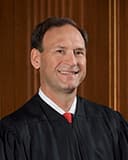
Alito
·
Sotomayor
·
Kagan
·
Gorsuch
·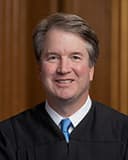
Kavanaugh
·Decided January 20, 2026
Majority Opinion— Justice Barrett
The Supreme Court held that Delaware's requirement that medical malpractice plaintiffs file an "affidavit of merit" — a document signed by a medical professional attesting to the lawsuit's merit — does not apply when a malpractice case is brought in federal court. Harold Berk sued his doctor and hospital in federal court for malpractice under Delaware law but failed to provide the required affidavit. The lower courts dismissed his case for noncompliance with the Delaware statute.
The Court reversed, ruling that Federal Rule of Civil Procedure 8 answers the question of what a plaintiff must present about the merits of a claim at the start of a lawsuit: only "a short and plain statement of the claim." Because Rule 8 requires no more than factual allegations — not evidence like an expert affidavit — it conflicts with Delaware's additional requirement. Under the Rules Enabling Act, when a valid federal procedural rule is on point, it displaces contrary state law, even if that state law serves a substantive purpose. The Court found Rule 8 to be a valid procedural rule, meaning Delaware's affidavit requirement cannot be enforced in federal court. The practical effect is that malpractice plaintiffs suing in federal court under state laws like Delaware's need only meet the federal pleading standard and are not required to attach an expert affidavit to their complaint.
Concurring Opinions
Justice Jackson
Justice Jackson agreed that Delaware's affidavit law cannot apply in federal court but disagreed with the majority's reasoning. In her view, the conflict is not with Rule 8 (which governs what a pleading must contain) but with Rules 3 and 12. Rule 3 states that a civil action begins simply by filing a complaint — nothing more — which directly conflicts with Delaware's requirement that an affidavit must accompany the complaint before it can even be filed and docketed. Jackson argued that Rule 8 only governs the contents of "pleadings," and since everyone agrees the affidavit is a separate document and not a pleading, Rule 8 does not speak to it.
Jackson also identified a conflict with Rule 12, which limits dismissal on the merits to "failure to state a claim" and bars courts from considering "matters outside the pleadings" when ruling on such motions. Since Delaware's affidavit is admittedly outside the pleadings, using its absence as a basis for dismissal violates Rule 12. Jackson criticized the majority for treating the affidavit as simultaneously outside the pleadings (for Rule 12 purposes) and as part of what a plaintiff must present about the merits (for Rule 8 purposes), calling this internally inconsistent. She concurred in the judgment but not the majority's broader reasoning about Rule 8.
Oral Argument Recording
Via Spotify ↗
Background & Facts
Harold Berk injured his foot while being treated at a medical facility in Delaware. He filed a medical malpractice lawsuit in federal court. Under Delaware law (Section 6853), no medical malpractice complaint may even be docketed unless it is accompanied by an affidavit of merit — a document signed by a qualified medical expert stating there are reasonable grounds for the claim. The affidavit is filed under seal, is not discoverable by the opposing party, and cannot be used as evidence at trial. Delaware law also delays the defendant's obligation to answer the complaint until the affidavit is served.
Berk's case was ultimately dismissed because his affidavit of merit was found insufficient. Although his treating physician reportedly told him he had a good malpractice case, that physician would not sign the formal affidavit. The defendants in the case did not challenge the complaint through a traditional motion to dismiss; instead, they used a procedure created by the Delaware statute — a motion for in camera review — to ask the court to examine the affidavit and determine its sufficiency.
The core dispute is whether this Delaware requirement can apply in federal diversity cases at all, given that the Federal Rules of Civil Procedure establish their own system for filing complaints, pleading claims, and testing the sufficiency of lawsuits.
Why This Case Matters
This case has major implications for the balance between federal procedural uniformity and state regulatory power over causes of action. Approximately half the states have enacted some form of affidavit-of-merit requirement for medical malpractice cases as part of tort reform efforts to reduce frivolous lawsuits. A ruling for the petitioner could invalidate the application of these state requirements in federal court, potentially encouraging forum shopping by malpractice plaintiffs into federal courts. A ruling for the respondents could open the door for states to impose a wide array of pre-filing proof requirements that could undermine the federal notice-pleading system.
The case also requires the Court to clarify the proper framework for analyzing conflicts between federal rules and state laws — specifically whether the 'answers the same question' test from Shady Grove applies, whether the Court should engage in a Gasperini-style 'crack and extract' approach to partially apply state laws, and whether Rule 11(a)'s reference to 'statute' encompasses state statutes. The decision could significantly refine the Hanna v. Plumer and Erie Railroad doctrines that govern the intersection of federal and state law in diversity cases.
The Arguments
Delaware's affidavit-of-merit requirement conflicts with multiple Federal Rules of Civil Procedure — including Rules 3, 8, 9, 11, and 12 — which establish a notice-pleading system where a plaintiff need only file a short statement of the claim. Because these federal rules 'answer the same question' as the Delaware law, the federal rules must control under Hanna v. Plumer and Shady Grove.
- The Delaware statute is procedural, not substantive — it regulates when complaints can be docketed and what must accompany them, but does not define malpractice or alter the standard of care, and it applies to all malpractice actions in Delaware regardless of which state's substantive law governs.
- Rule 11(a)'s reference to 'statute' means federal statute, not state statute, as confirmed by the rule's text, context, history, and purpose — so it does not preserve state affidavit requirements.
- Importing the Delaware statute into federal court would require selectively applying only some provisions while discarding others (like the sealing requirement and altered answer deadlines), amounting to an impermissible judicial rewriting of state law.
- States retain many tools to address frivolous malpractice suits — including fee shifting, shorter statutes of limitations, damages caps, and expert testimony requirements at trial — so striking down the AOM requirement in federal court does not leave states powerless.
Key Exchanges with Justices
Justice Jackson
“Why isn't there a plain, narrow, direct conflict with Rule 3, which says a case commences by filing a complaint, when the Delaware statute says the clerk shall refuse to file and docket a complaint without an affidavit of merit?”
It suggested a potentially cleaner path to ruling for the petitioner without needing to resolve more complicated questions about Rules 8, 9, and the scope of notice pleading.
Justice Kagan
“Isn't the fundamental issue that the entire thrust of the federal rules, particularly Rules 8 and 9, was to establish a notice-pleading system where all you had to do was state your claim, and everything else was supposed to happen later through discovery and summary judgment?”
It revealed strong sympathy for the petitioner's broadest argument — that the AOM requirement is fundamentally incompatible with the structure of federal litigation.
Justice Gorsuch
“Could one argue that Rule 11(a) only concerns verification of pleadings, and since an affidavit of merit is a third-party document by an expert witness — not a pleading by one of the parties — Rule 11 is simply inapplicable?”
It revealed that the Court may avoid the Rule 11 dispute entirely by finding the rule irrelevant to affidavits of merit, which are fundamentally different from verified pleadings.
There is no actual conflict between the Delaware affidavit-of-merit requirement and any federal rule because the requirement can be enforced through existing federal procedural mechanisms — such as involuntary dismissal under Rule 41 or early summary judgment — without displacing any federal rule. Under Hanna v. Plumer, federal courts must enforce state substantive requirements using federal modes of enforcement.
- The affidavit of merit is separate from the pleadings and the evidence — it is a prophylactic prerequisite to maintaining a cause of action, similar to the bond requirement upheld in Cohen v. Beneficial Industrial Loan Corp.
- No actual conflict arose in this case: the complaint was docketed, the pleadings were closed, discovery began, and only then was the affidavit found insufficient — none of these steps conflicted with any federal rule.
- Rule 11(a)'s proviso allowing requirements under 'a rule or statute' encompasses state statutes, since the original Federal Rules distinguished between 'federal statutes' and 'statute' generally.
- Striking down the AOM requirement in federal court would undermine state medical malpractice reform laws that most states have enacted to reduce frivolous litigation and protect healthcare providers.
Key Exchanges with Justices
Justice Kagan
“If Delaware could require one affidavit, could it require four affidavits from four different doctors each certifying a violation of the standard of care before a lawsuit begins? And could every state do the same for different types of suits?”
The respondent's inability to identify a clear limiting principle exposed a significant vulnerability, as the position would seemingly allow states to circumvent notice pleading entirely by labeling any requirement an 'affidavit.'
Justice Gorsuch
“By selectively applying parts of the Delaware statute in federal court while discarding others like the sealing requirement, aren't you creating a Frankenstein statute that the Delaware legislature never enacted?”
It revealed skepticism about federal courts' authority to rewrite state statutes by picking and choosing which provisions to enforce, especially when doing so may defeat the statute's underlying policy purposes.
Justice Sotomayor
“Aren't you rewriting the Delaware law to fit your argument? The Delaware law automatically delays the answer deadline without requiring court permission, but you're saying defendants could just ask for an extension under federal rules.”
It underscored that the respondent's 'no conflict' argument depended on substituting federal procedural mechanisms for the Delaware statute's own requirements — effectively conceding that the statute cannot apply as written.
Precedent Cases Cited
Hanna v. Plumer
The foundational case for analyzing conflicts between Federal Rules of Civil Procedure and state law. Both sides relied on it, but disagreed about whether a direct conflict exists here.
Shady Grove Orthopedic Associates v. Allstate Insurance Co.
Both sides relied on its 'answers the same question' test for determining whether a federal rule conflicts with a state law, though they disagreed on its application. The petitioner argued this case is on all fours with Shady Grove.
Cohen v. Beneficial Industrial Loan Corp.
Respondents argued the Delaware AOM requirement is analogous to the bond requirement upheld in Cohen, as both are conditions on maintaining a cause of action. Petitioner argued Cohen involved a manifestly substantive requirement unlike the Delaware procedural law.
Gasperini v. Center for Humanities, Inc.
Respondents pointed to it as precedent for partially applying a state law in federal court by extracting its substantive standard and enforcing it through federal procedural mechanisms. Petitioner argued this is a direct-conflict case unlike Gasperini.
Walker v. Armco Steel Corp.
Respondents cited it for the proposition that Rule 3 governs federal deadlines but does not displace state requirements for commencing a cause of action. Petitioner distinguished it as involving only statutes of limitations, not pleading requirements.
Sibbach v. Wilson & Co.
Cited for its test under the Rules Enabling Act: a federal rule is valid if it 'really regulates procedure — the judicial process for enforcing rights and duties recognized by substantive law.' Both sides accepted this test would validate the federal rules at issue.
Semtek International Inc. v. Lockheed Martin Corp.
Respondents cited it as an example of the Court interpreting a federal rule to incorporate state substantive law rather than treating the two as an irreconcilable conflict.
Woods v. Interstate Realty Co.
Respondents relied on it as supporting state power to impose conditions on maintaining suits in federal court. Petitioner distinguished it as involving a corporation's right to maintain a suit in the state, not pleading requirements.