FS Credit Opportunities Corp. v. Saba Capital Master Fund
Whether Section 47(b) of the Investment Company Act creates a private right of action allowing parties to a contract that violates the ICA to sue in federal court for rescission of that contract.
The Decision


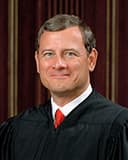
Roberts
·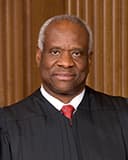
Thomas
·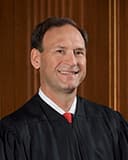
Alito
·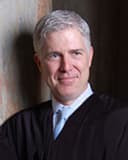
Gorsuch
·
Kavanaugh
·

Decided June 11, 2026
Majority Opinion— Justice Barrett
The Supreme Court held that Section 47(b) of the Investment Company Act (ICA) does not create an implied private right of action allowing private parties to sue for rescission of contracts that allegedly violate the Act. The case arose when Saba Capital, an activist investor, sued several closed-end mutual funds incorporated in Maryland, claiming that the funds' adoption of Maryland's Control Share Acquisition Act — which limits voting rights for shareholders holding disproportionately large stakes — violated the ICA's requirement that every share have equal voting rights. Saba relied on Section 47(b), which states that "a court may not deny rescission at the instance of any party" for contracts performed in violation of the ICA, as the basis for its lawsuit.
The Court, in a 6-3 decision authored by Justice Barrett, concluded that Section 47(b) is a directive to courts about how to exercise their remedial authority, not a grant of rights to private individuals. The provision tells courts they generally may not refuse rescission when a party before the court requests it — but it does not independently authorize anyone to bring a lawsuit. The Court emphasized that rescission is a remedy, not a cause of action, and that other sources of law must supply the right to sue. The Court also noted that the ICA's overall structure supports this conclusion: the SEC is the primary enforcer, and when Congress wanted to create express private rights of action elsewhere in the ICA, it did so explicitly. The Court distinguished its earlier decision in Transamerica Mortgage Advisors v. Lewis (TAMA), which found an implied right of action in a parallel statute based on "shall be void" language that Congress removed from Section 47(b) in 1980 amendments. The practical effect is that private parties cannot use Section 47(b) as a standalone basis to file lawsuits challenging contracts under the ICA.
Dissenting Opinions
Justice Kagan
Justice Kagan wrote a brief dissent stating that she agreed with Justice Jackson's textual and structural analysis in Parts I and II of Jackson's dissent, which she believed showed that Section 47(b) supports a private right of action based on its text, structure, and statutory history alone. However, Kagan did not join the portions of Jackson's dissent that relied on legislative history, explaining that she views legislative history as appropriate only when statutory text remains genuinely ambiguous after careful review — and she did not find Section 47(b) to be that unclear.
Justice Jackson
Justice Jackson, joined by Justice Sotomayor (and by Justice Kagan as to Parts I and II), argued that the majority misread Section 47(b) and ignored compelling evidence of Congress's intent. She emphasized that when Congress amended Section 47(b) in 1980, it did so with full knowledge of the Court's 1979 TAMA decision, which had found an implied private right of action for rescission in identical language of a companion statute. Rather than rejecting TAMA, Congress replaced the old "shall be void" language with explicit references to "rescission" and "any party" — the very concepts TAMA had recognized. Jackson argued that this was Congress making the previously implied right more explicit, not eliminating it. She also noted that the ICA's express private rights of action cover damages, not rescission, so their existence does not preclude an implied right to seek rescission.
Jackson devoted significant attention to defending the use of legislative history, pointing to House and Senate Committee Reports that explicitly stated Congress's wish that courts continue to imply private rights of action under the amended ICA to the same extent as before. She argued that the majority's refusal to consider these reports led it to substitute its own policy preferences for Congress's expressed intent. Jackson warned that by shutting out reliable evidence of what Congress actually intended, the Court was assuming the very legislative power it claimed to respect.
Oral Argument Recording
Via Spotify ↗
Background & Facts
The Investment Company Act (ICA) and the Investment Advisers Act (IAA) were passed together in 1940. Both originally contained provisions declaring contracts that violate them 'void.' In 1979, in Transamerica Mortgage Advisors v. Lewis (TAMA), the Supreme Court unanimously held that the word 'void' in Section 215 of the IAA created an implied private right of action for rescission of violating contracts. In 1980, Congress amended Section 47(b) of the ICA, replacing 'shall be void' with a new multi-part structure: subsection (b)(1) declares violating contracts 'unenforceable by either party,' subsection (b)(2) says a court 'may not deny rescission' at the 'instance of any party' unless enforcement would be more equitable, and subsection (b)(3) addresses severability and unjust enrichment.
Saba Capital is an activist hedge fund that acquired significant shares in closed-end investment funds managed by FS Credit and BlackRock. These funds adopted bylaws stripping voting rights from shareholders owning more than 10% of shares — which Saba alleges violates Section 18(i) of the ICA requiring equal voting rights. Saba sued in federal court under Section 47(b) seeking rescission of those bylaws. The Second Circuit held that Section 47(b) does provide an implied private right of action for rescission. Other circuits, including the Third Circuit, have disagreed.
The Supreme Court took the case to resolve whether Section 47(b)(2) authorizes private parties to bring rescission suits in federal court, or whether it merely provides a rule of decision when such claims arise defensively in litigation already before a court.
Why This Case Matters
This case is significant because it tests the boundaries of the Court's modern implied-right-of-action doctrine established in Sandoval. If the Court rules for Saba, it would confirm that private investors can sue in federal court to rescind contracts violating the ICA — a tool particularly important for shareholder activists challenging fund governance practices. If the Court rules for the petitioners, the only private enforcement of many ICA provisions would be through the SEC, leaving shareholders potentially without a direct remedy when fund managers adopt self-serving bylaws.
The case also has broader implications for how courts read statutory language that references remedies like rescission without explicitly saying 'a private right of action is hereby created.' It could clarify whether Sandoval requires a true clear statement rule or simply ordinary statutory interpretation, and whether the 1980 amendments to the ICA preserved or eliminated the rescission remedy the Court recognized in TAMA for the companion IAA statute.
The Circuit Split
Circuits disagree on whether § 47(b) of the ICA provides an implied private right of action for rescission of contracts made in violation of the Act. This affects the ability of private parties to enforce the ICA's protections against abusive investment company practices through direct federal court actions.
Section 47(b) creates a private right of action
Holds that § 47(b) creates an implied private right of action for rescission of contracts that violate the Investment Company Act, allowing private parties to sue directly.
Section 47(b) does not create a private right of action
Holds that § 47(b) is a voidability provision rather than a private right of action, and only the SEC can enforce the ICA's prohibitions.
The Arguments
Section 47(b) does not create a private right of action because Congress replaced the word 'void' — the linchpin of the TAMA decision — with 'unenforceable,' an inherently defensive concept. The statute's language is court-focused, not rights-creating, and falls far short of the clear statement required under Sandoval and Gonzaga to imply a cause of action.
- Congress knew how to create express private rights of action, as it did in Sections 30(h) and 36(b) of the ICA, making it implausible that it silently created a broader cause of action in 47(b).
- The phrase 'at the instance of any party' refers to a request from a party already before the court, not a right to initiate a lawsuit.
- Congress vested the SEC with comprehensive enforcement powers including investigation, rulemaking, exemptions, and litigation, indicating it did not intend private enforcement through 47(b).
- Even looking at legislative history, Congress considered but rejected adding an explicit private right of action in 1980, and the committee reports discussing implied rights address six statutes generally, not Section 47(b) specifically.
Key Exchanges with Justices
Justice Kavanaugh
“Given that Congress referred specifically to rescission after TAMA recognized that remedy, why would Congress silently remit everything to state court — something TAMA's Footnote 8 called 'anomalous'?”
Revealed that even a potentially sympathetic Justice found it difficult to believe Congress intended to eliminate a federal rescission remedy by amending the statute to explicitly reference rescission.
Justice Barrett
“Is rescission being only a defense necessary to your argument, or do you lose on the cause of action point if rescission can be more than defensive?”
Dvoretzky conceded his argument did not depend on rescission being only defensive, but maintained the statute still lacks the unmistakable focus on individual rights required to create a cause of action.
Justice Jackson
“When the right at issue is the right to bring the action, isn't it implicit in a direction to a court about a legal action that the party can bring that action?”
Highlighted a conceptual weakness in petitioners' argument that court-focused language cannot grant a right to sue, since courts need parties to bring actions before them.
Section 47(b) fails the stringent test for implying a private right of action because it references preexisting state law rights and tells courts how to limit them, rather than creating new federal rights with an unmistakable focus on individual plaintiffs. The government has reconsidered its 2001 position that this was an express right of action.
- The ICA is distinctive among securities laws in how intrusively it regulates areas traditionally governed by state law, providing additional reason to doubt Congress intended private enforcement.
- TAMA was a transitional case relying partly on older methodology; its logic should not automatically extend to the differently worded ICA.
- The SEC is the primary enforcer and private suits could disrupt its regulatory communications and exemption authority.
- The potential breadth of a 47(b) cause of action — covering any contract, any ICA violation, by any party — suggests Congress would not have created it subtly.
Key Exchanges with Justices
Justice Kagan
“Would you really have us reach different results on the exact same language in two companion statutes passed the same day, just because one has unrelated damages provisions?”
Exposed the difficulty of the government's position that identical 'void' language in the pre-1980 ICA and IAA should have produced different outcomes, even without the 1980 amendments.
Justice Kavanaugh
“The SEC brief in 2001 called this an express remedy six times. Do you disagree with that?”
The government acknowledged it had changed its position, attributing the shift to the Court's developing jurisprudence after Sandoval, raising questions about the reliability of the government's evolving interpretations.
Justice Sotomayor
“Do you really think Congress intended to let companies violate voting rights until the SEC acted, with no private remedy?”
Revealed the tension in the government's position between textualism and the practical need for private enforcement to supplement the SEC's limited resources.
Section 47(b) is not an implied cause of action case at all — Congress expressly referenced 'rescission' by 'any party' in 120 words of added statutory text, and subsections (b)(2) and (b)(3) presuppose the existence of a rescission remedy by addressing second-order questions like equitable balancing, severability, and unjust enrichment.
- Congress replaced 'void' with 'unenforceable by either party' — functionally a synonym — because the new 'unless' clause was incompatible with the absolute concept of voidness, not because Congress intended to eliminate the rescission remedy.
- Both the House and Senate reports specifically state the 1980 amendments were 'designed to provide clearer statutory guidance in interpreting that equitable rescission remedy,' confirming Congress was refining rather than eliminating the remedy.
- The SEC itself called this an 'express right of action' six times in its 2001 Olmsted brief, in order to persuade the Second Circuit not to recognize an implied damages remedy.
- Under petitioners' theory, the 120 words Congress added about rescission are effectively nugatory because investment companies will never sue their own shareholders for breach of contract.
Key Exchanges with Justices
Justice Gorsuch
“The language we relied on in TAMA isn't here anymore. Isn't this just asking us to take one last drink of implying causes of action?”
Clement pivoted to argue this is not implication at all but reading express text — 'rescission by any party' — which is more explicit than the 'void' language TAMA relied upon.
Justice Kavanaugh
“The amicus briefs on the other side describe 'chaos' and 'disruption.' What has actually happened in the six years the Second Circuit has had this rule?”
Clement effectively rebutted the floodgates argument by showing only two sets of cases in six years in the Second Circuit — his own clients' suits and three SPAC challenges that led to beneficial SEC rulemaking — demonstrating that rescission actions are inherently limited.
Justice Kagan
“If Congress had done nothing on the ICA front after TAMA, would Transamerica control?”
Both the government and petitioners struggled to convincingly explain why identical language in companion statutes would yield different results, strengthening Saba's position that TAMA's logic applied to the ICA even before the 1980 amendments.
Precedent Cases Cited
Transamerica Mortgage Advisors, Inc. v. Lewis (TAMA)
Central to the entire case — TAMA found an implied private right of action for rescission under Section 215 of the IAA based on the word 'void,' and the dispute centers on whether the 1980 ICA amendments preserved or eliminated that same right.
Alexander v. Sandoval
532 U.S. 275
Established the modern framework for analyzing implied private rights of action, requiring focus on statutory text and structure rather than legislative history, and is the primary standard petitioners invoke.
Gonzaga University v. Doe
536 U.S. 273
Petitioners and the government argue it establishes a clear statement rule requiring Congress to create new rights 'in clear and unambiguous terms,' which they say applies equally to implied rights of action.
Thompson v. Thompson
Petitioners cited it for the proposition that court-focused statutory language (a 'mandate directed to state courts') does not create a private right of action; respondents distinguished it as involving Full Faith and Credit, not a rescission remedy.
Cort v. Ash
Referenced as marking the beginning of the Court's shift toward a more restrictive approach to implied rights of action, with respondents noting TAMA was decided by the same Justices who decided Cort.
Franklin v. Gwinnett County Public Schools
Clement cited Justice Scalia's concurrence, where Scalia accepted an implied cause of action because Congress had answered secondary questions (waiving sovereign immunity) that presupposed a cause of action existed.
Ward v. Sherman
Cited by respondents to show that rescission has long been understood as an affirmative remedy, not merely a defense.
Stoneridge Investment Partners v. Scientific-Atlanta
Cited by petitioners as showing the Court applied Sandoval's restrictive approach in subsequent cases, demonstrating the Court 'really meant' a clear statement rule.
Legal Terminology
Analysis & Opinions
The Supreme Court ruled in FS Credit Opportunities Corp. v. Saba Capital Master Fund that investors cannot bring private lawsuits to enforce the Investment Company Act of 1940, holding that only the SEC has authority to enforce the statute. The sharply divided decision continued the Court's recent trend of refusing to imply private rights of action from federal statutes. The ruling effectively blocks investors from suing investment companies to rescind contracts that allegedly violate the law.