Wolford v. Lopez
Does Hawaii's law presumptively banning the carry of firearms on private property open to the public—unless the carrier first obtains the property owner's express permission—violate the Second Amendment under the Bruen framework?
The Decision
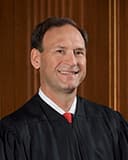
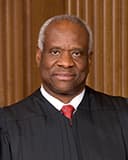
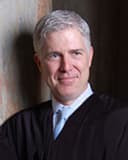
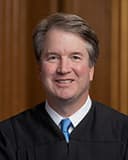

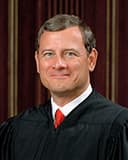
Roberts
·
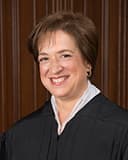
Sotomayor
·

Decided June 25, 2026
Majority Opinion— Justice Alito
The Supreme Court struck down a Hawaii law that prohibited licensed concealed-carry permit holders from carrying handguns on private property open to the public (such as stores, gas stations, and restaurants) unless the property owner gave express, affirmative permission. The Court held that this law violates the Second and Fourteenth Amendments. Writing for a 6-3 majority, Justice Alito explained that the law falls within the plain text of the Second Amendment because it restricts the ability of ordinary citizens to bear arms for self-defense. He emphasized that Hawaii's law "flipped" the traditional common-law default rule: historically, anyone—including those lawfully carrying firearms—could enter property open to the public unless the owner specifically banned them. Hawaii's new rule reversed this by requiring gun carriers to obtain express permission before entering, effectively barring them from routine daily activities like shopping for groceries or getting gas.
At the second step of the analysis required by the Court's 2022 decision in Bruen, the majority examined whether historical analogues justified Hawaii's law. Hawaii pointed to colonial-era laws requiring permission to carry guns on private land, but the Court found these were almost entirely anti-poaching laws targeting unauthorized hunting on farmland and rural estates—not restrictions on peacefully carrying a concealed weapon into a retail store. The Court also rejected Hawaii's reliance on an 1865 Louisiana statute, noting it was part of the notorious post-Civil War Black Codes designed to disarm formerly enslaved people. Finally, the Court rejected Hawaii's argument that its unique cultural traditions of hostility toward firearms could justify a narrower interpretation of the Second Amendment, reaffirming that the Amendment has the same meaning in every state. The practical effect of the ruling is that states cannot require gun owners who hold valid carry permits to obtain express permission before entering businesses and other private property open to the public.
Concurring Opinions
Justice Barrett
Justice Barrett, joined by Justices Thomas and Gorsuch on Part II-B, wrote separately to elaborate on why Hawaii's law triggers and fails Second Amendment scrutiny. She rejected Hawaii's framing of the case as being about property law rather than gun rights, explaining that when a state enacts a property law that specifically regulates arms-bearing conduct, that law implicates the Second Amendment regardless of the property-law label. She offered an analogy: a state could not escape First Amendment scrutiny by making it a crime to wear religious head coverings on private property open to the public without express permission, even though property owners have the general right to exclude.
Barrett also provided a detailed analysis of Hawaii's historical analogues. She agreed that the 18th-century anti-poaching laws support the principle that states may enact focused regulations to address specific abuses of the right to bear arms, such as the property damage and safety risks caused by unauthorized hunting. However, she concluded that Hawaii's law does not target any specific abuse—it reflects only general public disapproval of firearms in public, which is not a permissible basis for restricting a constitutional right. Regarding the 19th-century Black Code laws cited by Hawaii, Barrett explained their purpose was to subjugate newly freed Black Americans by restricting their ability to hunt, provide for themselves, and defend against violence—a purpose that obviously cannot justify modern gun regulations. She concluded that mere majority opposition to a constitutional right cannot serve as a basis for restricting it.
Justice Thomas
Justice Thomas joined Justice Barrett's concurring opinion as to Part II-B, which addressed the failure of Hawaii's 19th-century historical analogues, particularly the Black Code statutes. No separate concurring opinion by Justice Thomas was filed in this case.
Justice Gorsuch
Justice Gorsuch joined Justice Barrett's concurring opinion as to Part II-B, which addressed the failure of Hawaii's 19th-century historical analogues. No separate concurring opinion by Justice Gorsuch was filed in this case.
Justice Alito
Justice Alito authored the majority opinion. Although listed among the concurrence authors, his views are fully expressed in the majority opinion and no separate concurrence was filed.
Justice Kavanaugh
Justice Kavanaugh joined the majority opinion in full. Although listed among the concurrence authors, no separate concurring opinion by Justice Kavanaugh was filed in this case.
Dissenting Opinions
Justice Kagan
Justice Kagan dissented, arguing she would uphold Hawaii's law because it is a modern-day analogue of colonial and founding-era laws that similarly prohibited carrying firearms onto private property without the owner's affirmative consent. She argued that the 'how' of the old and new laws is identical—both set a default rule against gun carry that a property owner may reverse—and the 'why' is sufficiently close, since both respond to the dangers that someone with a gun can cause on another person's property. She emphasized that the old laws' particular focus on poaching should not matter, because the key question under the Court's precedents is whether the challenged regulation is consistent with the principles underpinning the historical regulatory tradition, not whether it addresses the exact same problem. She expressed no view on the step-one inquiry or the use of Louisiana's Black Code at step two.
Justice Jackson
Justice Jackson, joined by Justice Sotomayor, filed a lengthy dissent arguing that Hawaii's law does not even implicate the Second Amendment. She contended that the case is fundamentally about property rights, not gun rights. Because everyone agrees there is no right to carry a gun onto private property without the owner's consent, she argued the only question is whether a state may determine the form that consent must take—and the Constitution has nothing to say about that. She explained that the right to exclude is a foundational principle of property law, that licenses to enter private property have always been creatures of state law and local custom, and that states have historically altered default consent rules through legislation.
Jackson also criticized the majority for misapplying the Bruen framework. She argued that the majority gutted step one of the test by refusing to consider historical evidence about pre-existing limits on the right to bear arms, effectively turning step one into a rubber stamp. On the merits at step two, she contended that Hawaii offered ample historical analogues—including colonial anti-poaching laws and Reconstruction-era statutes—showing a tradition of requiring express consent for armed entry onto private property. She acknowledged that the Black Codes were enacted for abhorrent purposes but argued the majority was wrong to dismiss them entirely, since even tainted laws can illuminate the scope of accepted regulation. She concluded by expressing her view that Bruen was wrongly decided, and that the majority's analysis further empowers the judiciary to override legislative judgments about public safety.
Oral Argument Recording
Via Spotify ↗
Background & Facts
After the Supreme Court's 2022 decision in New York State Rifle & Pistol Association v. Bruen held that the Second Amendment protects the right to carry firearms publicly, Hawaii passed Act 52, which included a provision making it a crime to carry a firearm on private property open to the public (like stores, gas stations, and restaurants) unless the gun carrier first obtains the property owner's express consent. Under this law, even someone lawfully licensed to carry a concealed firearm commits a crime by stepping onto a gas station's property with a gun unless the station owner has affirmatively said guns are welcome.
Petitioners Jason Wolford and others challenged this law, arguing it effectively guts the Bruen decision by banning carry across the vast majority of accessible land in Hawaii. They claim the historical tradition in America has been the opposite: when property is open to the public, people are presumptively allowed to carry firearms there unless the owner posts a sign or otherwise objects. Hawaii counters that property owners have always had the right to control who enters their land and on what terms, and that the state is simply clarifying default rules about consent—a matter of property law, not the Second Amendment.
The case raises fundamental questions about where the Second Amendment right to carry ends and private property rights begin, and whether states can flip longstanding presumptions about implied consent to carry firearms on commercially open property.
Why This Case Matters
This case could define the practical reach of the Bruen decision by determining whether the Second Amendment protects not just the abstract right to carry in public, but the right to carry on the privately owned property (shops, restaurants, gas stations) where Americans conduct most daily life. If Hawaii's approach is upheld, states could effectively limit public carry by requiring express permission from every property owner, potentially reducing the Bruen right to a formality. If struck down, states would lose a key tool for regulating firearms in commercial spaces.
The case also tests the Bruen framework itself in important ways: how to evaluate historical analogs when the closest ones are either antipoaching laws on enclosed farmland or racially discriminatory black codes; whether states can use property-law defaults to regulate around a constitutional right; and whether the Second Amendment should be treated with the same vigor as the First Amendment when private property is involved. Several justices questioned whether the historical-tradition test works when so much relevant history is tainted by racial discrimination.
The Arguments
Hawaii's presumptive ban on carrying firearms on private property open to the public violates the Second Amendment because it flips the longstanding national tradition allowing people to carry on such property unless the owner objects. Hawaii cannot justify this law under Bruen's historical-tradition test because no relevant historical analogs support it.
- The national historical tradition has always been that opening property to the public implies permission to carry firearms there unless the owner affirmatively objects
- Hawaii's cited analogs—antipoaching laws—applied only to enclosed lands closed to the public and preserved self-defense exemptions, making them irrelevant
- The 1865 Louisiana black code cited by Hawaii was a racist, unconstitutional law designed to disarm freed slaves and cannot serve as a legitimate historical analog
- Hawaii's law uniquely singles out firearms—no other object requires express permission to bring onto property open to the public
Key Exchanges with Justices
Justice Barrett
“Could all property owners in Hawaii voluntarily get together, deny permission, and achieve the same result as this law—preventing carry on 97% of property?”
Beck conceded that private owners can individually deny permission, suggesting his objection is specifically to the government flipping the default.
Justice Jackson
“Isn't the historical presumption you cite about consent, not about your Second Amendment rights, since you already agree consent is required on private property?”
Beck maintained the Second Amendment is implicated whenever carry is regulated, but struggled to separate the right from the underlying property-consent framework.
Justice Kagan
“Why aren't the founding-era statutes that flipped the consent default close enough as historical analogs, since they did exactly what Hawaii's law does—change who must express consent?”
Revealed the central tension: whether the open-to-public versus closed-to-public distinction in old laws is the critical difference or merely incidental.
Hawaii's law is a pretextual regulation that targets the Second Amendment right specifically, since it singles out licensed gun carriers for a presumptive trespass rule that applies to no other activity. The law offends the historical tradition that opening property to the public authorizes carrying.
- The law is pretextual because it singles out only one right (Second Amendment) and one class (licensed carriers) for a trespass presumption while allowing everyone else to enter freely
- Antipoaching laws actually demonstrate the opposite tradition: property open to the public carried an implied license to carry, while only enclosed/closed property required affirmative consent
- States cannot evade constitutional scrutiny by redefining property-law defaults, just as they cannot in the Takings Clause or First Amendment context
- Black codes are unconstitutional outliers that cannot illuminate a valid tradition of permissible firearms regulation
Key Exchanges with Justices
Justice Kavanaugh
“Why lead with the pretext argument rather than the simpler point that there are no sufficient historical analogs?”
Harris conceded the case is 'overdetermined' and could be resolved simply on lack of historical tradition, acknowledging the pretext argument was supplementary.
Justice Kagan
“Isn't the pretext analysis you're proposing really just means-ends scrutiny, which Bruen was supposed to eliminate?”
Exposed tension between the government's desire to detect pretextual gun laws and the Bruen framework's rejection of interest-balancing.
Justice Jackson
“If a state offered free 'no guns' signs to every business and sent someone to install them, would that implicate the Second Amendment even though its purpose was to dissuade gun carrying?”
Harris said no, distinguishing between a law that directly criminalizes carrying versus one that subsidizes private exclusion, revealing the boundary of her theory.
There is no Second Amendment right to assume a private property owner's consent to bring a gun onto their property. Hawaii's law simply clarifies that consent must be express rather than implied—a matter of property-law defaults that states have always had authority to set, not a constitutional violation.
- No commentator, treatise, or court has ever recognized a right to imply a property owner's consent to carry firearms, making petitioners' claim unprecedented
- Historical analogs including the 1771 New Jersey law and 1763 New York law show states have long flipped consent defaults for firearms on improved and enclosed lands including stores and plantations
- Hawaii flips default consent rules for many things besides guns (vehicles, shopping carts, placards), showing no hostility to the Second Amendment
- Hawaii took Bruen seriously by issuing over 2,200 concealed carry permits and only denying 119 applications, mostly for incomplete paperwork
Key Exchanges with Justices
Justice Barrett
“If a state flipped the consent default for entering private property based on race (excluding Black people unless the owner expressly consented), wouldn't that be unconstitutional state action—so why isn't this?”
Katyal distinguished the Equal Protection Clause's antidiscrimination principle from the Second Amendment, arguing the Second Amendment lacks a comparable structural constraint on property-default manipulation.
Justice Gorsuch
“You say the 1865 Louisiana black code is a 'dead ringer' for Hawaii's law—how can unconstitutional laws rooted in racial prejudice inform our constitutional tradition?”
Katyal argued the specific consent provision was race-neutral and survived Reconstruction Congress review, but faced strong skepticism from multiple justices about relying on black codes.
Justice Kavanaugh
“In Ramos, we rejected Louisiana and Oregon's non-unanimous jury tradition precisely because it was rooted in racial prejudice. What's different here?”
Katyal struggled to distinguish Ramos, insisting this particular provision was race-neutral, but the parallel undercut his reliance on black-code-era laws.
Precedent Cases Cited
New York State Rifle & Pistol Association v. Bruen
The foundational framework for this case: Bruen held the Second Amendment protects public carry and established the two-step text-and-history test that all parties applied to evaluate Hawaii's law.
District of Columbia v. Heller
Cited for its recognition of an individual right to bear arms and its Part 3 discussion of historically rooted exceptions to that right, including sensitive places like schools and government buildings.
United States v. Rahimi
Cited for its guidance on the appropriate level of generality for historical analogs—requiring only analogous principles rather than historical twins—and for questioning reliance on black codes.
McKee v. Gratz
Cited by both sides regarding whether implied license to enter private property is determined by national custom or local/state custom, with petitioners emphasizing national tradition and respondent emphasizing local law.
Florida v. Jardines
Cited for Justice Scalia's discussion of the implied license to approach a home's front door—establishing that the right to exclude from private property is fundamental at the founding.
Tyler v. Hennepin County
Cited by the government to show that states cannot redefine property rights to evade constitutional protections, here the Takings Clause, and similarly cannot do so to evade the Second Amendment.
Church of the Lukumi Babalu Aye v. City of Hialeah
Cited by the government as a First Amendment analog for detecting pretextual laws—where a facially neutral law is gerrymandered to target a specific constitutional right.
Ramos v. Louisiana
Justice Kavanaugh cited it to argue that historical practices rooted in racial prejudice (non-unanimous juries) should be rejected as constitutional precedent, paralleling the black codes issue here.
Legal Terminology
Analysis & Opinions
The Supreme Court struck down a Hawaii law that criminalized bringing guns onto private property open to the public without the property owner's specific consent. In Wolford v. Lopez, the justices ruled 6-3 that the law violates the Second Amendment right to bear arms, siding with Maui residents who held concealed-carry permits. The decision will have broader implications for similar gun restrictions beyond Hawaii.